malvernmugadzikwa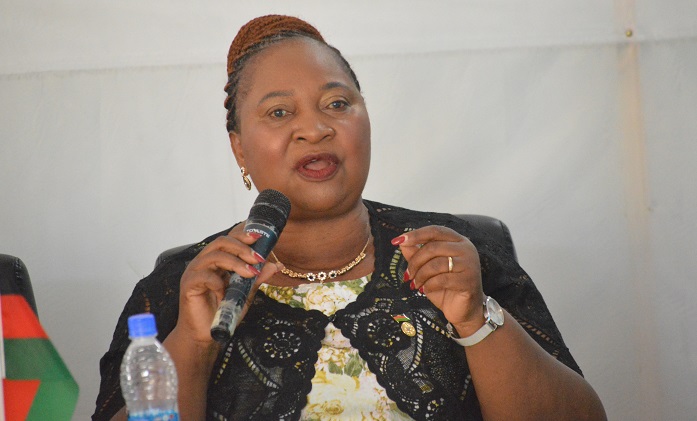
Moses Magadza
VIOLENCE against women and girls is one of the most systematic and widespread human rights violations the world over, and it continues to be a major blight on the collective conscience of humanity.
This was said by Malawi’s minister of Gender, Community Development and Social Welfare, Ms Jean Sendeza, in Salima, Malawi last Thursday during a high-level National Engagement and Capacity Building workshop for Malawi parliamentarians to promote the domestication of the SADC Model Law on Gender-Based Violence.
Ms Sendeza said, according to the World Health Organisation, 818 million women above the age of 15 years, experience sexual or physical violence at home, in the community or at the workplace. “Here in Malawi, nearly one in three women has experienced physical violence and one in four has experienced sexual violence in their lifetime, according to the Malawi Demographic and Health Survey Report of 2015/2016,” she said.
She said children were not spared from the scourge.
“One in five girls and one in seven boys under 18 have experienced sexual violence,” she added.
“Further, 47 percent of girls marry before their 18th birthday while 9 percent marry before their 15th birthday.”
According to a concept note shared at the workshop, gender inequality continues to be a persistent concern in the region, which poses significant obstacles to the fulfilment of socio-economic rights for women and girls. The note shared studies showing a staggering gender gap of 67,9 percent — which, at the current pace — would take the region about 98 years to close. It says women and young girls continue enduring social inequalities in employment, education, decision-making, and inheritance.
Ms Sendeza said the model law provides a comprehensive normative framework to fight GBV. She further said it is a powerful tool for prevention and effective response to the scourge since it provides for crucial aspects such as survivor protection, perpetrator accountability and the overarching goal of fostering a society where women and girls can thrive without the burden of violence and discrimination.
“By embracing the model law as stakeholders in Malawi, we empower ourselves to build a future where the rights and well-being of all individuals are upheld, ensuring a society that is safe, equitable and free from the constraints of GBV,” she added.
The SADC Parliamentary Forum (PF) developed the model law. The model law sets a remarkable precedent as the first of its kind, encompassing not only physical violence but also economic, psychological and cyber-related violence through digital platforms.
It also provides for an array of women’s rights to ensure their voices are heard, their perspectives considered, and that they have equal opportunities to live free from violence and discrimination.
She stressed that the model law is only effective if it is implemented and enforced effectively.
“This is where parliamentarians, working with other stakeholders in the country, come in.
“You have a critical role in ensuring that the model law is domesticated and integrated into our national legal framework to ensure efficient dissemination to grassroots and remote areas, where its impact is needed the most,” she urged the MPs.
“The model law is based on the UN Declaration on the Elimination of Violence against Women, among other international instruments, which Malawi has committed to. By domesticating the model law, we will be fulfilling our obligations under this declaration.”
She noted that the model law guarantees access to justice and support services for GBV survivors.
“The model law provides for the establishment of specialised courts and the provision of free legal and medical services, specifically to meet the needs of survivors.
“By domesticating and implementing it, we would ensure these crucial services are readily available to survivors in the country,” she said.
The minister said domesticating the model law also has the potential to prevent gender-based violence through awareness and education.
“Through targeted educational campaigns and increased consciousness, we can strive towards a society that proactively combats GBV and cultivates an environment of respect and equality for all,” she said.
Ms Sendeza encouraged participants to use the workshop as a platform for expanding knowledge on the model law, and sharing invaluable experiences and perspectives.
She further called for active engagement in the formulation of strategies to ensure effective dissemination and domestication of the model law.
She also urged MPs to collaborate and leverage on the strength of their diverse backgrounds to identify priority areas for action and establish a comprehensive action plan to initiate the domestication with urgency.
Given that the dissemination and domestication of the model law requires the involvement of multiple stakeholders — including parliament, government agencies, the media, civil society organisations and the private sector — Ms Sendeza appealed for greater coordination among the players for an effective and efficient process.
“The complex and widespread nature of GBV necessitates a comprehensive and coordinated response that transcends the mandates of our individual institutions and even national borders,” the minister noted, adding that eliminating all forms of violence against women and girls is a precondition for peaceful societies.
She reminded MPs that in Malawi, the domestication of the model law is not just a legal obligation, but also a moral imperative.
“As leaders, we bear the responsibility of safeguarding the rights and dignity of all individuals, particularly the most vulnerable. Let us build a society where gender-based violence is unequivocally condemned, and where women and girls can thrive with dignity, respect, and equality,” she added.
Ms Sendeza expressed gratitude to the SADC PF and its secretary-general, Ms Boemo Sekgoma, Plan International, SAfAIDS and other UN agencies for contributing to the development, adoption and promotion of the model law and organising the workshop.
She also paid tribute to the speaker of the Malawi parliament, Ms Catherine Gotani Hara, for her leadership in the country’s commitment to champion the domestication of the Model Law on GBV.
The model law was adopted by the SADC PF during its 50th Plenary Assembly in December 2021.
The comprehensive aspirational instrument seeks to address gender inequalities in all their forms within the SADC region.
It strives to empower women and young girls by promoting education, facilitating employment opportunities, harnessing the potential of digital services and learning, and ensuring their safety in the digital space.
Among the many objectives of the workshop was enhancing awareness and understanding; providing MPs with a comprehensive understanding of the SADC model law and its significance in promoting gender equality and protecting women’s rights.
The workshop was also aimed at raising awareness on the importance of domesticating the model law in Malawi to align national legislation with regional standards and commitments.
The high-level workshop was attended by the country’s top leadership — which included parliamentarians, the ombudsman, the clerk of parliament, representatives of UN agencies, legal experts, researchers and the media.
The meeting considered a legislative landscape on GBV in SADC, after which SADC PF legal consultant Ms Eva Jhala led the session in unpacking the SADC model law.



 Online Reporter