admin
admin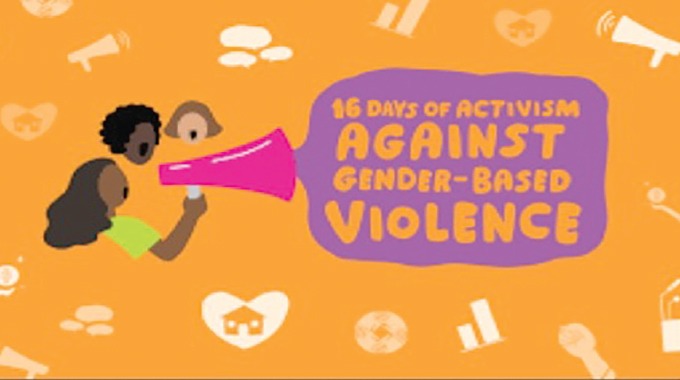
Joan Tsikira Review Writer
It is almost a month until November 25, the International Day for the Elimination of Violence against Women.
From that day until December 10 the Human Rights Day the world at large including Zimbabwe will mark 16 Days of Activism against gender-based violence. This is the 24th year of the campaign and Zimbabwe has seen its fair share of activities over the years as various organisations and individuals carry out various activities to sensitise the nation about the physical, social, psychological and financial impact of violence in the home.
But are the campaigns bearing fruit? A glance at the Press on any given day seems to show that far from abating, cases of violence in the home are still very much an ordinary day scenario in our communities.
Just this week there was a case in one paper about a woman who poured boiling oil over her husband for suspected infidelity. In another paper there has been the running story of a man who bludgeoned his wife to death before axing his six-year- old daughter (who survived the horrific attack) before reportedly hanging himself outside his in-laws homestead.
Why are the campaigns failing to bear fruit? The Herald Review went onto the streets to talk to ordinary Zimbabweans about the scourge. Most said the annual campaign appears to be divorced from the very society that it targets.
“We have no much insight into what the activism is about, the responsible authorities need to go around in schools were the upcoming future mothers and fathers are “said Precious Nyamhondoro aged 21, a student at TelOne Centre.
She pointed out that it is harder to change views in adults than it is to inculcate positive values in children as they grow up.
Casper Denhere (44) said there is need for the activists to move from the city centre and media events to go to the people.
“They need to come into the communities where people live and hold road shows in high density suburbs were most of the violent acts are committed.”
Another man who refused to be identified said the move is doomed to fail because these campaigns are imported ideas that have no relationship to the traditions and culture of locals.
“We need to find our own solutions to our own problems. In the past we had structures for resolving disputes and we had ngozi (avenging spirits of the dead who return to haunt the living) to keep people in line. But now you just see men, and women too, killing each other like they are slaughtering humans. We have adopted customs whereby human life does not matter,” he said.
According to 16dayscwgl.rutgers.edu this year’s theme is “From Peace in the Home to Peace in the World: Make Education Safe for All!”
The site goes into detail about the history of the campaign and the year’s targets.
“The year 2015 marks the 24th year of the 16 Days of Activism Against Gender-Based Violence Campaign, initiated in 1991 and coordinated by the Centre for Women’s Global Leadership. Participation in the Campaign has seen over 5 478 organisations, policymakers, governments, UN agencies and countless individuals from over 180 countries worldwide.
“Together we have brought attention to issues of racism, sexism, cultures of violence, homophobia and called for the implementation of human rights obligations, including the right to health and reproductive rights, and end to militarism and gender-based violence, among others.”
UN women, Ministry of Women’s affairs and Zimbabwe Women’s Lawyers Association are some of the organisations that have been active in addressing the issue beyond the 16 days of this particular campaign.
The organisations say that the main goal is to treat gender based violence as a social ill that should be addressed through educating people within the 16 days of activism not to make the days an end in themselves. Statistics reveal gender-based violence to be on the rise but it is also comforting to know that people now more than ever report cases of violence in any relationship said Zimbabwe Women’s Lawyers Association Director Abigail Matsvayi.
“Most people have become aware of the days. What is left is for people to have a deep understanding of what laws exist and how they can protect them, we still have a long way to go with regards to awareness raising “said Mrs Matsvayi.
A number of solutions need to be put into place to address domestic violence especially with regards to women.
“The culture of acceptance both on the survivor and the perpetrator need to be addressed and this should start at the school level,” said Mrs Matsvayi echoing Precious Nyamhondoro’s sentiments.
Activists say the nation at large should understand that gender-based violence is not a women’s battle but a national initiative premised on both men and women’s understanding on the effects of violence and how it can be eradicated.
At a glance
The prevalence of all forms of violence against women, especially physical and sexual violence, continues to be high despite the country’s relatively strong GBV legal framework.
Zimbabwe is one of the six SADC countries, which now has a baseline that provides data on the extent, response, support, and prevention of Violence Against Women (VAW).
The research found that 68 percent of the 3 326 women interviewed had experienced some form of gender-based violence (GBV) in their lifetime while 46 percent of the 3 274 men interviewed said they had perpetrated some form of violence in their lifetime.
The most predominant form of GBV experienced by women and perpetrated by men occurs within intimate partnerships. About 90 percent of the women interviewed experienced intimate partner violence (IPV), while 73 percent of the men admitted to perpetrating this form of violence.
Sexual violence against women and girls is a major focus on the government. On November 1 2014, the country launched the National Campaign against Rape and Sexual Abuse of Children.
Government’s financial resource allocation to GBV prevention, response and services is low which affects negatively on the implementation of the law.
In the first nine months of 2012 (January-October), more than 720 new Domestic Violence Act cases were lodged with the courts each month.
GBV and VAW campaigns do not reach the majority of the population. Only 10 percent of the 6 600 women and men interviewed in the first GBV Baseline study knew about the 16 Days of Activism Campaign.
Adapted from Zimbabwe SADC Gender Protocol Barometer 2014 by Virginia Muwanigwa.


 Online Reporter