Online Reporter
Oliver Kazunga
Senior Reporter
ZIMBABWE is entering a new era of economic competition, with President Mnangagwa declaring that Government will now increasingly measure development through the Gross Domestic Product performance of individual provinces as the Second Republic accelerates the drive towards Vision 2030.
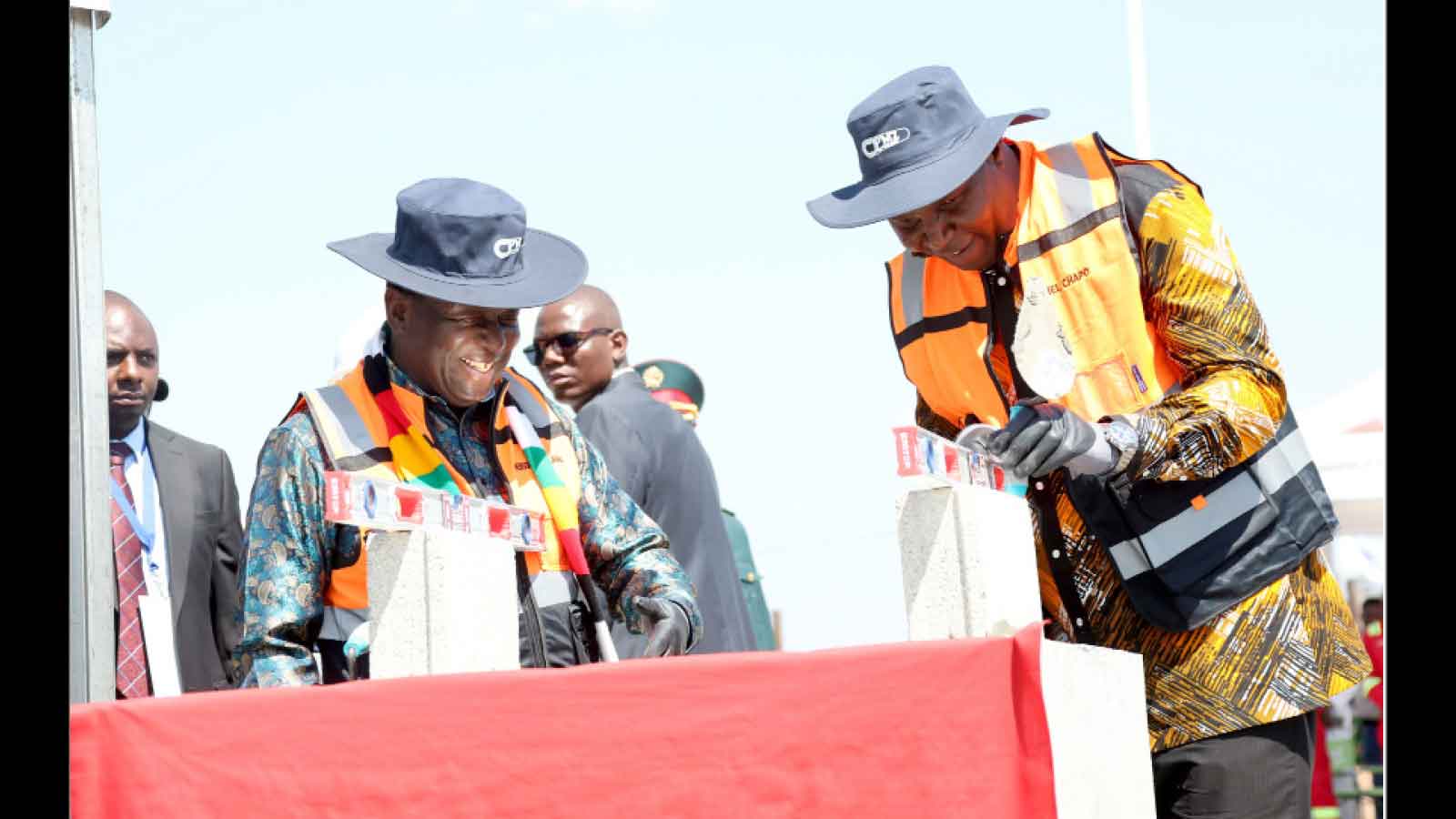
Addressing thousands gathered for the commissioning of the 10-megawatt New Glovers Solar Power Plant in Munyati, Kwekwe on Friday, the President signalled what could become one of the most consequential shifts in the country’s economic governance model since Independence.
“We are entering an era where we shall compare GDP growth of each province,” said President Mnangagwa, while challenging provinces to fully leverage their resource endowments and industrial capacities to drive economic transformation.
The project, which is a partnership between the Public Service Pension Fund (PSPF) controlling 51 percent stake and local investors New Glovers Solar, is expected to produce 110MW when complete.
The first phase of the project is already feeding 10MW into the national grid.
The facility comprises 18 600 solar panels, supported by 31 inverters, two smart transformers, and a 6km transmission line that connects seamlessly to the national grid.
Constructed under the Government Project Support Agreement Framework, the plant is among the first renewable energy projects implemented through a model designed to provide investor guarantees, cost-effective tariffs and secure infrastructure financing.
Under the emerging framework, provinces with stronger infrastructure delivery, investment attraction, energy security and value-addition industries could increasingly position themselves as economic growth hubs.
Already strategically positioned at the heart of Zimbabwe’s mining and manufacturing sectors, the Midlands Province appears set to become one of the biggest beneficiaries of the shift.
President Mnangagwa said the province should accelerate value addition and beneficiation across sectors, while leveraging its vast mineral wealth and growing energy infrastructure.
“In 2030, Zimbabwe will be the first country in the world to have a clean energy economy,” he said.
“It is my expectation that district by district, the aspirations and goals set out in Vision 2030 will be achieved way ahead of time, leveraging on the province’s rich natural resource endowments.
“We must, in this respect, collaborate and scale up synergies for the value addition and the beneficiation of all our resources across the various sub-sectors of the economy,” he said.
The President linked provincial development directly to infrastructure delivery, praising the New Glovers Solar project for being completed under the Government’s 100-day cycle priority projects.
“The completion of this plant within record time reflects the discipline, efficiency, coordination, and commitment to results that has become normal through the Second Republic.
“This achievement is a testament that when the Government and the private sector work hand-in-hand, Zimbabwe can deliver projects of international standards,” he said.
President Mnangagwa added that the project demonstrated growing investor confidence in the country’s economic reforms and reflected the increasing role of the private sector in supporting national development.
Economic commentator Mr George Nhepera yesterday said the President’s comments pointed to a future in which provinces would increasingly compete for capital, industrial projects, and export-oriented investments.
“We definitely need to track the drivers of economic growth at that lower level such as access to finance and markets, industrial projects and financial inclusion.
“It’s about time that we have provincial leaders that focus entirely on economic and social metrics in their region so that no place or no one is left behind in our quest to achieve an upper-middle class society by 2030,” he said.
Another economic commentator Ms Wendy Mpofu said the pronouncement by President Mnangagwa was a major policy signal that could propel the emergence of provincial economic benchmarking.
“It’s a policy signal where we could see the emergence of provincial economic benchmarking, and the good side of it is that provinces will no longer only be administrative regions.
“They will become more of investment territories competing on productivity, infrastructure readiness, and industrial output,” she said.