admin
admin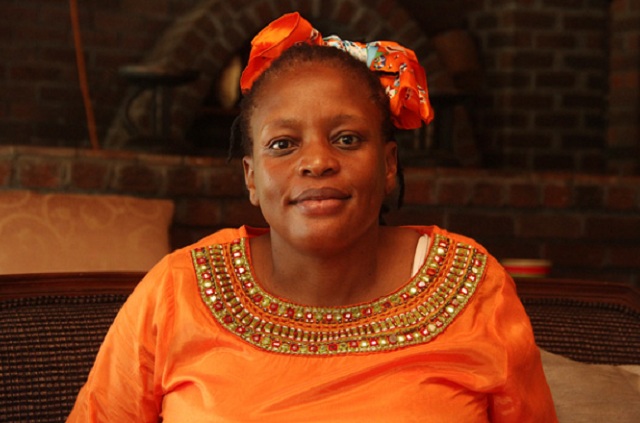

Tsungai Chekerwa-Machokoto
The moment some women hear about gender parity it seems they get all their ammunition and get ready to shoot the men and the ‘men’s world’ for their injustices and exhibit evidence of the extent of that injustice.
It is unfortunate, however, how we as women waste our time and exhaust our energy to major in minors. There is work for us to do, let us focus on that. The only parity that I can think of is parity in the mind.
Our minds are so polluted by rage, revenge and bitterness that even if parity was achieved, there is a good chance that we would end up pretty much in a vulnerable position still.
We need to start by thinking positively about ourselves as women, our place in the world and the power of our contribution. And we need to be unapologetic about it too.
The term parity generally has stereotypical connotations that induce resistance from the male listener. They instantly think ‘these women are trying to be us and they want to be equal with us’.
While this is happening, the important topics are shoved in the back. Let me set the record straight once more on behalf of most women.
Women do not want to be men; neither do they want to be equal with men.
They are quite happy with how they look and take pride in their multi-tasking skills as well as other biological attributes that are peculiar to them. It is senseless to try to be equal with issues of biology that are out of our control coming into play.
The issue is not that at all. It is equal opportunities that we are striving for. It is acceptance into institutions that are defined as men’s spaces that we desire.
It is also acceptance of women into the jobs and arenas that they would have worked hard to achieve without encountering any discriminatory and derogatory resistance.
Sometimes we tend to focus more on what is wrong and forget that the power to change that is from within.
Our frequent reference to the traditions of our fore fathers is detrimental to progress and they make it difficult to free our mindsets.
The injustices of the past are real, but they are right where they belong, in the past. We cannot do anything about them except use them to make strategies for the future.
Scrutinising and lamenting over them is not really going to do much in improving the plight of the woman. We have a lot to learn from our great grandmothers, they didn’t have much education, if any, but they raised such powerful people today.
They were strong women and would take care of their families with the work of their hands. Their dignity remained intact. Those women were phenomenal and their wisdom was overwhelming.
We are the constructors of gender and therefore we define our own expectations. Why not use gender to undo gender?
Why not take advantage of the responsibility that is placed on us by culture, religion and tradition, and use them to change the future?
If we are the custodians of the moral fiber of the community, we have the power to make it what we want. Our girl children can be taught about self-worth from a very young age.
The boy children can be enlightened on the advantages of being flexible and open minded. We can reward them; we can manipulate canalisation to achieve redrawing the boundaries of gender roles.
The problem of looking at parity is that we focus on women and neglect the men that share the world with women. Gender is about both women and men and so parity should be preached to both sexes so as to put things on a level perspective.
It is interesting that Plato, a respected legal philosopher, equated change with chaos and decay. He thought that there had to be something that never changes.
Here and now in 2016, we disagree completely. We are saying change is welcome. Change is necessary, and change starts in the mind. It is evident that people who are resistant to change are stuck in the 14th century and that is a cause for concern.
We are saying no glass ceilings, sticky floors and revolving doors just because of the sex of a woman. We are saying no to the marginalisation of women.
We are saying no to discrimination of women on the sole basis of being women.
We are also saying no to expecting women to constantly justify themselves and explaining why they are interested in the jobs that have been dominated by men and finally we are saying no to professional men who share executive positions with women, to drag the domestic role of a woman into the boardrooms.
A lot of advocacy has taken place regarding the emancipation of women. Feminist theories have played a huge role, in liberating women to a large extent. We owe a number of the legal rights we claim today to liberal feminists and black feminists to name but a few.
Some of the feminist theories are, however, rather Eurocentric and are not relevant to our African communities. Some of the things that they list as oppressive are practices that we hold dear in our African tradition.
An example of this is ‘mombe yehumai’ where a mother is honoured for having raised a beautiful bride. We need African feminist theories and if I had a chance to start a feminist theory, I would name it the positive feminist theory.
This is because I believe that negativity is a form of oppression. It could be the worst kind because it is self-crippling. No matter how many liberties are placed in front of a negative woman, even on a silver platter, negativity can suck the will to live and thrive out of a woman.
If and when a woman becomes positive about her life, her future and the future of those around her becomes instantly bright. So the key to equality requires commitment from the mind.
While we need to be African conscious on our approach, it is also quite unfortunate that in our African societies, practices such as female genital mutilation are administered by older women on younger women.
Son preference is highlighted by women on other women. The enduring of triple roles is encouraged by women on other women as well.
The point is, women pull each other down quite often and these are some of the reasons why men find it hard to take us seriously.
We punish the other woman, we are intimidated by the beauty, success and strength of other women and we pull them down instead of being challenged to achieve the same.
The successful women often place themselves in unreachable bubbles that they become so far out of reach and thereby making the other less fortunate women feel inferior. There is no way we can focus on real issues if we still have to deal with such petty stories.
Like Martin Luther King, I also have a dream. I have a dream that one day my people will be so past this subject of equality that the children who read about it in the future will find it difficult to imagine such a world.
I dream of a Zimbabwe that is accommodating for both women and men to the extent that a girl child can be groomed to become an engineer from primary school and having no eyebrows raised about it.
I have a dream that African men will cease to treat their women like they are incapable minors but will work hand in hand with them for the greater good of the world.
I long for a world where women going through hardships find comfort in any woman in their reach because of the compassion so readily available anywhere without fear of being judged.
I dream of a world where culture and tradition are not despised because of being viewed as a source of oppression, but are respected and treasured even by the youth because of the dignity and unity they encourage.
One thing I know for sure is that the influence of a mother is not debatable. Therein lies the power to build or destroy.
I realise that it is completely up to us as women, to focus on the positives as much as possible and tap into the power within to change the world for the better.
Parity can be achieved if women would hold hands and together put our energy into effecting change from our own minds and the minds of the little ones that we raise, be it females or males.
That way, we nip the problem in the bud. This we start to effect in our own spheres of influence and the educated ones will educate the next woman and with decent time, parity from the mind will be achieved and spread into all the other areas of life.
Let us, therefore, all celebrate International Women’s day every year! It is our day. Here’s to us!
About the writer: Tsungai Chekerwa-Machokoto is a businesswoman who holds a Diploma in Human Rights, (North-West University). B.Sc Women’s and Gender Studies, (Women’s University in Africa). She is also studying towards a Bachelor of Laws (LLB) with the University of South Africa (UNISA). Contact details, Email: [email protected], Cell: +263 7 72627812


 Online Reporter