Chronicle Editor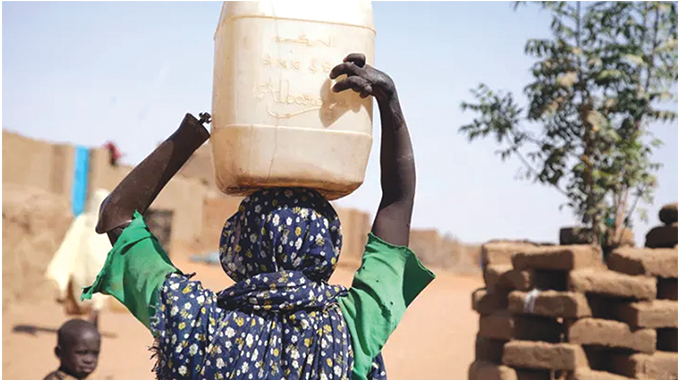
Andile Tshuma
FOR people with disabilities, gender based violence is often compounded by disability-based discrimination, and women are often more vulnerable. Women with disabilities are often considered weak, worthless and in some cases sub-human by their societies.
Because of such factors, women with disabilities face a heightened risk of domestic and sexual violence.
Protecting women and girls with disability must be made a global priority.
On Thursday the world marked the international day of people with disabilities, and it is important to note that this day falls within the 16 days of activism against gender-based violence. Women with disability are often more vulnerable to GBV.
It is unfortunate that a number of existing programmes meant to tackle gender-based violence do not take into account the unique dangers and challenges faced by women with disabilities. Without specific attention and solutions, these women have been left behind and at risk.
Development agencies, policymakers and power holders need to build into their programmes the right protection for women with disability. Such will require sustained global focus, momentum and action.
However, if society is serious sand fully committed to ‘‘leaving no one behind’’, then it has to be done.
An estimated one in five women in the world has a disability.
The intersectionality of GBV and discrimination of people with disability is glaring.
The intersection between disability and gender-based violence is of particular concern as some forms of violence against women with disability have remained invisible and have not been recognised as gender-based violence due to disability discrimination.
Women with disabilities around the world experience much higher levels of physical, sexual and psychological violence for longer periods of time and with worse physical and mental outcome as a consequence of violence than women without disabilities.
According to the working group on Violence against women with disabilities, the ‘‘Forgotten sisters’’ in 2016 cited that women with disabilities suffered an up to three times greater risk of rape and other forms of sexual violence as compared to their able-bodied peers.
Studies have also confirmed that women with disability often experience much higher levels of family violence.
They are much more likely to be insulted, especially about their disability. They are made to feel bad about themselves, belittled, intimidated and subjected to physical and sexual violence even by their own family members.
Women with disabilities also fall victim to violence at the hands of people who want to use them for ritual purposes.
Global data in gender-based violence against women with disabilities is limited, which in itself speaks to the global inertia on this crisis.
As a means of mitigating the risk of sexual violence, women with disabilities need to have their own means of independence.
Women with disabilities are often seen as an unproductive burden and therefore considered sub-human, useless and deserving abuse. This violence has debilitating physical and emotional effects on women. It can render them unable to hold on to land and other assets for livelihood activities.
The increasing economic independence of women and girls with disabilities increases their status as contributing and productive family members and reduces incidences of violence, while giving them the means to leave abusive homes and provide for themselves.
Women with disabilities face increased vulnerability to violence in daily life.
Poor sanitation facilities pose an increased risk to women with disabilities. In rural set ups, walking distances to school and to fetch water exposes women and girls to sexual violence and some girls with disabilities may be withdrawn from school because it is too far and there is no dedicated person who can take them to school and back.
Caregivers may also have to leave people with disabilities at home due to the need to continue with livelihood activities to fend for families. The women and girls with disabilities are more vulnerable when left unsupervised and unprotected.
Policymakers must ensure that schools go beyond the wheelchair ramps to making schools disability friendly, but must ensure that schools have teachers and special staff that is able to take care of the acute needs of learners with disabilities, such as those that may need assistance in going to the toilet or eating.
Schools must also be safe havens for learners with disabilities and ensure that they are protected from bullying and mockery because of their disability.
People with disabilities must also be taught and encouraged to report any forms of abuse and efforts must be made to enlighten them about their rights.
People with disability often have very low self-esteem, it is the duty of those around them to cheer them up and help boost their confidence and self-esteem.
Due to fear of being abandoned, having their children taken away, losing financial support and care, may women and girls with disabilities may not report abuse, therefore stronger support systems are needed to ensure that they have people that care around them and can report abusers anytime.
Persons with disabilities are often perceived as asexual, and this increases their risk to sexual violence owing to societal myths about sex with virgins such as those that believe it will cure diseases such as HIV.
Due to myths that they are asexual, they are also denied the opportunity to access sexual reproductive health services as it is deemed unlikely that they may have a sex life.
This increases their risk of getting infected with HIV and having unwanted pregnancies.
It takes a whole community to ensure that people with disabilities live their lives fully without fear, without discrimination and without stigma. It also takes the community to ensure they are protected from all forms of violence.
Raising awareness about the rights of people with disabilities and fighting discrimination must not be just a 3 December affair but must go on all year round. — @andile_tshuma


 Online Reporter