admin
admin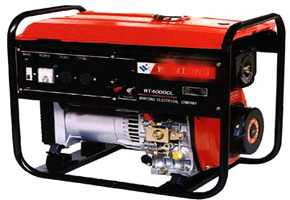
Commenting on an outcry by residents that the generators were damaging their electrical appliances, electronic engineering experts from the National University of Science and Technology (Nust) said the generators were not necessarily for ironing and cooking purposes.
“What causes these generators to result in faults is that people tend to overload them with stoves and irons, but most of them are not for ironing and cooking purposes,” said an electronic engineering lecturer, Mr Zedekia Nyathi.
He said in the event that members of the public use the generators, they should ensure that they operate them properly.
“They should adjust the frequency depending on the voltage of that particular appliance. It has to be set on the right frequency.
“Some appliances are sensitive to high or low frequencies, but in most cases appliances are more sensitive to high frequencies,” said Mr Nyathi.
He said most electronic appliances have internal circuits that regulate voltage and should the voltage go down it regulates it to the required voltage.
“When voltage is up it does the same, but as this carries on, the circuit might stop working resulting in the damaging of property,” said Mr Nyathi.
Another electronic engineering lecturer Mr Reginald Gonye, also from Nust, said members of the public should avoid overloading the generators with a lot of appliances.
“People should avoid loading the appliances before they start the generator because that puts more pressure on it.
“They should start it and then gradually load the appliances,” said Mr Gonye.
He urged the public to pay attention to the sound of the generator when it is running, as it could indicate when something goes wrong. “They should practise proper operation of the generator by making use of the throttle, which enables them to adjust voltage,” said Mr Gonye.
He said generators with larger ratings were more stable while smaller ones were prone to damage.



 Online Reporter