Online Reporter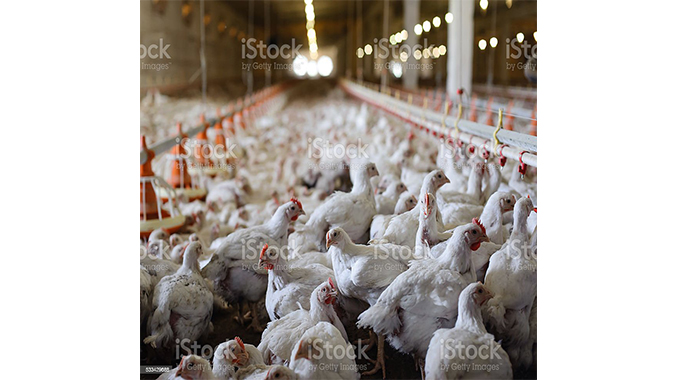
Talking Farming Ronald Veremu
ZIMBABWE’S poultry industry continues to be one of the fastest-growing agricultural subsectors, providing employment, income, and an affordable source of protein for millions of households.
From small-scale backyard producers to large commercial operations, broiler production has become an attractive enterprise due to its relatively short production cycle and strong market demand.
However, while many farmers focus on sourcing quality day-old chicks, feed, and vaccines, one critical factor is often underestimated: housing.
Experience has shown that the success or failure of a broiler project frequently begins with the quality of the poultry house. Even the best genetics and feeding programmes cannot compensate for poorly designed housing.
Proper broiler housing provides the environment necessary for birds to achieve their genetic growth potential while minimizing disease outbreaks, mortalities, and production losses.
A broiler house is more than just a shelter.
It is a controlled environment designed to protect birds from harsh weather conditions, predators, pests, and disease-causing organism.
Good housing contributes to, faster growth rates, improved feed conversion efficiency, lower mortality rates, better bird welfare, reduced disease incidence and higher profitability.
Poor housing, on the other hand, often results in overcrowding, heat stress, respiratory diseases, wet litter problems, poor weight gains, and significant financial losses.
For Zimbabwean poultry farmers operating under increasingly unpredictable climatic conditions, investing in proper housing is no longer optional, it is essential.
One of the first considerations when constructing a broiler house is orientation. Livestock specialists recommend that broiler houses should be aligned east to west. This orientation minimizes direct sunlight entering the poultry house during the day.
In Zimbabwe, temperatures can rise significantly, particularly during the hot summer months. When direct sunlight penetrates the poultry house, it increases internal temperatures, causing heat stress among birds.
Heat-stressed birds typically reduce feed intake, increase water consumption, and grow more slowly, become more susceptible to disease, and experience higher mortality rates.
An east-to-west orientation helps maintain a more comfortable environment and supports optimal bird performance throughout the production cycle.
The durability and hygiene of a broiler house depend largely on the construction materials used.
Farmers should construct poultry houses using standard bricks or concrete blocks. These materials provide strength, durability, and protection against weather conditions. Importantly, all walls should be properly plastered.
Plastered walls eliminate cracks and crevices that often serve as hiding places for pests and disease vectors such as red mites, lice, cockroaches, rodents and other harmful insects. Smooth plastered surfaces also make cleaning and disinfection easier between production cycles, improving overall biosecurity.
The poultry house floor is another critical component of broiler management. Floors should ideally be smooth, durable, washable and easy to disinfect.
Concrete floors are generally preferred because they can be thoroughly cleaned and sanitized after each production cycle.
A smooth floor reduces the accumulation of dirt and pathogens while making litter management easier. Proper floor construction also helps prevent moisture seepage, which can create conditions favourable for disease outbreaks and poor litter quality.
Biosecurity remains one of the most important pillars of successful poultry production. Wild birds and rodents are among the leading carriers of poultry diseases.
They can introduce pathogens that cause devastating outbreaks capable of wiping out an entire flock. For this reason, poultry houses should be fitted with chick mash wire or suitable wire mesh.
Proper wire screening prevents wild birds from entering, rodents from accessing feed, predators from attacking birds and unwanted contamination of water and feed.
Rodents not only spread diseases but also consume significant quantities of feed, reducing profitability.
A well-secured poultry house is therefore one of the most effective disease prevention measures available to farmers.
The size of a broiler house should always be determined by the number of birds the farmer intends to raise.
Overcrowding is one of the most common mistakes in poultry production. When birds are kept at excessively high stocking densities, competition for feed and water increases, ventilation becomes inadequate, and disease transmission accelerates.
As a general guideline, one square metre can comfortably accommodate ten broiler birds under normal management conditions.
This means 100 birds require approximately 10 square metres, 500 birds require approximately 50 square metres or 1,000 birds require approximately 100 square metres. Providing adequate floor space improves bird comfort, growth performance, and overall flock health.
Farmers planning expansion should design houses that allow for future increases in production while maintaining recommended stocking densities.
In commercial poultry production, the width of a standard broiler house is often maintained at approximately 10 metres, while the length can vary depending on production capacity. Commercial houses may extend up to 100 metres in length or more.
Maintaining a manageable width is important because it facilitates better ventilation, easier temperature control, uniform feed distribution and efficient management of birds.
Very wide houses often experience ventilation challenges, resulting in uneven temperatures and increased disease risks.
The roof plays a vital role in protecting birds from rain, excessive heat, and temperature fluctuations. A properly designed roof should effectively channel rainwater away from the structure without allowing water to leak or drip into the poultry house.
Among the various roofing designs available, the gable roof is generally preferred for broiler production.
A well-designed gable roof offers several advantages: efficient drainage of rainwater, improved air circulation, reduced heat accumulation and greater structural durability.
Water leaks inside poultry houses create wet litter conditions that can lead to respiratory diseases, ammonia build-up, footpad lesions, and reduced bird performance. Regular roof inspections should therefore form part of routine farm maintenance.
While often overlooked, ventilation is one of the most important aspects of broiler housing. Good ventilation helps remove excess heat, moisture, dust and harmful gases such as ammonia. Poorly ventilated houses create stressful conditions that reduce growth rates and increase disease susceptibility.
Open-sided poultry houses fitted with wire mesh and curtains are commonly used in Zimbabwe because they provide flexibility during different weather conditions. During cold weather, curtains can be lowered to conserve heat.
During hot periods, they can be raised to improve airflow.
Many poultry farmers focus heavily on feed costs because feed accounts for the largest proportion of production expenses.
However, poor housing often increases feed costs indirectly by reducing feed efficiency and increasing mortality.
A well-designed broiler house creates the conditions necessary for birds to convert feed into meat efficiently. This translates into faster growth, lower losses, better market weights, and higher profits.
As Zimbabwe’s poultry sector continues to expand, farmers who invest in proper housing infrastructure will be better positioned to achieve sustainable success.
Housing should therefore be viewed not as an expense, but as a long-term investment in productivity, biosecurity, and profitability. The foundation of a successful broiler enterprise is not laid when the chicks arrive, it is laid when the poultry house is properly designed and constructed.
Ronald Veremu is an independent livestock and agriculture development specialist. He writes in his own capacity.
Feedback: [email protected]
Cell: +263 772 898 722