Online Reporter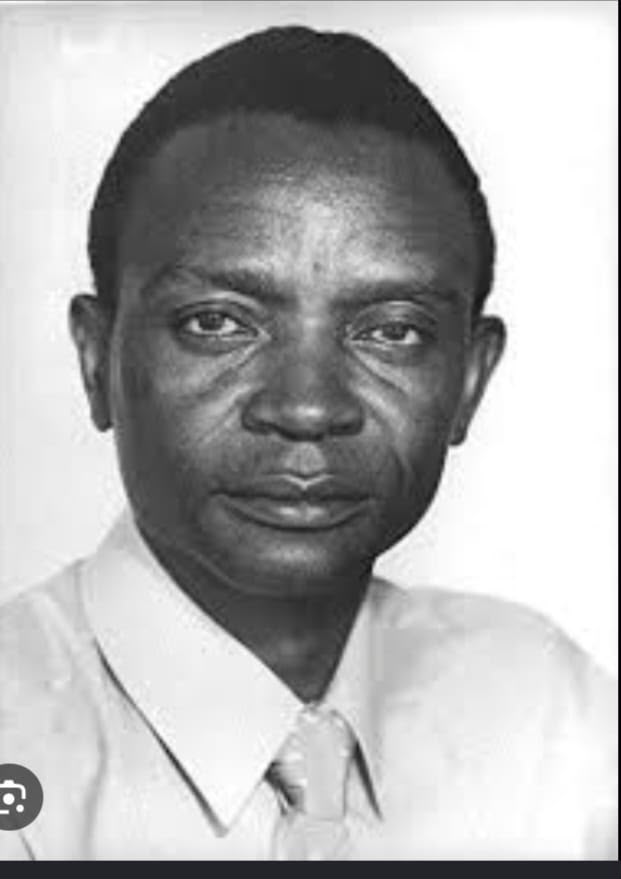
Gibson Mhaka Zimpapers Politics Hub
EVERY year, as the nation pauses on Heroes’ Day to honour the gallant sons and daughters who secured Zimbabwe’s independence, public attention naturally turns to the commanders, military strategists and frontline fighters who confronted the settler-colonial army.
In the national consciousness, the liberation struggle is largely defined by the rifle, the battlefield and the decisive military campaigns that ultimately delivered freedom.
Yet, alongside those who bore arms was another group that fought a quieter, but equally decisive, battle.
Every injured guerrilla who survived an ambush to fight another day, every mother who safely delivered a child in a refugee camp, every child protected against disease and every fighter treated for malaria in the harsh terrain of the Zambezi Valley and beyond formed part of a medical struggle that deserves equal recognition.
While guns confronted the colonial army on the battlefield, medical personnel ensured that wounded freedom fighters returned to the front, epidemics were contained in sprawling refugee camps and thousands of civilians survived the brutal realities of war.
Without this medical infrastructure, Zimbabwe’s liberation struggle would have been severely weakened, if not crippled altogether. Healthcare was not merely a humanitarian service during the liberation war; it was a strategic weapon that sustained the fight for freedom.
Healthcare as a strategic weapon
The liberation struggle was fought on more than one front. Beyond the exchange of gunfire lay another equally important battle — the struggle to preserve life.
Every wounded combatant who recovered to rejoin the front, every civilian treated for disease and every refugee protected from deadly epidemics represented a victory that strengthened the liberation movement.
An organised medical corps had a direct bearing on the effectiveness of military operations.
A guerrilla fighter who knew that treatment and evacuation were available in the event of injury fought with greater confidence.
Access to healthcare strengthened morale, encouraged recruitment and improved survival rates, allowing experienced combatants to recover and continue participating in military operations.
Equally important, the availability of medical services reassured rural communities that the liberation movements cared not only for their fighters but also for civilians caught in the crossfire.
In many instances, medical assistance became one of the strongest bonds between the liberation forces and the masses who supported them.
Healthcare therefore became an integral component of military strategy, sustaining operational readiness while reinforcing the confidence of the people in the liberation cause.
The liberation war also created an unprecedented humanitarian crisis.
Medical teams were confronted with gunshot wounds, landmine injuries, severe burns, fractures, malnutrition, cholera, malaria, tuberculosis and psychological trauma resulting from relentless aerial bombardments and ground attacks by the Rhodesian security forces.
Working under constant threat, often with limited medicines, rudimentary equipment and makeshift operating facilities, liberation medics displayed extraordinary ingenuity and resilience in keeping thousands alive.
The birth of liberation medicine
Out of these harsh conditions emerged a sophisticated liberation medical system. Both the Zimbabwe African National Liberation Army (ZANLA) and the Zimbabwe People’s Revolutionary Army (ZIPRA) developed organised medical services that evolved from rudimentary first-aid units into structured healthcare networks capable of supporting large numbers of fighters and civilians.
These systems included concealed field clinics hidden in mountains and forests, mobile medical units that moved with combatants, underground treatment centres within liberated zones and carefully coordinated casualty evacuation systems.
These facilities became lifelines for injured fighters and displaced civilians alike.
Neighbouring Frontline States, principally Mozambique, Zambia, Tanzania and Angola, became indispensable centres for medical training, specialist treatment and rehabilitation.
It was in these countries that many liberation cadres received medical instruction while seriously injured fighters underwent surgery before returning to the struggle.
These rear bases became extensions of the liberation battlefield, demonstrating that victory depended as much on healing as it did on military engagements.
Women: The backbone of the medical front
Women formed the backbone of the liberation movement’s medical services.
As nurses, midwives, medical assistants and first-aid instructors, thousands of young women assumed enormous responsibilities under extremely dangerous conditions.
Many combined military and medical duties without hesitation.
They carried weapons alongside medical kits, treated wounded combatants under enemy fire, delivered babies in makeshift maternity wards and cared for the sick in hidden bush hospitals.
Their contribution went far beyond clinical care.
They provided emotional support to traumatised fighters, comforted displaced families and helped sustain the morale of liberation camps. Their courage demonstrated that the struggle for
independence demanded not only military bravery but also compassion, endurance and selfless service.
Traditional medicine: An overlooked frontline
Another often overlooked pillar of liberation medicine was traditional healing.
Long before regular supplies of modern pharmaceuticals reached the frontlines, indigenous medical knowledge provided essential healthcare.
Traditional healers supplied herbal remedies for wounds, pain management, fever and other tropical illnesses that afflicted fighters operating in difficult terrain.
Beyond healthcare, indigenous knowledge also contributed to camouflage, survival skills and intelligence gathering.
Traditional healers worked closely with rural communities, many of whom provided safe houses, food and information on enemy movements.
Their contribution became part of a broader community resistance that enabled liberation fighters to survive in hostile environments.
Refugee camps: Centres of resilience
The medical struggle reached its greatest test in refugee camps such as Chimoio and Nyadzonia in Mozambique, as well as Freedom Camp, Mkushi and Victory Camp in Zambia.
These camps sheltered thousands of refugees, including women, children and the elderly who had fled colonial violence.
Overcrowding, poor sanitation and limited resources created conditions in which cholera, malaria, tuberculosis and malnutrition could spread rapidly.
Medical teams worked around the clock to prevent epidemics while providing maternal healthcare, childhood immunisation, emergency surgery and nutritional support.
Their work became even more demanding following devastating air raids by the Rhodesian security forces, which transformed medical centres into emergency theatres where doctors, nurses and medical assistants treated severe burns, blast injuries and multiple trauma cases under extremely difficult conditions.
Despite these challenges, the camps remained symbols of resilience, hope and the determination of the Zimbabwean people to continue the struggle.
International solidarity and medical leadership
The liberation movement’s medical capacity was further strengthened through international solidarity.
Countries such as Cuba, the Soviet Union, China and several Scandinavian nations, together with humanitarian organisations linked to the World Health Organisation, provided medicines, equipment, scholarships and specialised training for Zimbabwean medical personnel.
International doctors and volunteers also shared their expertise, helping strengthen the liberation movement’s healthcare capacity.
This international support complemented the commitment of pioneering black Zimbabwean doctors who abandoned the comfort of successful professional careers to serve the liberation cause.
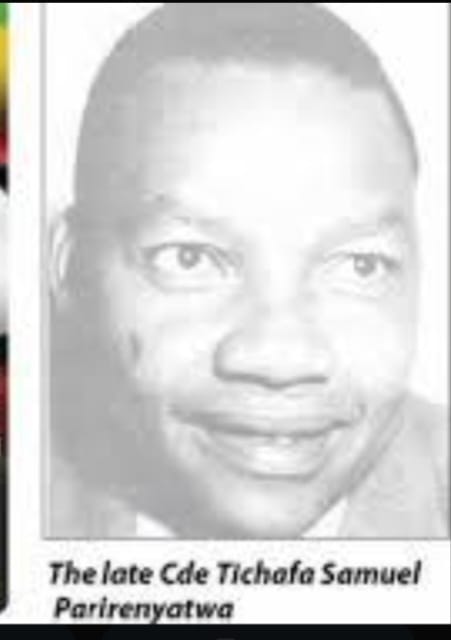
The first black Zimbabwean doctor, Dr Tichafa Samuel Parirenyatwa, was among the earliest medical pioneers to combine professional excellence with a commitment to social change. After graduating with a Bachelor of Science Degree in Hygiene from Fort Hare University in 1950, he proceeded to study medicine at the University of the Witwatersrand.
Although he was studying on a bursary, supplemented by financial assistance from an American benefactor who supported his upkeep, his journey was not without challenges.
At one stage, his bursary was revoked because of his involvement in student political activism and his association with the Youth League of the South African National Congress.
After qualifying as a doctor, Dr Parirenyatwa began working at the Old African Hospital in then Salisbury before moving to Harare Hospital when it opened. He was later appointed Government Medical Officer.
He also worked at Antelope Mine in Matabeleland, where he faced the difficult task of winning over white patients who were sceptical about being treated by a black doctor. However, through professionalism and dedication, he overcame those prejudices and earned their trust.
When he eventually left public service to establish a private practice, his popularity continued to grow. He attracted many patients at his surgeries in Highfield and along Kingsway (now Julius Nyerere Way).
Despite the demands of running a private practice, Dr Parirenyatwa continued to serve in various capacities, including sitting on the Selection Committee responsible for the further training of nurses. He later became vice-president of ZAPU when the party was formed.
However, his promising career in both medicine and politics was cut short when he died in 1962 at the age of 36.
Dr Herbert Ushewokunze was another foremost pioneer who made significant contributions to Zimbabwe’s medical history and liberation struggle.
Beyond establishing community clinics and advocating for the integration of traditional medicine into mainstream healthcare, Dr Ushewokunze played a leading role in commanding the ZANLA
Medical Corps. He helped establish an organised medical service capable of supporting liberation fighters both inside and outside the country.
Working alongside him were Dr Sydney Sekeramayi and Dr Felix Muchemwa, who played pivotal roles in developing ZANLA’s medical infrastructure in Mozambique.
Having completed his medical studies at the University of Birmingham after being expelled from the University of Rhodesia because of his anti-colonial activism, Dr Muchemwa chose to abandon the prospect of a comfortable career abroad to treat wounded freedom fighters in the bush.
Dr Simon Mazorodze also made an immense contribution.
Operating from Fort Victoria, now Masvingo, and later through private practice, he secretly channelled medicines, medical supplies and financial assistance to liberation fighters despite repeated arrests and constant surveillance by Rhodesian security forces.
These pioneering doctors rejected the privileges associated with their professional status.
Instead, they established field hospitals, trained liberation medics, treated wounded combatants under dangerous conditions and risked imprisonment and even death in pursuit of Zimbabwe’s freedom.
A lasting legacy
Following the attainment of independence in 1980, many veterans of the liberation medical corps became architects of Zimbabwe’s post-colonial health system.
Their wartime experience in resource-constrained environments informed the country’s primary healthcare strategy, the expansion of rural health services, emergency medicine, nursing education and public health programmes that continue to benefit millions of Zimbabweans today.
Their legacy remains highly relevant. Zimbabwe’s healthcare professionals continue to serve under immense pressure, responding to disease outbreaks, pandemics, natural disasters and economic challenges with the same resilience, innovation and commitment that characterised the liberation struggle.
As the nation commemorates Heroes’ Day, the story of Zimbabwe’s liberation must be told in its entirety.
National honour belongs not only to those who carried rifles into battle, but also to the doctors, nurses, field medics, traditional healers, midwives and medical assistants who fought with stethoscopes, bandages, scalpels and indigenous knowledge.
Their healing hands sustained the liberation struggle, preserved the fighting strength of the liberation forces, protected vulnerable communities and ensured that the march to independence never lost its heartbeat.
In remembering these often-overlooked heroes and heroines, Zimbabwe pays tribute to a generation that proved that medicine, like the rifle, was an indispensable weapon in the struggle for freedom.