admin
admin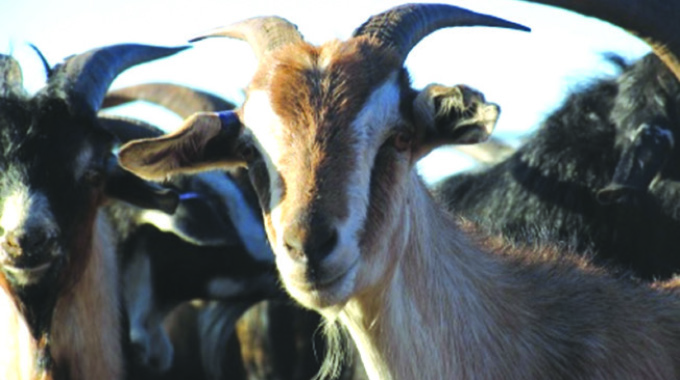
Lyn Munjanja recently in Chimanimani
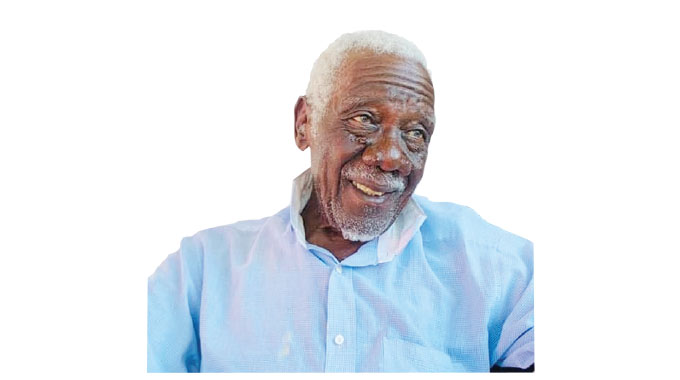
For Tinowota Karakadzai, a farmer from the Saurombe area of Chimanimani which was hardest hit by Cyclone Idai some three years ago, goats are his most reliable livelihood insurance.
To him, goats are the most reliable source of earning a living and for recovery from the devastating impact of the cyclone.
For the people in this area, he says, goat rearing has some major advantages — “A goat has everything a person in emergency needs. You do not need much investment and has better returns as you can easily trade it to get money.”
Karakadzai says goats can survive in harsh environments and can breed more quickly and thrive in drought prone areas.
“They are able to conceive and breed twice a year,” he says. “Most of the time they give birth to twins, sometimes to triplets or quadruplets. This is why I think they are good for our recovery from the cyclone.”
Karakadzai was one of the many farmers who benefited from the Zimbabwe Idai Recovery Project (ZIRP) — a multi-sectoral project designed to help farmers respond to the devastation that was caused by Cyclone Idai.
When he received goats that were distributed to them by the Food and Agriculture Organisation recently, he was overjoyed. The goat distribution programme was targeting farmers who were affected by Cyclone Idai in 2019.
“I am very happy I received these goats because I am going to breed them and sell them when they multiply,” Karakadzai says. “This will help me in the upkeep of my family. I am grateful to the FAO for helping us. They have made our burden lighter.”
Livestock is an important source of livelihood contributing to household income, employment and nutritional security.
The project is funded by the World Bank and is multi sectoral and FAO is leading the agricultural and livelihood response.
The goal of the ZIRP is not simply to restore what was lost, but to help build community resilience to shocks that can come with climate change.
ZIRP started in 2019 and has supported various activities to support the restoration of crop production, livestock production and rehabilitation of irrigation schemes.
FAO has supported a number of activities including distribution of seeds and fertiliser, establishing community vegetable gardens, provision of supplementary stock feed, production of fodder crops, vaccination and treatment of cattle and goats, provision of dipping chemicals as well as the rehabilitation of dip tanks and irrigation.
FAO is implementing ZIRP with the objectives to restore livestock production and productivity through provision of livestock inputs (goats and chickens) in four cyclone affected districts.
In particular, FAO managed to procure 1 500 goats (1 000 does and 500 bucks) that were distributed to 500 stock owners (224 females and 276 males) or beneficiaries in Chipinge and Chimanimani districts.
FAO distributed goats because of their lower cost and to improve household nutrition.
In addition, small ruminants such as goats are an important source of income for smallholder farmers as they may be kept as a stepping stone to owning larger and higher-value animals such as cattle.
They can also provide a more-profitable and less-risky alternative in marginal or densely populated areas where access to feed resources are limited.
Chief Raymond Saurombe expressed gratitude on behalf of his community.
“We would like to thank United Nations because most farmers lost their sources of livelihoods during Cyclone Idai,” he said. “We welcome the donation which has replaced the goats that we lost during Cyclone Idai and we are very happy.
“If they are well maintained they will be good for business and will help families in their upkeep.”
Each family was given three goats which consisted of one male and two females.
Farmer Stella Mutasa who was struggling to contain her goats was excited about the goats she got.
“I would like to thank God for remembering me during this difficult time,” he said. “I am one of the people who was affected by cyclone Idai. I lost all my livestock. I did not even know where to start because I literally had nothing after the disaster.
“I am going to breed these goats. I pray that everything works according to plan so that I start off a business so that I can survive.”
The damage caused by the cyclone was massive.
Crop fields were flooded, resulting in total loss of crops for many households. Stored grain and agricultural inputs were destroyed while livestock were lost including homes and other infrastructure.
“It was therefore important to help the farmers re-establish their production capacity,” said assistant FAO representative — programmes Constance Pepukai.
“The goat restocking exercise is supporting 500 households that lost their livestock as a result of the cyclone. We are pleased and excited about the impact that this intervention will have on the livelihood of the targeted farmers.
“These households will realize improved goat production, improved income generating capacity and greater prospects for household dietary diversity.”
The farmers received training and extension support to ensure good management and viability in goat production.
The intervention through ZIRP will contribute to the attainment of the National Development Strategy 1 goals and global UN goals that aim to build a more efficient, inclusive, resilient and sustainable agri-food systems for better production, nutrition, environment and a better quality of life.
Zimbabwe and most other Southern Africa have not been spared from weather-related disasters.
The region is now experiencing an average or above-average number of tropical cyclones every season.
Tropical Cyclone Idai, the worst in more than 50 years, brought heavy rainfall and strong winds to Malawi, Mozambique and Zimbabwe between March 5 and 19 2019, causing severe flooding which led to loss of lives, destruction of infrastructure, disruption of livelihoods and destruction of crops.
The cyclone affected four provinces in Zimbabwe namely, Manicaland, Masvingo, Midlands and Mashonaland East.
It also affected more than 270 000 people leaving 341 dead and many others missing.
A total of 17 608 households were left homeless, 12 health facilities damaged, water, sanitation and hygiene infrastructure were damaged, 139 schools were affected, 33 primary schools and 10 secondary schools were temporarily closed and 9 084 learners were affected.
In agriculture, more than 50 percent of land under maize crop, banana plantation and tubers like yams was wiped away while 18 irrigation schemes were affected.
At least 362 cattle and 514 goats and sheep, 17 000 chickens were lost whilst 86 dipping facilities were damaged.
Road infrastructure was grossly damaged, with above 90 percent of road networks in Chimanimani and Chipinge destroyed and 584 kilometres of roads being damaged by landslides.
Bridges were also swept away.



 Online Reporter