Online Reporter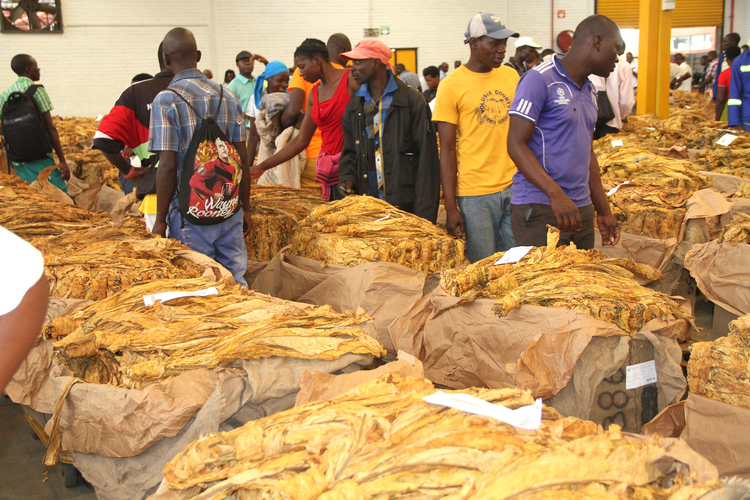
Lovemore Kadzura
Post Reporter
AS the tobacco marketing season gathers pace, excitement among farmers has quickly given way to frustration, as auction floors deliver prices far below expectations.
For months, growers laboured in their fields—preparing, planting, and curing the golden leaf. Yet the selling season is now marked by returns that fail to keep up with soaring production costs.
“I expected better,” said Mrs Mavis Makoni, a farmer from Nyazura, after delivering her crop to the Rusape auction floor.
“Inputs such as fertiliser, chemicals, and labour are expensive. When the price is as low as US$1,20 for my best leaf, it feels like all the effort was for nothing.”
Tobacco remains one of the country’s most important export commodities and a vital source of income for hundreds of thousands of smallholder farmers. But growers say profitability is increasingly under threat.
At the auction floors, many complained that their bales were graded lower than anticipated, automatically reducing the price offered.
Others voiced concern over inconsistencies, noting that similar-looking bales often fetched very different prices.
“Sometimes you see your tobacco classified as low grade, yet you know the quality is good. You feel powerless because once it is graded, there is little you can do,” said Mrs Makoni.
Farmers also point to the high cost of production as a major challenge. Inputs such as seed, fertiliser, chemicals, and fuel have risen sharply in recent years.
Many growers rely on contract arrangements to finance their operations, meaning a significant portion of their earnings goes towards repaying the loans.
Tobacco Farmers union Trust president, Mr Edward Dune, which represents mainly small-scale commercial farmers, said chances of farmers gaining profits are slim if the prices remain low.
He added that farmers must grow other commercial crops to augment tobacco and cushion themselves in times like this.
“Prices at the moment are very low, as some players failed to pitch up and participate in the auctioning. Since TIMB issued an ultimatum threatening to cancel their licences, there was a slight increase in prices being offered. The average price is US$2,80 compared to US$3,50 recorded last year. If the situation remains like this, then viability is eroded. We hope it will change if all buyers participate. We are urging farmers to deal with companies that are paying relatively well and turn down low offers.
“If the price is low, we remain with almost nothing after paying back the contractors. We worked the whole season, but the profits are very small.
‘‘They are talking of oversupply on the market, but the majority of the crop is contracted, which means the contractor already had a market. So the issue of oversupply and quality are not at play when it comes to pricing. The Tobacco Value Chain Transformation Plan encourages farmers to diversify and build resilience by entering into other crops which are viable to complement tobacco. Agriculture is not just about tobacco only; we need to identify other crops,” said Mr Dune.
Industry experts say the price of tobacco is influenced by several factors, including global demand, leaf quality, and competition among buyers.
‘‘When international prices fluctuate, the effects are often felt directly by farmers at the auction floors.
Despite the frustrations, most farmers say they have market.
Days before the opening of the auction floors, Tobacco Industry and Marketing Board (TIMB) announced that there is oversupply of the product on the market, which will affect pricing.
However, this week it said prices are firming as buyers who were not participating are now active on the floors.
“The Tobacco Industry and Marketing Board (TIMB) wishes to advise tobacco growers and all stakeholders that tobacco pricing on the market is beginning to stabilise, with increased buyer participation driving improved competition across the floors.
‘‘ Following earlier adjustments in the opening phase of the season, tobacco is now being purchased at a good price. Growers are encouraged to continue delivering well-graded and properly presented tobacco to maximise returns. Tobacco prices at auction floors are determined through transparent open bidding by multiple buyers competing for the crop in the presence of farmers and other stakeholders.
“Individual prices may vary depending on factors such as grade, quality and presentation of the leaf. This is why we emphasise that growers should produce good quality tobacco, properly grade it and present it for sale. Tobacco growers who are not satisfied with the price offered have the right to withdraw their tobacco and choose to offer it for sale later in the day or on another selling day in pursuit of a better price. Know your rights at the tobacco sales floors,” said TIMB on its social media sites this week.
As the marketing season continues, farmers say they remain hopeful that prices will improve for the rest of the crop still waiting to be sold.
But for many, the early experience at the auction floors has already raised concerns about whether the season will deliver the returns they had hoped for.
For now, growers say they will keep bringing their tobacco to market, even as they call for fairer prices that better reflect the effort behind every bale.