Online Reporter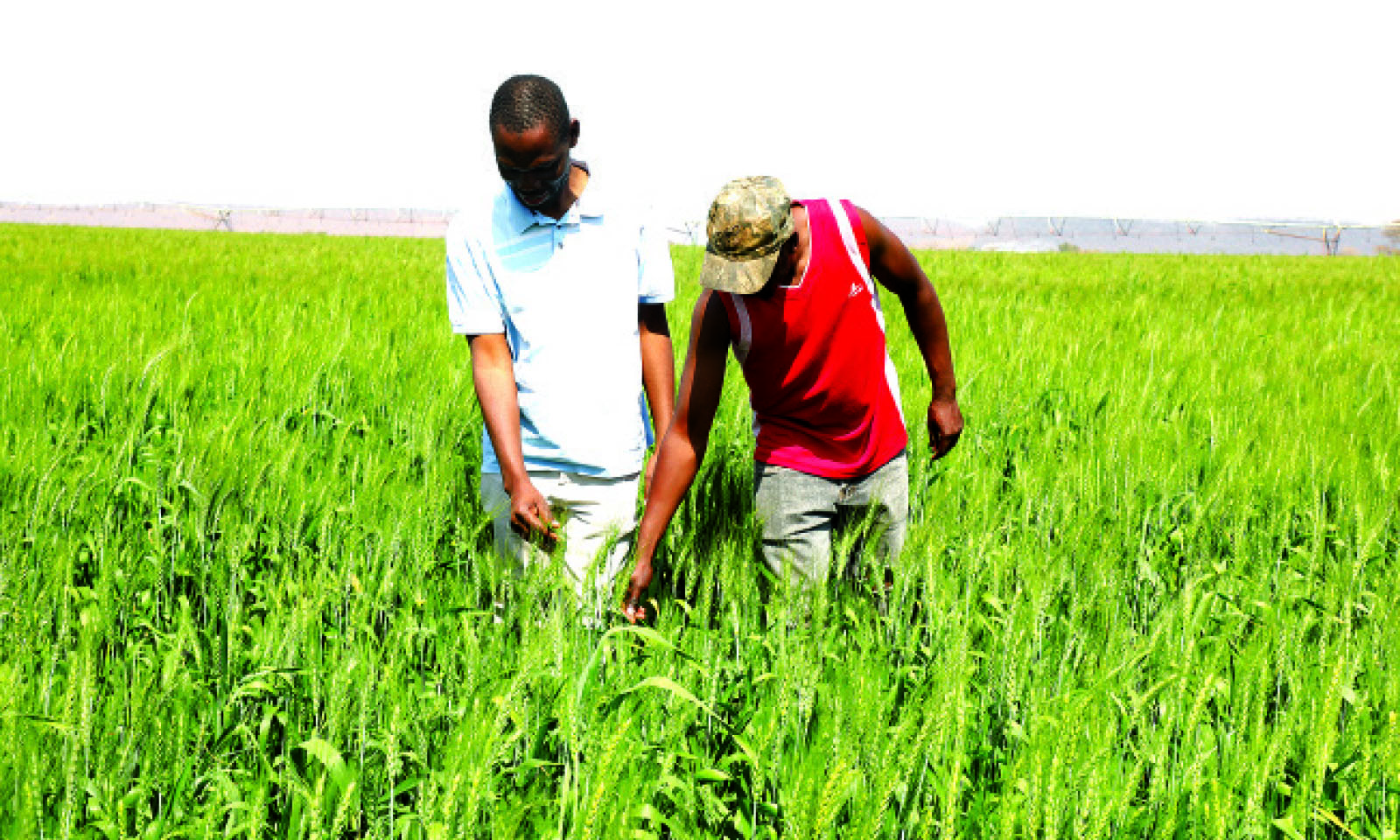
Theseus Shambare
FARMERS have begun harvesting wheat across the country.
This season’s output could turn out to be the most remarkable to date.
Improved agronomic practices and mechanisation over the years, careful planning and timely support from stakeholders have made all the difference.
Early harvests are averaging 6,1 tonnes per hectare, up from 5,6 tonnes in 2024 and 4,8 tonnes in 2023.The country’s previous record in 2016 stood at around four tonnes per hectare (ha).
From 1969 to 1999, national yields averaged just 2,5 tonnes per ha, with a peak of 3,25 tonnes in 1990.The current yields — more than double the long-term average — underscore the effectiveness of good preparations, timely irrigation, mechanisation clusters, strategic pest and fire management, and sustained electricity supply.
Overall, this has positioned Zimbabwe on a path towards sustained wheat self-sufficiency. This year’s harvest is projected to rise to a record 600 000 tonnes, which is significantly above the national annual requirement of 360 000 tonnes.
Farmers planted 122 566ha of the cereal this season, surpassing last year’s 116 000ha.This represents an increase of 5 percent year-on-year.
With continued surpluses, Zimbabwe is now well on its way to become a wheat exporter. Planning
The Agricultural and Rural Development Authority (Arda) has been able to support farmers with inputs and mechanisation, and link them to markets, while launching a credit scheme to support production. The Presidential Input Support Programme also funded additional hectares of wheat, ensuring a steady pipeline of high-quality seed and fertiliser.
Meanwhile, the National Enhanced Agriculture Productivity Scheme, supported by banks that include AFC, CBZ and NMB, provided critical financing for commercial and smallholder farmers. To guarantee returns for farmers and stabilise the sector, the Grain Marketing Board (GMB) set a winter wheat incentive price of US$451,35 per tonne, allowing producers to plan confidently and focus on quality and efficiency.
To achieve these targets, the Government mobilised nearly 300 combine harvesters and 15 000 tractors, deploying them across 21 mechanisation clusters in key wheat-producing regions to ensure timely harvesting. Fireguards — a critical safeguard as the country enters the peak of its fire restriction season, which began on July 31 — were also created around fields.
Drones and aircraft have been working round the clock spraying quelea bird roosting sites, thus protecting crops from migratory pests that have historically destroyed thousands of hectares. President Mnangagwa recently provided 30 grain carriers — 20 for GMB and 10 for Arda — to facilitate smooth transport from farm to market.
Farmers have multiple options to sell their wheat, including contractors, the Zimbabwe Mercantile Exchange or warehouse receipt systems, allowing for better price discovery and financing. Water and electricity management played a pivotal role this season.
The Zimbabwe National Water Authority (Zinwa) ensured reliable irrigation supply for over 120 000ha of wheat, while the Zimbabwe Electricity Supply Authority (Zesa) maintained consistent electricity to power irrigation pumps, mechanisation hubs and processing facilities, effectively “ring-fencing” crops against environmental risks. Permanent Secretary in the Ministry of Lands, Agriculture, Fisheries, Water and Rural Development Professor Obert Jiri said mechanisation clusters were central to ensuring preparedness across all wheat-growing areas.
“All clusters are receiving combine harvesters and farmers in those clusters know where the harvester is and when they will get it,” he said.“We are really prepared to ensure the harvesting goes on smoothly and no wheat is lost.
“The crop outlook is already strong, with nearly 80 to 84 percent at the soft dough stage and the remaining 16 percent at late vegetative stage, pointing to a promising yield.”Harvesting is expected to peak in October, with farmers urged to harvest promptly to avoid post-maturity losses once rains begin.
Provincial progress
In the Midlands, Agricultural and Rural Development Advisory Services (ARDAS) provincial director Ms Busiso Mavankeni said good preparations were paying off.
“The wheat is looking very good. No power cuts, no water shortages and the cold spell in early August benefited the late-planted crop,” she said.“We planted 12 025 hectares against a target of 12 000 hectares, and we are now targeting eight tonnes per hectare, up from seven tonnes last year. Farmers remain vigilant against quelea birds, but combine harvesters are ready.”
In Masvingo, ARDAS provincial director Mr Caleb Mahoya confirmed 96 percent of the 5 000ha target was achieved.“Electricity has been stable except for brief cuts last week. With good agronomic practices we imparted to our farmers and support from Arda and banks for mechanisation, we are on the right path to higher yields. Pest control has been effective,” he said.
In Mashonaland Central, ARDAS acting provincial director Mr Misheck Chitikomere said 80 percent of the crop was in excellent condition.“The cold spell experienced earlier gave the crop a strong start, and we are expecting an average yield of 5,5 tonnes per hectare, up from 5,1 tonnes last year. Combine harvesters are sufficient from Government, banks and private players. No grain will be left to rot in the field,” he said.
In Matabeleland North — a province considered dryer — provincial director Mr Mkhunjulelwa Ndlovu said irrigation schemes had supported strong crop growth.“The crop is very good. We expect 4,5 tonnes per hectare on average, with the upper limit at seven tonnes. Water and electricity supply have been consistent, and quelea bird control has been effective,” he said.
Early harvestARDAS acting chief director Mr Leonard Munamati confirmed that harvesting had commenced on 758ha, with early yields of 6,1 tonnes per ha.
“We are on course to meet the national target of 600 000 tonnes. Farmers must prioritise efficiency in harvesting and seek combine harvesters promptly to avoid post-maturity losses,” he said.He urged farmers to remain alert for veld fires, noting that early deployment of machinery and support had boosted confidence among producers.
The authorities are also safeguarding the crop post-harvest with artificial intelligence (AI)-powered silos, a first in Zimbabwe. These facilities are equipped with smart sensors that monitor temperature, humidity and pest activity in real-time.
When conditions threaten grain quality, the system automatically activates aeration fans or fumigation, dramatically reducing post-harvest losses. Mr Munamati added that traditional silos lost up to 15 percent of grain, whereas AI systems have cut losses to below 3 percent.
“When you produce 600 000 tonnes, even a small percentage loss is significant. These systems are game-changers for our food security,” he said. Farmers are enthusiastic.
Ms Esther Makwara, a grower in Mazowe, said: “We used to worry that after harvesting, part of our crop would spoil in storage as we try to sun-dry our produce. With AI silos, we are sure our hard work will feed the nation, not weevils.”Regional and global context
Zimbabwe’s projected output of 600 000 tonnes surpasses many of its peers in the region.South Africa relies heavily on imports from Europe and North America.
Malawi produces about 70 000 tonnes from 25 00ha, while Zambia produces 100 000 tonnes — largely insufficient for domestic demand.By surpassing its national consumption needs, Zimbabwe can export soft wheat while strategically importing hard wheat for specialised bakery products, positioning the country as a regional grain hub.
Wheat breeder Mr Jairos Masawi has urged the Government to empower the Crop Breeding Institute to develop varieties tailored to Zimbabwe’s climate.“We have to move beyond soft winter wheat to varieties that can thrive in diverse agro-ecological zones and even explore summer wheat production,” he said.
Mr Masawi added that climate-resilient wheat varieties, combined with mechanisation and smart storage, could ensure year-round wheat production, reduce import reliance and strengthen the country’s export potential. He stressed that targeted investment in breeding, irrigation and mechanisation would transform the sector into a sustainable, high-yielding enterprise, securing livelihoods and national food security simultaneously.
The boost in wheat output could help stabilise flour prices, protect grain quality and position Zimbabwe as a key exporter of the cereal.