Chronicle Editor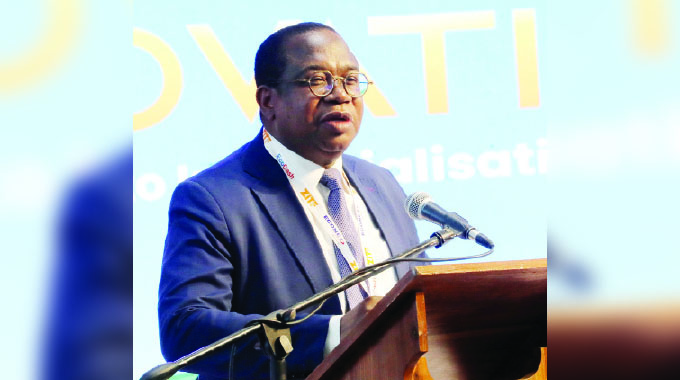
Nqobile Tshili, [email protected]
GOVERNMENT will draw resources from its international disaster insurance savings to support vulnerable households in need of food aid across the country following the El-Nino weather patterns, which crippled the harvest this season.
Finance, Economic Development and Investment Promotion Minister, Professor Mthuli Ncube, revealed this in an interview on the sidelines of an engagement with war veterans in Bulawayo on Sunday.
As the country is battling drought, he said all the necessary measures were being taken to ensure citizens do not feel the adverse effects of climate change.
Prof Ncube said President Mnangagwa’s declaration of the drought as a state of disaster has culminated in the international community pledging to support the country.
“Last year, we took insurance as Government, we bought some insurance abroad and that insurance has already written to us to say they are ready to release any payments, which we will use to support our vulnerable citizens,” said the minister.
“We took a disaster insurance, which entails insuring the performance or lack thereof of the agriculture output. Of course, it gets technical and those experts in it will work out what premiums we should be paying and have determined how much we are due for in terms of compensation for the drought.”
Prof Ncube said the Treasury was yet to finalise on the total amount that will be drawn from the disaster insurance but stated that the funds will see the Government offering cash transfers to vulnerable citizens.
“So, we will be finalising that very soon and then we will inform the nation as to which districts are likely to benefit from it,” he said.
“We cannot spread it all over the place. We have to target areas where things are not well to ensure citizens are protected through cash transfers and food gifts. It is yet to be confirmed and we will announce it formally to the public.”
Prof Ncube said the disaster insurance fund will complement other initiatives that have already been rolled out to ensure citizens are food secure during the drought period.
“This year, we had a drought and as Government we are taking measures to make sure that we deal with it. In our own budget we might have to do some re-allocations so that we can accommodate any need to import additional grain so that we can support our vulnerable citizens,” he said.
“We also opened up the borders so that those with free funds can import freely so that they can support our citizens and they have been importing. But also His Excellency (President Mnangagwa), declared a state of disaster regarding the agricultural season and that has enabled well-wishers to come forward and to support Zimbabwe.
“So, as you can see, it’s a package of members that we have taken to deal with the drought including some budgetary allocations and re-allocations.”
Prof Ncube said already the private sector is playing a key role in ensuring national food sufficiency through importing grain. On the currency issues, Prof Ncube challenged the former freedom fighters to support the Government’s initiatives to protect the new Zimbabwe Gold (ZiG) currency from economic saboteurs.
He said the Government was cognisant that some individuals were trying to manipulate the currency for selfish benefits.
“It’s not fair as Zimbabwean citizens that some among ourselves continue to degrade, and undermine the currency that everyone has fought hard for to make sure that we have a currency that is stable and eventually be the sole currency in time where we would say, we don’t need any other currency except our own.
“We will have to work hard to make sure it is stable and we call on citizens to protect the currency,” said Prof Ncube.
He said at least 70 individuals had been arrested countrywide for manipulating the currency while companies will be fined ZiG 200 000 for violating the exchange rate.
“We are going to be very strict, and vigilant as authorities to make sure that we can protect our currency. Over 70 people have been brought before the law so that they can face justice for undermining the currency and that should be a strong message,” said the minister.
“We have also introduced certain fines that when businesses deviate from using the willing buyer, willing seller rate as published by the Reserve Bank of Zimbabwe, they will be in violation of the law and again we will fine them ZiG 200 000 for that violation,” he said.
Prof Ncube said Government has already rebased the national budget into ZiG, but would not be drawn to shed more light on the figures.
“We have done that already and we are in the process of communicating with various ministries to alert them of those kind of changes,” he said.
“But really, in terms of what the new currency is able to purchase in terms of goods and services, it didn’t change much there is now stability and predictability and ministries will find it easier overtime to budget and plan carefully for any expenditures using the new currency.” @nqotshili


 Online Reporter