Chronicle Editor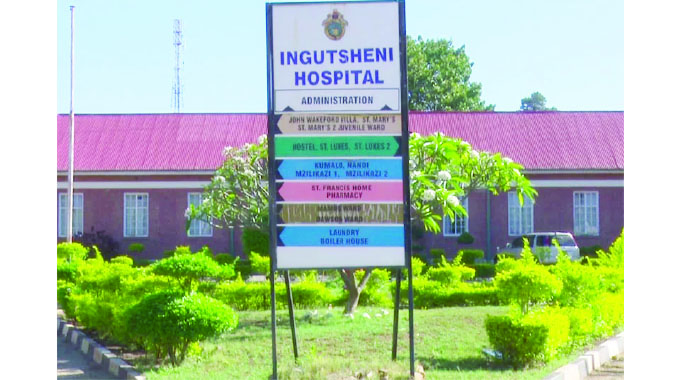
Raymond Jaravaza and Ashley Phiri, Chronicle Writers
ZIMBABWE is facing a shortage of mental health drugs, which is adversely affecting patients at the country’s largest mental health referral institution, Ingutsheni Hospital.
The Government is expecting delivery of the vital medicines by mid-October while also capacitating local manufacturers with the skills to produce the drugs to avert future shortages, a top Government official has said.
Deputy Minister of Health and Child Care, Sleiman Timios Kwidini, said this while responding to questions in Parliament from legislators who wanted to know what measures the Government was taking to deal with the mental health drug shortages.
“It is very true and we are aware, but I believe when we started having this problem as the Ministry (of Health and Child Care) and Government, we realised that most of these drugs are not locally manufactured. So, as we speak, those drugs are on their way from the manufacturers.
“The Government is now trying to capacitate local manufacturing companies so that the shortages of drugs will be reduced or eradicated. Currently, we have a huge consignment which is coming from our suppliers. So, to tell the truth, maybe by mid-October, all these shortages of drugs we are discussing here (in Parliament) will have greatly improved. With time, when these local companies have full manufacturing capacity with the assistance of the Government, all these shortages will be a thing of the past,” said Deputy Minister Kwidini.
Meanwhile, in a heart-wrenching incident, a young man’s life was cut short when he slit his throat with a kitchen knife in a gruesome suicide case in Entumbane suburb on Monday morning.

The deceased was identified by police as 27-year-old Lloyd Mabhena.
The late Mabhena’s mother, Ms Clara Sibanda, told Chronicle that her son was a recovering drug and substance abuser who was battling a mental health illness.
She recounted the last moments of her son’s life.
“The day that he committed suicide, I woke up and prepared for work as usual. When I was going to bath, Lloyd came to me and said he was not feeling well.
“I asked what was wrong and discovered that he had not been taking his medication because the pills were finished. I promised him that I would buy the pills without fail since I had settled our rent with the landlord.”
She was not ready for what she witnessed minutes later.
“When I came out of the bathroom, which is outside the house, the main door was locked and I knocked on the door a couple of times. I assumed that he had fallen asleep while I was bathing.
“I don’t even know how to describe the scene when we finally managed to gain entry to the house. There was blood everywhere and my son was lying on the floor next to the door. I can’t imagine how he inflicted such injuries on himself,” said the visibly shaken mother.
She blames the drug addiction for his death.
“My son started doing drugs during the Covid-19 pandemic. I did everything I could to help him, including taking him to Ingutsheni Hospital. The doctors prescribed medication for him and it was a constant struggle to find the US$25 monthly for the medication.
“I also engaged a therapist but the withdrawal symptoms were too much for him to handle when I couldn’t get the medication on time,” she said.
The distraught mother survives by selling clothes at a flea market and barely makes enough to take care of her other surviving son.
Bulawayo provincial police spokesperson, Inspector Abednico Ncube, confirmed the incident, saying it is very sad that a young life was lost in such a gruesome manner.
“As police, we are saddened by the loss of such a young life. This mentally ill young man committed suicide by slitting his throat with a kitchen knife after his mother told him she could not afford his medication. No one deserves to die in such a gruesome manner and at such a young age,” he said.



 Online Reporter