Online Reporter
Rutendo Nyeve, Victoria Falls Reporter
THE launch of the Regulatory Impact Assessment Dialogue has been scheduled for the second week of July.
The initiative is part of the Government’s ongoing efforts to improve the ease of doing business and unlock the country’s economic potential.
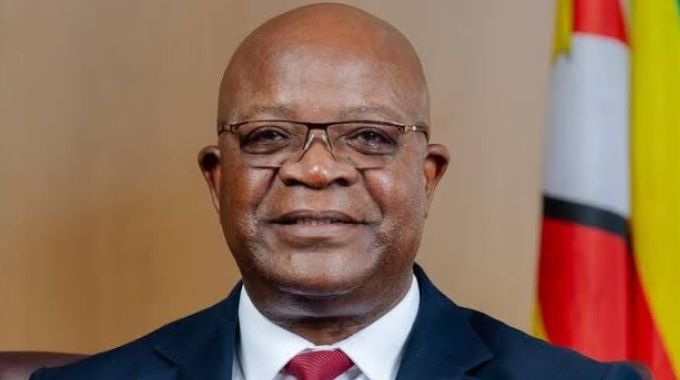
Vice-President Constantino Chiwenga, announced the launch during his keynote address at the Zimbabwe National Chamber of Commerce (ZNCC) Annual Congress in Victoria Falls last Thursday.
The Vice-President revealed this after the ZNCC president, Mr Tapiwa Karoro urged the Government to address the country’s cumbersome regulatory environment, which he described as a major barrier to business growth and investment.
Mr Karoro spoke on the need for streamlined policies to unlock Zimbabwe’s economic potential under the National Development Strategy 2 (NDS2).
However, the Vice-President reaffirmed the Second Republic’s unwavering commitment to sustaining macro-economic stability and creating a predictable, enabling environment for businesses.
He emphasised that the dialogue will serve as a critical platform for public-private consensus on reforms aimed at improving Zimbabwe’s investment climate.
VP Chiwenga highlighted the significance of the upcoming Regulatory Impact Assessment Dialogue, saying it aligns with President Mnangagwa’s directive to refine policies and remove bottlenecks hindering economic growth.
“In line with President Mnangagwa’s directive, Government has initiated a Regulatory Impact Assessment Dialogue, scheduled for the second week of July. This platform will enable public-private consensus on necessary reforms to further improve the ease of doing business and unlock latent economic potential,” said VP Chiwenga.
The dialogue is expected to address regulatory inefficiencies, streamline business processes and foster a more competitive economic landscape.
This initiative comes as the nation transitions from the National Development Strategy 1 (NDS1) to NDS2, a blueprint designed to consolidate the country’s economic transformation and achieve upper-middle-income status by 2030.
VP Chiwenga reiterated the Government’s resolve to maintain macroeconomic stability, citing encouraging progress in exchange rate discipline and rationalised pricing frameworks.
“The Second Republic remains unwavering in its commitment to sustaining macro-economic stability. Encouraging signs are already evident in exchange rate discipline and rationalised pricing frameworks. These developments position Zimbabwe as a more attractive and reliable investment destination,” he said.
The Vice-President also outlined ongoing reforms targeting liquidity management, inflation control and modernisation of public financial systems.
“Additionally, reforms targeting the management of liquidity, curbing inflationary pressures, and modernising public financial management are being aggressively pursued. Our focus is not only to stabilise but to stimulate high-impact, inclusive, more dynamic and sustainable growth,” he said.
VP Chiwenga stressed the importance of increased productivity and industrialisation in driving economic transformation.
“We are driving the ‘Manufacturing-for-Manufacturing’ initiative under the Ministry of Industry and Commerce, aimed at increasing local content and import substitution. This approach will fortify our industrial base and reduce supply-side vulnerabilities,” he said.
He urged stakeholders to uphold transparency, corporate governance, and ethical business practices, describing these values as non-negotiable for long-term prosperity.
“As we deepen public-private partnerships and catalyse economic growth, we must decisively shun corruption in all its forms. There can be no room for rent-seeking behaviours or muddy practices in a modern, competitive economy,” he said.
Meanwhile ZNCC president, Mr Karoro had urged the Government to address the country’s cumbersome regulatory environment, which he described as a major barrier to business growth and investment.
“Businesses face layers of licences, permits, levies and reporting requirements from various regulatory bodies, many of which duplicate functions or contradict each other
“This regulatory maze significantly raises the cost of doing business, deters investment, and serves as a major disincentive for the formalisation of enterprises, particularly for MSMEs,” he said.
The ZNCC president said the current system stifles productivity and discourages formal business operations, calling for a shift toward a “one-stop, digitised and low-cost compliance regime.”
He said that predictability in regulations and taxation is critical for attracting private investment.
To promote ease of doing business, Mr Karoro proposed several measures, including reducing Government interference in commercial sectors, liberalising markets for efficient price discovery, and enhancing public-private partnerships in infrastructure and energy.
He also emphasised the importance of regional integration under the African Continental Free Trade Area (AfCFTA) to expand Zimbabwe’s export opportunities.
Additionally, Mr Karoro underscored the need for institutional reforms to strengthen the rule of law, protect property rights and combat corruption.
“Unlocking growth requires bold, inclusive action. Let us use NDS2 as a platform to embrace smart policy reform and elevate Zimbabwe’s competitiveness,” he said.
The ZNCC’s appeal aligns with broader efforts to position Zimbabwe as an upper-middle-income economy by 2030, with the private sector playing a pivotal role in driving this transformation.
@nyeve14.