

 Online Reporter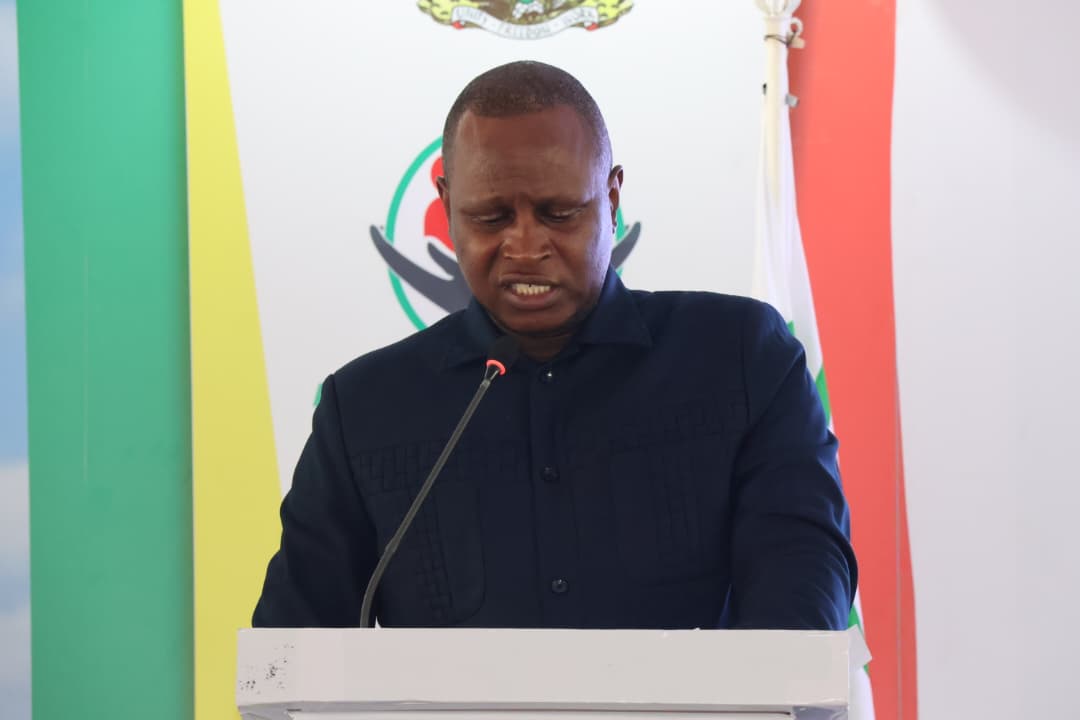
Theseus Mauruki Shambare in VICTORIA FALLS
THE Government is accelerating efforts to strengthen domestic healthcare capacity and financing as Zimbabwe seeks to sustain health gains amid growing donor fatigue and pressure on external funding.
The strategy includes expanding primary healthcare, increasing the health workforce, mobilising domestic resources and strengthening financing mechanisms to make essential services more sustainable.
Zimbabwe has previously set a target of increasing its public health workforce from about 55 000 to 128 000 by 2030, while a 2021-2022 health labour market analysis found the country’s health workforce was operating at about 47,5 percent of the required capacity.
The Health Workforce Strategy also targets annual training output of at least 7 000 health workers by 2030, up from 3 334 in 2022.
Speaking during the Zimbabwe Tripartite Negotiating Forum Global Summit in Victoria Falls, Deputy Minister of Health and Child Care Sleiman Timios Kwidini said the Government was moving from planning to implementation under the Second National Development Strategy (NDS2).
“Utilising local resources, we are now deploying health personnel in each and every corner of Zimbabwe despite the location as we aim to leave no place behind,” he said.
Deputy Minister Kwidini said the strategy included construction of more clinics in marginalised and rural areas, deployment of medical doctors to district hospitals and recruitment and training of additional health workers.
“This has been seen by deploying construction of more clinics in our marginalised areas, that is the rural areas, and also deploying our medical doctors in our district hospitals to make sure that more people are screened at the district hospital,” he said.
He said the approach was part of a broader shift towards preventive healthcare, with services being taken closer to communities rather than waiting for people to become seriously ill.
“A professional health system does not wait for people to become ill, it engages them where they live, work and grow,” he said.
The drive to strengthen domestic capacity comes as Government also pursues measures to reduce reliance on external health financing, including the transition of partner-supported programmes and personnel into the public health system.
Under the National Health Strategy 2026-2030, Government has prioritised primary healthcare, health-system resilience and the expansion of the national health workforce.
National AIDS Council official Mrs Nester Mukwehwa said donor fatigue had made domestic resource mobilisation increasingly important in sustaining health programmes.
“I am sure you are aware of donor fatigue that is hitting in our routine. As Zimbabwe, we have adopted an inward approach which is making us resilient as we ensure all the health gains achieved in the past are maintained and even scaled up,” she said.
Mrs Mukwehwa said the AIDS Levy paid by employers and employees remained an important domestic financing mechanism for the national HIV and AIDS response.
“In Zimbabwe, we have an AIDS Levy that is paid by employers and employees, and it is collected from the regulator to the National AIDS Council, so that we can use the funds to also cater for these programmes,” she said.
She said NAC’s coordinating mandate also covered non-communicable diseases, including mental health, reflecting the broader health needs being incorporated into the national response.
Meanwhile, NSSA Director of Social Security and Benefits, Actuarial and Schemes Development, Mr Shepherd Muperi, said healthcare should also be viewed as part of social protection, including mental health.
“Access to health care, that includes mental health, is one of the minimum standards of social security,” he said.
Zimbabwe’s health-sector response is consequently increasingly being shaped around domestic financing, workforce sustainability and stronger primary healthcare, as the country seeks to preserve gains while adapting to changes in external support.



 Peter Tanyanyiwa