Online Reporter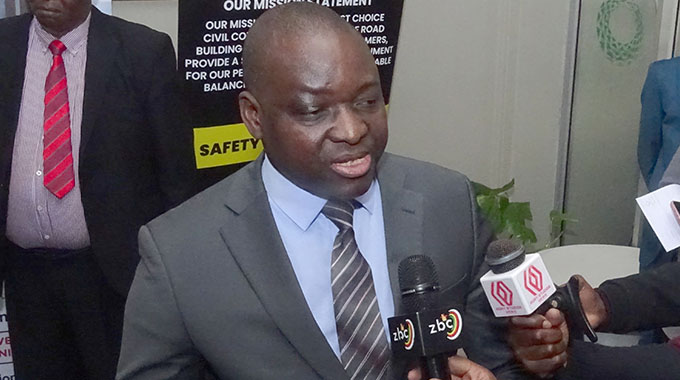
Africa Moyo, Deputy National Editor
ZIMBABWE has unlocked over US$1 billion in housing finance under the National Development Strategy 1 (NDS1), far surpassing the initial projection of US$233.75 million, National Housing and Social Amenities Minister Zhemu Soda revealed yesterday.
In an interview at his Harare office, Minister Soda said the funding milestone reflects the country’s growing ability to attract both local and regional investment into the housing and infrastructure sectors.
“Improving access to housing finance is one of our key deliverables under the NDS1 housing delivery cluster. Surpassing our initial target by such a significant margin is a clear sign of market confidence and our effective engagement with both local and regional financial institutions,” he said.
Since 2021, the Ministry had set a target of 220 000 housing units, which has already been exceeded, prompting Cabinet to revise the target to one million. To date, over 800 000 housing units have been delivered, driven by Zimbabwe’s growing capacity to mobilise funding. Minister Soda clarified that the figures include both fully serviced stands and completed houses.
One of the key contributors to this success has been Zimbabwe’s active participation as a Class A shareholder in the Shelter Afrique Development Bank (ShafDB), a pan-African multilateral institution focused on mobilising resources for housing and infrastructure development.
Since 2010, Zimbabwe has accessed US$85 million from ShafDB, with US$30 million secured during the NDS1 period. These funds were channelled through local banks such as CBZ and BancABC.
To further enhance access to housing finance, Zimbabwe has applied for a capital increase facility of over US$8.8 million to ShafDB from the Arab Bank for Economic Development in Africa (BADEA). Minister Soda said this would raise Zimbabwe’s shareholding in ShafDB from 1.25 percent to five percent, giving the country greater leverage in future financial disbursements.
The facility has already been approved by BADEA’s board of directors and is now awaiting the signing of the relevant agreements.
“Our growing stake in ShafDB reflects our long-term commitment to regional co-operation and infrastructure development. It allows Zimbabwe to tap into larger capital pools for housing finance and delivery,” he said.
Zimbabwe has also participated in the Viral model research — Vision, Institutions, Regulations, Actors, Local Initiatives — a framework developed by ShafDB with financial support from the African Development Bank. This initiative assesses national housing ecosystems, particularly in terms of affordability and sustainability.
Locally, the Ministry of National Housing has played a pivotal role in attracting private sector investment by issuing Letters of Support for Prescribed Asset Status, enabling several large-scale housing and infrastructure projects.
These projects include FBC Bank’s US$3.6 million Four Miles housing development in Zvishavane, a US$7.9 million investment by the Mining Industry Pension Fund (MIPF) for student accommodation in Chinhoyi, and the US$3.653 million Gokwe shopping mall development, among others.
Minister Soda said these projects demonstrate how public-private partnerships can be leveraged to close the housing gap and improve access to essential services in underserved areas. He also highlighted the regularisation of informal settlements as a key pillar of the Ministry’s long-term housing strategy. This approach includes land re-planning, the production of engineering designs for water, sewer, roads, and storm water systems, followed by infrastructure development and the issuance of compliance certificates and title deeds.
“Title deeds unlock housing finance as they provide collateral. In the case of regularisation, the title will be endorsed to allow for repayment on investments made by financial arrangers. This regularisation process is anchored on a user-pay model, allowing beneficiaries to repay investments under flexible terms,” he said.
To operationalise the regularisation plan, President Mnangagwa launched the Presidential Title Deeds Programme in 2023. A special purpose vehicle (SPV) — the Kwangu/Ngakwami Presidential Title Deeds Programme Trust — was established to lead the process, mobilise private sector funding, and oversee the digital issuance of title deeds. Kwangu enables the Government to formalise informal settlements in a structured and sustainable manner.
Minister Soda said the initiative would unlock land value, improve tenure security, and attract further investment in housing infrastructure.
As part of Zimbabwe’s ongoing engagement and re-engagement drive, the Ministry of National Housing has signed several Memoranda of Understanding (MoUs) with countries such as Egypt, Rwanda, Angola and Botswana, with advanced discussions underway with Kenya and Algeria.
These partnerships focus on knowledge exchange, affordable housing delivery and access to new financing and technologies.