Online Reporter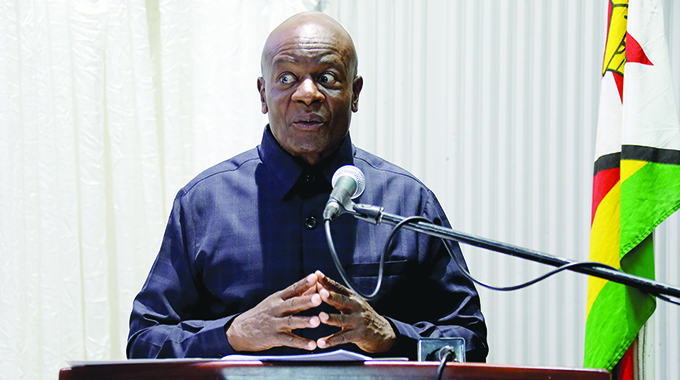
Thupeyo Muleya, [email protected]
GOVERNMENT has reaffirmed its commitment to repatriating and reintegrating Zimbabweans returning from South Africa, with more than 100 000 citizens now back home as the Second Republic intensifies humanitarian support and resource mobilisation to sustain the operation.
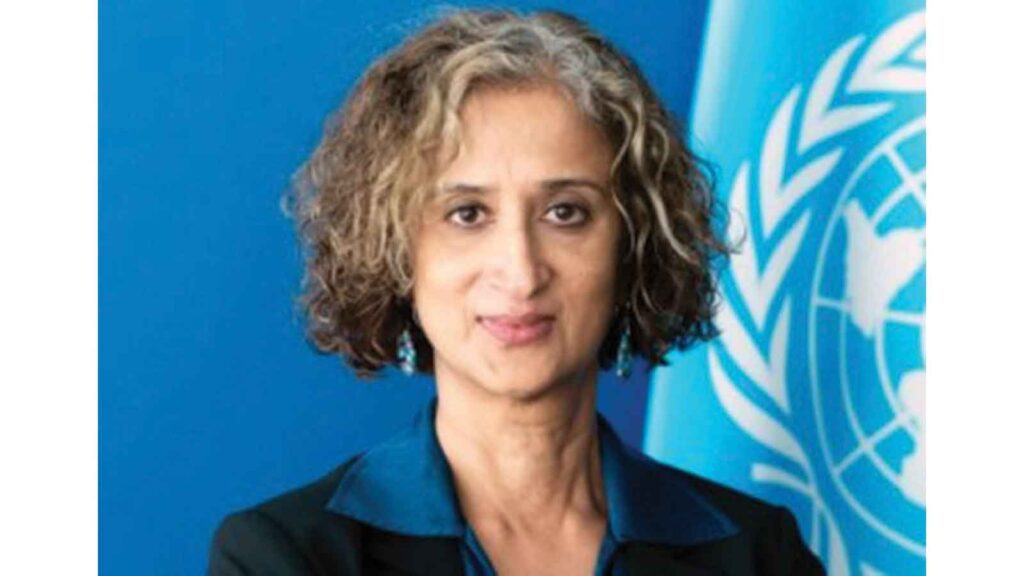
Local Government and Public Works Minister Daniel Garwe made the remarks on Thursday during a familiarisation tour of the Beitbridge Reception and Support Centre, where he also signed a Joint Resource Mobilisation Plan with the United Nations Resident and Humanitarian Coordinator, Dr Rosemary Kalapurakal, to mobilise financial, technical and material support for the ongoing repatriation and reintegration exercise.
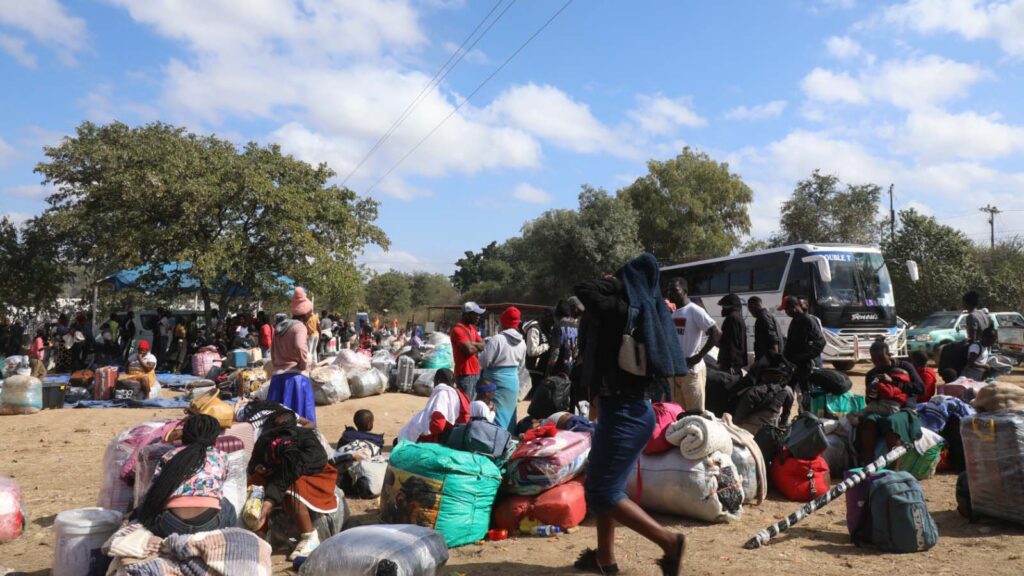
The Beitbridge Reception and Support Centre is processing an average of 1 000 returnees daily following renewed anti-migrant violence in parts of South Africa.
Minister Garwe said President Mnangagwa directed Government to establish a comprehensive framework for the repatriation, reception and reintegration of Zimbabwean nationals, resulting in a coordinated whole-of-Government response involving ministries, development partners and humanitarian organisations.
“Following this directive, the Government and its partners have successfully repatriated over 30 000 returnees. Over 70 000 Zimbabweans returned through self-repatriation. This brings the total number of returnees to over 100 000,” he said.
Minister Garwe said the increasing number of returnees highlights the need for continued collaboration and resource mobilisation.
“Government expresses its sincere appreciation to the United Nations family, whose support through various agencies has been instrumental in the areas of protection, health, WASH, logistics, coordination, information management and humanitarian assistance,” he said.
“Appreciation is also extended to development partners, humanitarian organisations, the private sector, faith-based organisations and individual well-wishers for their invaluable contributions towards supporting returning Zimbabwean nationals.”
Minister Garwe said while significant progress had been made, the growing influx of returnees continued to place pressure on transport, temporary accommodation, food assistance, healthcare, sanitation facilities, protection services and reintegration programmes.
“It is against this background that a joint resource mobilisation initiative is being undertaken. While the United Nations Resident Coordinator’s Office engages international cooperating partners and the donor community, the Government will continue mobilising support from the private sector, philanthropic organisations, faith-based institutions and other local stakeholders,” he said.
Minister Garwe said Government has upgraded facilities at the Beitbridge Reception and Support Centre, including improvements in water, sanitation and hygiene (WASH), temporary shelters and other supporting infrastructure to enhance the welfare of returnees.
He said returnees receive three meals a day, while border management systems have been strengthened to facilitate smooth processing.
The centre now operates a 24-hour clinic, which has assisted more than 1 200 returnees over the past two weeks through medical screening, primary healthcare services and referrals where necessary.
Minister Garwe said beyond emergency assistance, Government was placing greater emphasis on sustainable reintegration in line with the Second Republic’s inclusive development agenda, which dovetails with Vision 2030.
“The Government has adopted a three-pronged reintegration framework covering social, economic and cultural integration. On social integration, the focus is on access to education, health care, civil registration and social protection. This ensures returnees are fully integrated into national systems,” he said.
Minister Garwe said economic reintegration focuses on employment creation, entrepreneurship, skills development and livelihood support to enable returnees to contribute meaningfully to national development.
“Cultural integration is being promoted through traditional leaders, faith-based organisations, families and communities. This strengthens social support networks and promotes a sense of belonging,” he said.
Minister Garwe said the reintegration programme also seeks to harness the knowledge, professional skills and work experience acquired by Zimbabweans while living abroad.
“These competences will be documented, validated and aligned with local development priorities to enhance both individual livelihoods and national development,” he said.
Minister Garwe said Government views the returning of citizens not only as a humanitarian challenge but also as an opportunity to build resilient communities and promote inclusive economic growth.
“By supporting returnees to reintegrate, the Government is not only addressing immediate humanitarian needs but is also transforming return migration into an opportunity for community resilience and inclusive growth,” he said.
Minister Garwe urged all stakeholders to continue supporting the programme.
“Together, we must ensure that every Zimbabwean returning home is received with dignity, protected from harm and supported to reintegrate,” he said.
Dr Kalapurakal reaffirmed the UN’s commitment to supporting Zimbabwe’s response, saying close cooperation between Government and development partners remains critical to addressing both immediate humanitarian needs and long-term reintegration.
Officials at the reception centre told the visiting delegation that about 1 000 returnees are processed daily, receiving registration, health screening, temporary accommodation, food assistance and transport to their respective home districts before leaving the facility.
.