Online Reporter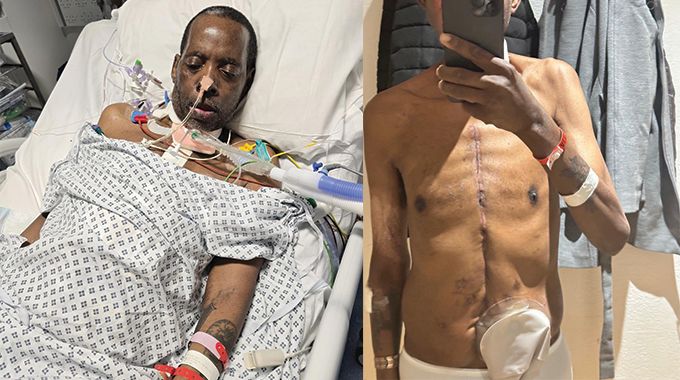
Mbulelo Mpofu, [email protected]
Hassan Nyangoni, affectionately known as King Mambo, has long been recognised as the driving force behind Pamtengo Radio — the UK-based online station that has become a cherished link to home for thousands of Zimbabweans and Southern Africans living abroad.
From its base in Luton, the station has spent years reconnecting the diaspora with the sounds, stories and cultures they hold dear. Often hosting Zimbabwean broadcasters, including Star FM Zimbabwe presenters when they travel to the UK, Pamtengo
Radio has built a loyal following through music, conversations and community-driven programming, proudly describing itself as broadcasting on “the frequency of heritage”.
Through the platform, King Mambo created more than just a radio station; he built a cultural bridge that allows people living thousands of kilometres away from home to reconnect with familiar languages, music and traditions. The station’s contribution to uplifting African communities abroad was recognised through an Africa4U Achievement Award for Africans in the UK, celebrating its role in preserving and promoting African identity in the diaspora.
However, beyond the microphones, playlists and studio lights, King Mambo has been living a story more powerful than any he has ever shared on air — a remarkable journey of survival that has amazed medical professionals, deepened his faith and completely transformed his perspective on life.
Today, he describes himself as a “living testimony” after surviving three comas, multiple major surgeries, sepsis, kidney complications and three separate clinical deaths. Looking back, King Mambo says the signs were there, but neither he nor those around him understood their severity.
For weeks, he unknowingly lived with a leaking heart valve that was preventing blood from circulating properly through his body.
“In medical history, cases like mine are almost unheard of — a true dead man walking,” he says.
Doctors later told him they were astonished he had remained active for so long. By the time the problem was discovered, specialists reportedly believed his condition had become so critical that he should have been transported by helicopter for emergency treatment. Instead, he had somehow continued with everyday life, unaware of just how close he was to death.
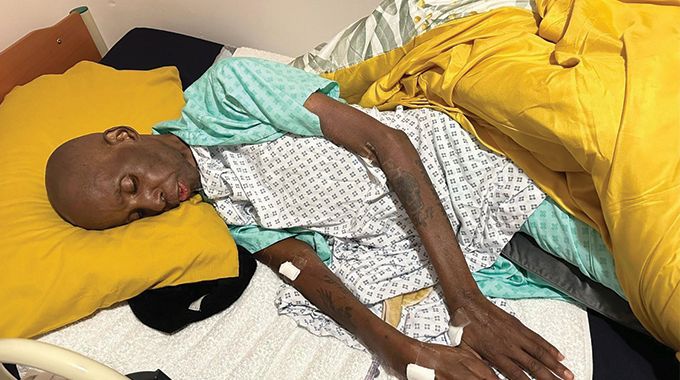
On March 15, 2025, King Mambo was admitted to the hospital for what was expected to be a routine five-hour operation. Nothing about the months that followed would be routine. Complications developed rapidly.
He suffered severe sepsis, underwent open-heart surgery, experienced kidney failure and later required major abdominal surgery that resulted in an ileostomy after part of his small intestine was removed.
At several points, doctors believed they were losing him. Three times, he was declared clinically dead. Three times, the monitors went silent. Three times, he came back.
His ordeal continued into 2026. In January, surgeons attempted to reverse his stoma in another major procedure. Midway through the operation, disaster struck again and he slipped into a coma. Doctors told his wife that recovery was unlikely and advised her to prepare for the worst.
For his family, it was yet another devastating moment in a journey already filled with uncertainty. But King Mambo was not finished yet. Against all expectations, he regained consciousness. One of his clearest memories is waking up after emergency procedures and uttering three simple words: “I am cold.”
Surviving was only the beginning. After spending months in the hospital and intensive care, he faced another challenge — learning how to walk again. Simple tasks became milestones. Each step required determination.
Today, he still uses crutches as he continues rebuilding his strength and adapting to life after a medical ordeal that lasted almost a year. Rather than rushing into further procedures, he has chosen to focus on recovery.
“I’m giving myself time to gain weight, rebuild my strength and come back stronger,” he says.
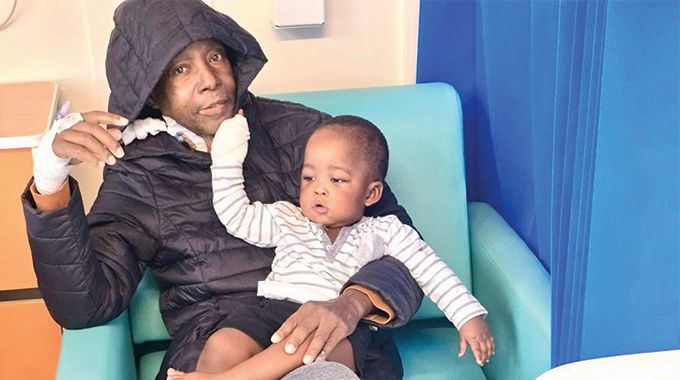
His long-awaited discharge from the hospital finally came on February 20 this year, ending one of the most difficult chapters of his life. While his body continues to heal, King Mambo says the biggest changes have taken place within. The experience strengthened his faith and reshaped his sense of purpose.
He now embraces the name Mansa Ahmed, which he says symbolises a life transformed through suffering, faith and restoration.
Throughout his recovery, he found comfort in the support of his wife, parents, sister and extended family, whose prayers and encouragement sustained him through countless dark days.
“I stand today as a living testimony of God’s power and the covering of my ancestors. You see me standing, but you don’t know what tried to take me out. You see my life, but you don’t know how many times it almost ended.”
For him, survival was not merely a medical outcome but a spiritual experience.
“I am a man with nine lives. Certified dead . . . and I woke up three times. Not by chance. Not by luck. But by God showing His power.”
Today, King Mambo speaks about his experience with the same passion he once reserved for broadcasting. His scars are reminders not of tragedy, but of survival. He frequently shares his story to encourage people facing illness, grief and seemingly impossible circumstances.
One statement, in particular, has become the defining message of his journey: “The enemy tried to write my obituary. God wrote my testimony instead.”
While Pamtengo Radio continues connecting Southern Africans across the globe, King Mambo believes his greatest platform now extends beyond broadcasting. His mission is to inspire hope. For listeners who have known him only as the voice behind the station, his most powerful message may no longer be transmitted through studio microphones or radio frequencies.
Instead, it comes through a life that has become its own testimony, a story of resilience, faith and purpose rediscovered after unimaginable suffering.
For a man once described as a “dead man walking”, every sunrise now carries a different meaning. It is proof that hope can survive the darkest moments and that sometimes the most remarkable stories are not the ones told on air, but the ones lived.