Online Reporter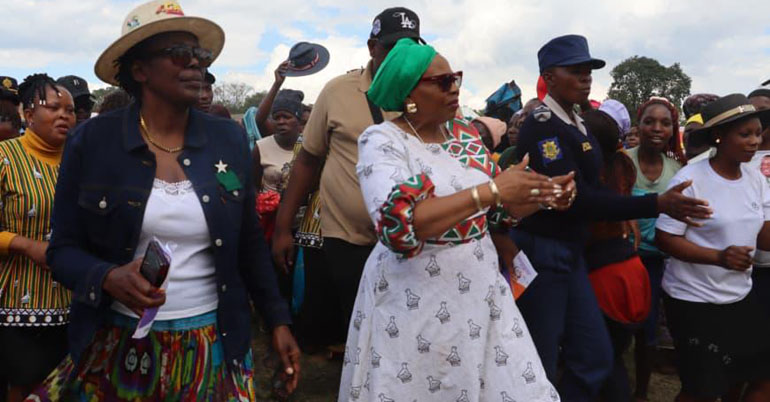
Tendai Gukutikwa
Post Reporter
GOVERNMENT has reaffirmed its commitment to strengthen support systems for survivors of Gender-Based Violence (GBV), while intensifying efforts to end child marriages, amid growing calls for stronger protection of women and girls across Zimbabwe.
Speaking during Manicaland’s International Women’s Day commemorations held at Grassflats Primary School in Chipinge last Saturday, Women Affairs, Community, Small and Medium Enterprises Development Minister, Senator Monica Mutsvangwa, said Government is expanding One Stop Centres to ensure that survivors of GBV receive coordinated and dignified support.
Minister Mutsvangwa said the centres are a critical pillar in the national response to violence, as they integrate medical, psychosocial and legal services under one roof, reducing delays and trauma for survivors.
The commemorations were held under the theme: “For All Women and Girls: Rights. Equality. Empowerment.”
“Through our One Stop Centres, which provide comprehensive medical, legal and psychosocial support under one roof, we are restoring dignity and enhancing social protection for women and girls. This is justice in practice,” she said.
She said the expansion of the centres across the country is aimed at ensuring that survivors of abuse are not left to navigate fragmented systems when seeking help.
Minister Mutsvangwa said the initiative also directly targets the root causes of abuse affecting women and girls, including gender-based violence and child marriages, which remain persistent in some communities.
“We are saying no to gender-based violence and no to child marriages. Every girl child deserves to grow, learn and develop without being forced into early adulthood through marriage or abuse,” she said.
She stressed that Government is strengthening legal and social protection systems to ensure that offenders are held accountable, while survivors receive full support to recover.
“Let us build a society where women and girls live free from violence, and every child is protected, educated and empowered to reach their full potential,” she said.
Minister Mutsvangwa said efforts to combat GBV and child marriages must go hand-in-hand with strengthening child protection systems, including those within schools and communities.
She reiterated that Government remains committed to ensure that no woman or girl is left behind in the fight against violence and exploitation, adding that protection, dignity and justice must be guaranteed for all.
Minister of State for Manicaland Provincial Affairs and Devolution, Advocate Misheck Mugadza, said the fight against gender-based violence and child marriages must be supported by strong economic empowerment programmes that uplift women and strengthen households.
“The Second Republic, under the leadership of President Emmerson Dambudzo Mnangagwa, has deliberately created an enabling environment where women are now able to participate meaningfully in economic activities and community development initiatives.
“This progress we are witnessing did not happen by chance. It is a direct result of President Mnangagwa’s visionary leadership, which places women at the centre of national development,” he said.
Advocate Mugadza said the province has benefited from a number of development projects that are directly improving the livelihoods of women and reducing vulnerability to social challenges such as GBV and child marriages.
He highlighted initiatives such as the Jopa Safe Market, Hauna Processing Plant, Sinara Dairy Project and Chikanga Mushroom Project as practical examples of women-centred empowerment being implemented on the ground.
“These projects are, not just infrastructure developments; they are life-changing interventions. The Jopa Safe Market, for example, has created a secure trading environment for women, while agro-processing and dairy projects are giving women income-generating opportunities that strengthen their independence,” he said.
Manicaland Provincial Schools Inspector in the Ministry of Primary and Secondary Education, Mr Mbengo Mawire, said the education sector has stepped up interventions aimed at safeguarding learners and preventing school dropouts linked to abuse and early marriages.
He said the Ministry of Primary and Secondary Education, working with development partners, has introduced strengthened policy measures to ensure safer learning environments for children.
Mr Mawire said initiatives such as “Not-In-My-Village, Not-In-My-School” and Early Warning Systems were rolled out to help identify and respond early to risks that push learners, particularly girls, out of school.
“The programmes were designed to strengthen collaboration between schools, communities, traditional leaders and other stakeholders to protect children both inside and outside the classroom.
“Our interventions are aimed at ensuring that children remain in school and are protected from abuse, neglect and harmful practices that disrupt their education,” he said.
Mr Mawire said child marriages and teenage pregnancies remains a major concern in the education sector, as they continue to derail the future of many girls.
“Our goal is to ensure that schools remain safe spaces where learners can focus on education without fear of exploitation or forced marriage. Once a child drops out, especially a girl child, it becomes very difficult to reverse the cycle of poverty,” he said.
Development partners also reaffirmed their commitment to strengthen child protection systems and reduce vulnerabilities among girls.
Plan International representative, Mr Dunmore Chiduku said they are working closely with Government and other stakeholders to address teenage pregnancies and child marriages through long-term programmes.
“Sustained collaboration remains key to addressing deep-rooted social challenges affecting girls, particularly in rural communities.
“We are proud of the strong partnerships we enjoy with the Ministry of Women Affairs, Community, Small and Medium Enterprises Development, and together we have made significant strides in mobilising communities and strengthening child protection systems,” he said.
He called for stronger coordination between Government, civil society, traditional leaders and development partners to eliminate GBV and child marriages.