Online Reporter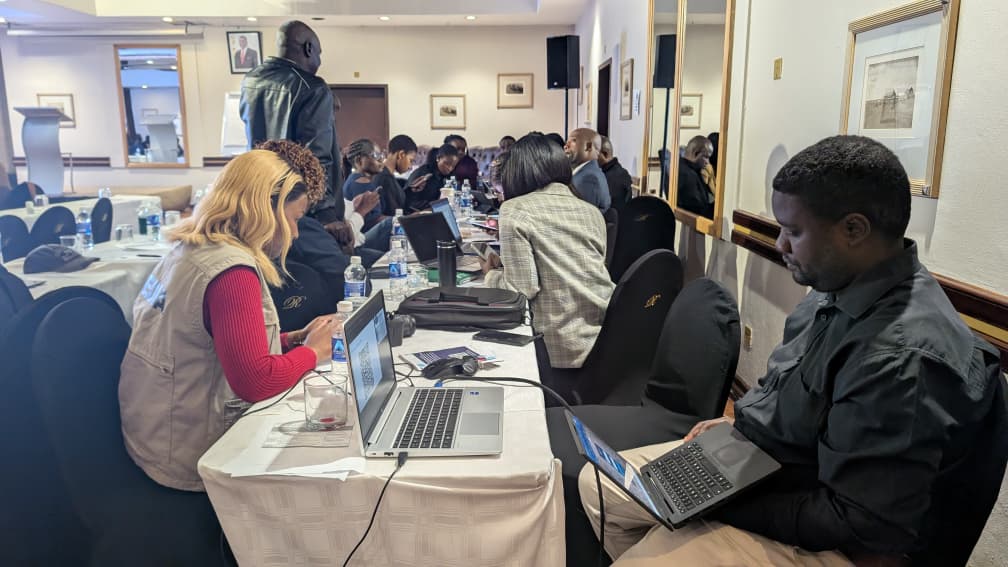
Ivan Zhakata Online Correspondent
The Government has validated the Children’s Climate Risk Index and Disaster Risk Model (CCRI-DRM), a tool that will guide climate adaptation planning and disaster risk reduction.
This follows findings that showed that more than four million children are living in districts classified as high or very high climate risk.
In a speech read on his behalf by the acting Director of Climate Change Management, Mr Kudzai Ndadziwana, during the validation workshop in Harare on Friday, acting Permanent Secretary in the Ministry of Environment, Climate and Wildlife, Mr Washington Zhakata said the model will enable Government to identify vulnerable children and channel interventions to communities most in need.
“It is therefore imperative that our national response is informed by evidence that allows us to understand who is most at risk, where they are located and why they are vulnerable,” he said.
Mr Zhakata said climate change was no longer merely an environmental issue, but a development challenge that demanded a coordinated national response.
“Climate change is not only simply an environmental concern, but a fundamental development and resilience challenge requiring a coordinated whole-of-government and whole-of-society response,” he said.
He said Zimbabwe continued to experience recurrent droughts, floods, tropical cyclones and extreme heat, with children among the most affected because of their limited capacity to anticipate, cope with and recover from climate shocks.
The effects of climate change, Mr Zhakata said, extended beyond physical damage, disrupting education, health, nutrition, water and sanitation services, livelihoods and social protection systems while worsening existing inequalities.
He said the CCRI-DRM would provide child-focused, sub-national risk information to strengthen preparedness, adaptation and disaster risk reduction, while supporting implementation of Vision 2030, the National Adaptation Plan and national disaster risk management frameworks.
Mr Zhakata urged stakeholders to ensure the tool was fully utilised after validation.
“It is one thing just having it in a policy. If you don’t implement and you don’t monitor and evaluate, you will not be able to see what has been the change,” he said.
UNICEF Climate Specialist Mrs Egline Tauya said the assessment found that approximately 7,1 million children across Zimbabwe were exposed to climate and environmental hazards, including droughts, floods, cyclones, extreme heat, disease outbreaks, wildfires and air pollution.
She said the analysis further showed that more than four million children lived in districts classified as high or very high risk when exposure to climate hazards and underlying vulnerability were considered together.
“These are children whose development outcomes, health, education and protection are increasingly threatened by climate,” said Mrs Tauya.
She said drought, extreme heat and flooding remained the country’s most widespread climate threats, while inadequate access to quality social services and livelihood opportunities further increased children’s vulnerability.
Mrs Tauya said the findings should serve as a basis for decisive action.
“These findings should not discourage us. On the contrary, they provide a powerful opportunity for action,” she said.
She said the model would provide Government and its development partners with a common evidence base to strengthen climate adaptation planning, disaster risk reduction, resilience programming and investment decisions.
“A model is only valuable if it is trusted, understood and ultimately used,” said Mrs Tauya.
The Children’s Climate Risk Index and Disaster Risk Model were developed by the Government in partnership with UNICEF and other stakeholders, with financial support from the Korea International Cooperation Agency (KOICA) under the Climate Action for the Last Mile project.
The tool is expected to strengthen evidence-based planning and improve protection for children living in communities most vulnerable to climate change and climate-induced disasters.