admin
admin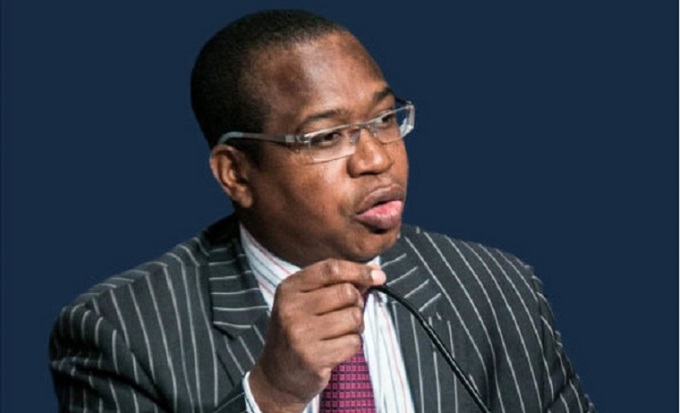
Prosper Ndlovu, Business Editor
GOVERNMENT has put in place legislation and incentives to unlock increased value addition and beneficiation as part of measures to reduce exports of raw minerals and agricultural produce, the Minister of Finance and Economic Development, Professor Mthuli Ncube, said yesterday.
In his speech to world leaders and investors at the World Investment Forum session in Geneva on “Promoting Foreign Investment to Landlocked Developing Countries (LLDCS)” focusing on Zimbabwe, Minister Ncube said Government wanted to correct the present scenario whereby the country relies on raw commodity exports, largely from the extractive and agricultural sectors.
“Much of Zimbabwe’s produce is exported in raw form. In the agriculture sector, Zimbabwe is a huge producer of tobacco and the bulk of the product is exported unprocessed. The average prices are $3/kg for unprocessed and $6/kg for crushed tobacco compared to between $30 and $60 for tobacco cigarettes,” said Prof Ncube.
He said by exporting unprocessed tobacco the country was giving away value of at least $27 per kilogramme.
Minister Ncube said a similar trend was rife in the mining sector where, for instance, the bulk of platinum group of metals are refined outside the country thereby prejudicing the economy of huge potential earnings.
In view of this setback, Prof Ncube said President Mnangagwa’s Government has put in place legislation and incentives to encourage value addition and beneficiation.
“Beneficiation also helps in triggering the emergency of vertical and horizontally integrated industries, a strategy for luring both local and foreign direct investment. The strategy has started yielding positive results with the country having processing plants for several minerals,” he said.
Informed by these interventions, Minister Ncube told the gathering that Zimbabwe’s platinum companies were in the process of setting up a base metals and precious metals refinery to process platinum group of metals.
“This project alone is expected to create at least 15 000 jobs, just at the facility, after full implementation, and this will tremendously cut down the costs incurred from toll fees charged for refining. The development has raised the interest of other companies that now want to establish facilities to further process platinum into catalytic converters,” he said.
Minister Ncube said a value addition and beneficiation model economy does not only guarantee massive job creation but increased incomes and ability for the country to meet the United Nations’ Sustainable Development Goals (SDGs).
Prof Ncube also briefed delegates about Zimbabwe’s strategic location within the SADC and Comesa regions and how the country has moved to embrace a one-stop-border post concept to facilitate smooth transit of both vehicular and cargo traffic.
The initiative has already yielded increased trade, with additional $3,1 million, between Zimbabwe and Zambia through Chirundu.
He said the country was also seized with modernising its key infrastructure to enhance efficiencies along major trade corridors that service east and southern Africa as well as the north-south corridor.
The country is also pushing investments in renewable energy, in addition to expansion of existing thermal and hydro-electric power generation capacity.
In that regard Minister Ncube said great effort was being made to balance the need for climate sustainability and quality affordable investment riding on private and public partnerships.
Zimbabwe under the new dispensation has already undertaken a number of reforms to promote and facilitate investment.
The country has signed 35 bilateral investment treaties and 10 of these are in force, said Prof Ncube.
Ease of doing business programmes are also ongoing and these are being complemented by measures to fight corruption, provision of investment security among others.
Minister Ncube said the country was maximising on its comparative advantages to attract quality investment and increasing linkages with the global community.
Although being a land-locked country, Prof Ncube said Zimbabwe, as a member of the international community, was cognisant of the need to craft sound policies, develop standard infrastructure and embrace tenets of international trade while facilitating regional integration and cooperation.
Meanwhile, Government has said the country would be setting up more one-stop-border posts to ease the flow of people and goods across borders in a bid to generate more revenue.
This was said by Finance and Economic Development Minister Professor Mthuli Ncube yesterday while addressing world leaders and investors at the World Investment Forum session in Geneva, Switzerland, on “Promoting Foreign Investment to Landlocked Developing Countries (LLDCS)”.
Prof Ncube said instead of worrying about being landlocked, Zimbabwe was now employing strategies to make the country “more land-linked and attractive to investment”.
He said the country’s economic blueprints, including the Transitional Stabilisation Programme (TSP), have principally reflected the fundamental priorities’ identified in the Vienna Programme of Action (VPoA) for Landlocked Developing Countries for the Decade 2014-2024.
“Here I am specifically referring to the issues of transit policy, infrastructure development and maintenance, international trade and trade facilitation, regional integration, cooperation and structural economic transformation,” said Prof Ncube.
“Zimbabwe is located at a very strategic position as a transit country within the Southern Africa sub-region (and) in recognition of this, the country has harmonised transit policies in compliance with the Comesa and SADC protocols on transit trade, transit facilities, and third-party motor vehicle insurance schemes.
“Aside from that, Zimbabwe is also establishing one-stop boarder posts to facilitate smooth transit of both people and goods across the country’s borders.”
Prof Ncube said the Chirundu One-Stop Border Post, which is already functional after being launched in 2009, has induced between $2,2 million and $3,1 million of Zimbabwe’s annual exports to Zambia.
Under the one-stop border post arrangement, one office houses immigration officials from both countries, which reduces the amount of time spent at the border post.
Prof Ncube said as part of improving infrastructure, the country is in the process of upgrading and modernising its road infrastructure along major trade corridors that serve East and Southern Africa, linking the North-South transport corridor.
He said for the road projects already completed, a Costs-Time-Distance study has shown that the average speed of heavy trucks has increased from 33km/hr prior to the rehabilitation exercise to 48km/hr.
“This does not only reduce transit time and costs, but also improves competitiveness,” said Prof Ncube.
In the energy sector, the country has taken the initiative to promote the use of renewable energy in the form of solar generators, apart from the expansion of the current thermal and hydroelectric generation capacity.
Just over two weeks ago, the country was generating adequate electricity and did not import for a week, saving the much-needed foreign currency.
The increase in power generation comes after the expansion of Kariba South Hydro Power Station where 300MW were added to the grid.
This has seen installed capacity rising to 1 050MW.
Hwange Thermal Power Station is also being expanded and an additional 600MW would be fed into the grid in the next 42 months when the expansion is completed.
Prof Ncube said Zimbabwe has undertaken a number of reforms to promote and facilitate investment.
The country has signed 35 Bilateral Investment Treaties (BITs) and of these, 10 are already in force.
Some of the measures being implemented under this process include the establishment of the Zimbabwe Investment and Development Authority (ZIDA), a one-stop investment services centre, and the promulgation of a Special Economic Zones (SEZ) law which designates areas for the purpose.


 Online Reporter