admin
adminLuthando Mapepa
THE declining milk production in Chipinge is worrisome, putting to the fore the need for Government, development partners and the private sector to make joint efforts to resolve issues affecting registered dairy producers in the district.
This will also guarantee the survival of the Chipinge Dairibord plant.
Dairibord last year invested in the steri-milk equipment in Chipinge following the closure of its plant in Gweru.
Speaking at Livestock Production Department (LPD) stakeholders meeting held last Friday, Chipinge District Administrator, Mr Edgars Seenza, said there was need to find a lasting solution to the problems affecting the dairy sector in the district.
“As Government, we want to hear from you as dairy farmers where the problems are emanating from because you are behind yet you are in the district that was being assisted by the same partners.
“There is need to implement policies that will see milk production output increase in order to feed the nation,” said Mr Seenza, adding that farmers need to acquire skills from taught by development partners such as SNV.
“An upsurge in milk production in Chipinge is critical for the sustenance of the local dairy plant and this explains why SNV and Lead Trust come in to assist you,” said Mr Seenza.
SNV programme manager, Mr Cloffas Nyagumbo, said his organization would innovate ways to ensure that dairy farmers in Chipinge maximise milk production.
Chipinge has the bulky of registered dairy producers in Manicaland.
Zimbabwe Association of Dairy Farmers (ZADF) national chairman, Mr Emmanuel Zimbandu, said Manicaland produces one million litres of milk per month, with Chipinge accounting for the bulky of it.
The main challenge facing dairy farmers include the cost of doing dairy and the drivers for the high cost of production include overheads – and farmers have to be aware of their overhead costs and learn how to manage them.
Labour – farmers need to ensure that labour has the correct training for improved efficiency of the farm personnel.
“For example, how many cows per unit does a farmer have for calf rearing, milking, among other issues?
“An ideal would be 50 cows per one worker, but unfortunately in Zimbabwe it is more like 25 cows per unit on large farms,” said Mr Zimbandu.
Mr Zimbandu added that feed was the biggest driver in the cost of production.
“Farmers need to know what their feed conversion ratios are, for instance, how many kilogrammes of feed do you use to produce one kilogramme or litre of milk.
“A worst case scenario would be 0.8kg milk/kg feed, and at best it should be 1,6 kg milk/kg feed. By simply changing the presentation and timing of feed a farmer can increase his production by 35 percent,” added Mr Zimbandu.
Mr Zimbandu added that on heifer rearing (calf management) – farmers must invest in what will give them better rewards.
“Spend money on what is going to make you more money. Rear calves so that they are calving down at 22 months – grow your calves faster so that they calve younger. Farmers need to feed calves with calf replacer (cost 0,40c/litre) instead of milk that can be sold for 0,60c/litre. However, feeding with calf replacer does need to be managed so that they don’t develop scours,” he explained.
He said a cow needs to live for 1to 1.5 lactations in order to pay for itself (approximately $1 600).
“If a cow only lives 1,5 years, that farmer is not making money. There is need, especially for small scale farmers to work hard to have their cows living to 2.5 lactations,” he said.
However, some farmers would argue that having your cow produce 25 litres and live longer is better than pushing for a production of 28 litres but dying young.
The other challenges facing dairy farmers include fertility – with heat spotting being the biggest challenge in heifers.
A heifer must have a 305-day lactation (be dry 60 days). If the cow is only getting pregnant at 350 days she will only just be covering her feed costs.
Inter-calving internal affects viability.
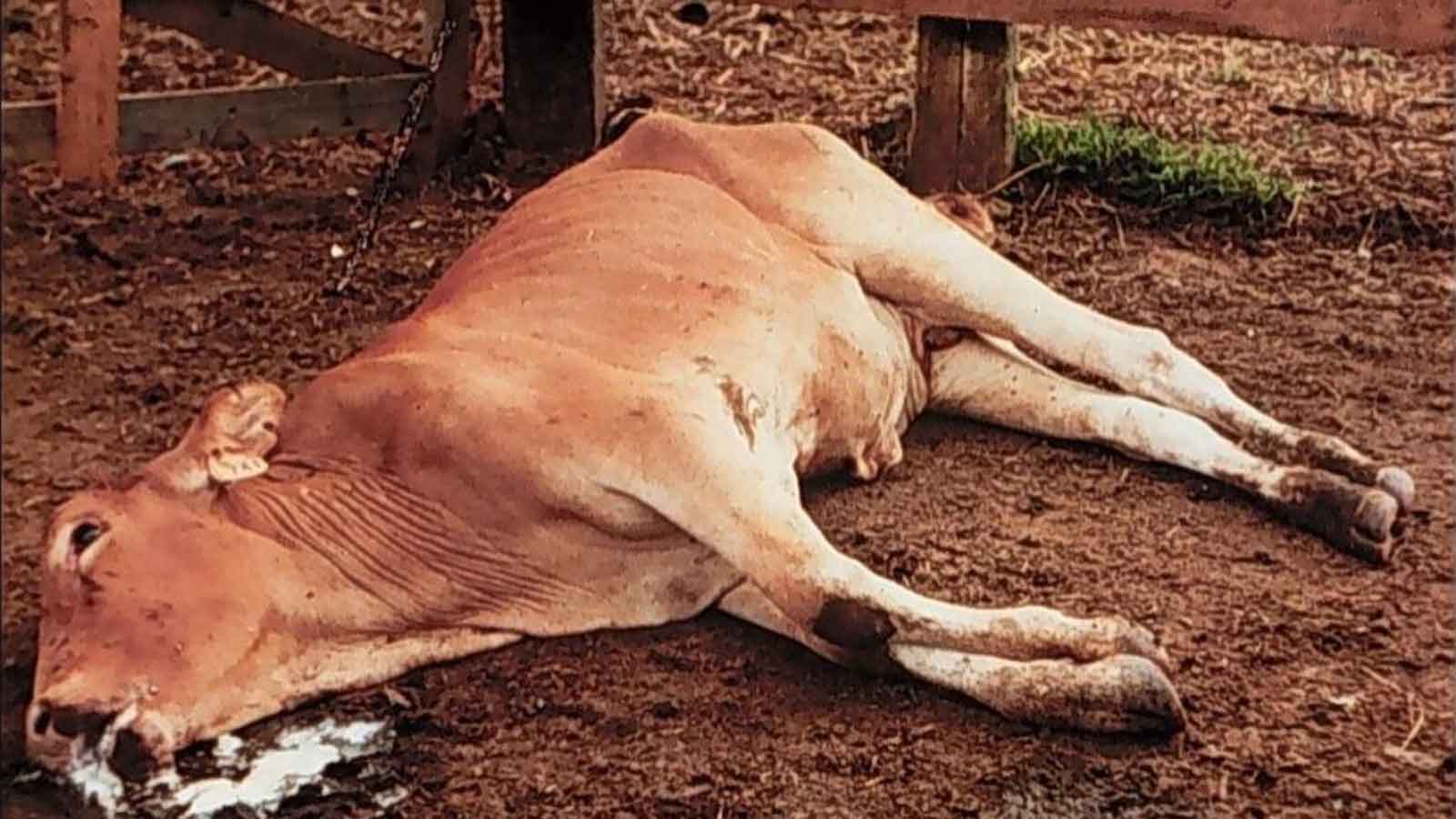
Disease control – especially foot and mouth outbreak has a devastating impact on the dairy industry.
“Other diseases that affect production are Bovine Viral Diarrhoea and Mastitis. Farmers need to graduate to the point of being able to use appropriate to ensure the quality milk production. This enables the farmer to take advantage of quality bonuses paid by processors for high fat and protein content and SCC below 300 000,” said Mr Zimbandu.
.


 Online Reporter