

 admin
admin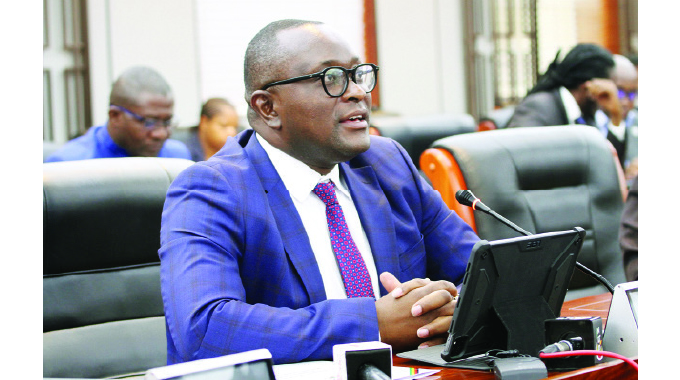
Rumbidzayi Zinyuke
Senior Reporter
FOLLOWING the escalation of prices of basic commodities in retail shops in the past few weeks, the Government is engaging stakeholders in a bid to curb speculative pricing while protecting formal retailers.
This comes on the back of recent monetary policy measures announced by the Reserve Bank of Zimbabwe (RBZ) to halt the depreciation of the local currency, Zimbabwe Gold.
Addressing a post Cabinet media briefing yesterday, Information, Publicity and Broadcasting Services Minister Dr Jenfan Muswere said surveys conducted by the Ministry of Industry and Commerce between September 27 and October 4 had revealed that prices of basic goods had increased in formal retail shops.
“The ZiG prices of basic commodities in the formal retail outlets have increased in response to the adjustment of the local currency. However, the prices of the commodities in US$ terms in both the formal and informal outlets have remained stable. Both the ZiG and US$ prices are still on the higher side in the formal retail outlets, indicating an element of forward or speculative pricing and benchmarking against the black market rates,” he said.
Dr Muswere said the survey had also revealed that there were limited stock levels of basics such as cooking oil, mealie-meal, bread and sugar while the same products were readily available in informal outlets.
“This is attributable to arbitrage as informal retail economic agents seek to capitalise on exchange rate differentials, given the reported cases of hoarding in the formal sector for re-sale to informal outlets exclusively in US$. It is also evident that most suppliers have reduced supplies to the formal sector and are channelling them to the informal market where payment is exclusively in US$,” he said.
Dr Muswere stressed that there were however, no major shortages of basic commodities in the formal retail sector.
He said the Government would continue with regular monitoring and stakeholder engagements to ensure implementation of market-relevant interventions while a number of measures had been put in place to support the formal sector.
Responding to questions during the briefing, Industry and Commerce Minister Mangaliso Ndlovu said the monetary interventions by the Central Bank were a critical step towards ensuring a convergence between the formal exchange rate and the parallel market exchange rate, which was the cause of a number of problems being faced in the economy.
He said the interventions were contributing to long-term stability of prices.
“There are a number of interventions that the Central Bank announced following the Monetary Policy Committee meeting last week. Added to that is the increased support of the formal manufacturing sector by the Central Bank which has now increased the foreign currency that is dispersed through the banks under the willing-buyer-willing seller system, mainly to support the purchase, acquisition of raw materials, which are then supplying the formal sector in our economy. You will realise that following that, there has been some stability when you look at what was obtaining in the market in the last two to three weeks. And the supply of goods in general in the market has improved, and we continue to monitor,” Minister Ndlovu said.
He said the Government would continue to monitor the developments closely and come up with the necessary interventions.


 Online Reporter