Sidumisile Mabena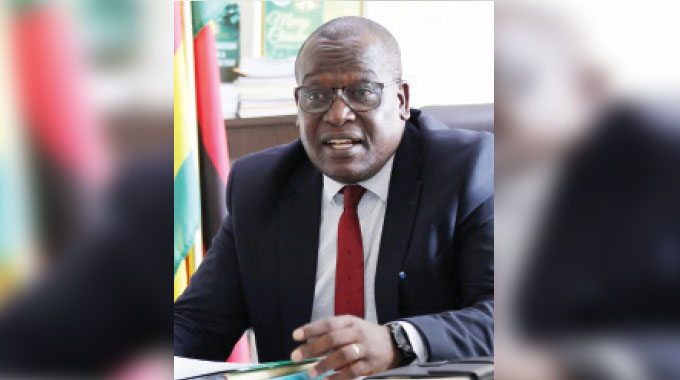
Gibson Mhaka
[email protected]
GOVERNMENT and the media must strengthen collaboration to ensure citizens have access to accurate information and to counter the growing threat of misinformation and disinformation on social media, Bulawayo Provincial Affairs and Devolution Permanent Secretary Mr Paul Nyoni has said.
In a speech read on his behalf by the Director of Economic Affairs and Investment, Mr Simon Sawunyama, during a Media Stakeholders Engagement organised by the Zimbabwe Media Commission (ZMC) in Bulawayo on Friday evening, Mr Nyoni said closer cooperation between Government and the media was critical to the success of devolution and national development.
Mr Nyoni acknowledged that relations between Government and the media had not always been seamless, resulting in situations where the public received incomplete information.
“Sometimes there is a rush to publish before we can give context. Sometimes Government jargon makes no sense to you, and sometimes we do not pick up the phone fast enough when you need comments,” he said.
“The result? Stories go out half-full, and the public gets half the truth. Nobody wins there — not the Government, not the media and definitely not the people of Bulawayo, Matabeleland and the country at large.”
He said devolution could only succeed if communities were adequately informed about Government programmes and development initiatives.
“Devolution means power and resources are coming closer to the people. That only works if citizens know what is happening. Who better to bridge that gap than you, the media?” said Mr Nyoni.
“You have the trust, the reach and the language our communities understand. We have the data, the policies and the projects on the ground.
“Imagine what happens when we stop working in silos. Government brings the facts; the media brings the voice.”
Mr Nyoni warned that social media had become a fertile ground for misinformation, hate speech and online scams, which were threatening social cohesion and exposing young people to harmful content.
“Professional media is the antidote. Fact-checking, context and responsible reporting — that is your superpower,” he said.
“When you teach audiences to question before they share, when you give youth content that informs instead of corrupts, you are not just reporting. You are protecting. You are building a safer digital space for our children.”
Addressing the same gathering, ZMC Executive Secretary Mr Godwin Phiri said the rise of digital content creators and influencers was reshaping the global media landscape and presenting new challenges for traditional media organisations.
He said audiences were increasingly turning to influencers for information and recommendations, a development that was affecting traditional advertising revenue streams.
“Advertising remains the lifeblood of many media organisations, yet audiences are increasingly turning to influencers for information and recommendations,” said Mr Phiri.
“This shift has significant implications for media sustainability and revenue generation, and it is a challenge that the industry must address.”
Mr Phiri said the commission supported a co-regulatory framework that allowed different sectors of the media industry to organise themselves around professional codes and standards while maintaining accountability.
“The Zimbabwe Media Commission remains firmly committed to a regulatory framework that is consistent with the Constitution of Zimbabwe, particularly the provisions guaranteeing freedom of expression, freedom of the media and access to information,” he said.
He also defended the commission’s broad definition of a media practitioner, saying the media ecosystem now included content creators, videographers, photographers, public relations practitioners and digital publishers.
“While journalists remain a critical component of the media sector, we must also recognise the contributions of photographers, videographers, film producers, public relations practitioners, social media managers, content creators and digital publishers,” said Mr Phiri.
“All these players operate in a space that has the potential to affect people’s rights and interests.
“Consequently, they must be regulated in a manner that promotes accountability and protects the public good.”
On media sustainability, Mr Phiri said many news organisations were battling declining revenues, rising operational costs and competition from global digital platforms.
“The reality is that a free media cannot exist without sustainable institutions.
“Financially fragile newsrooms struggle to invest in quality journalism, investigative reporting, professional development and public-interest content,” he said.
Mr Phiri also challenged journalists to embrace emerging technologies, particularly artificial intelligence (AI), saying those who failed to adapt risked being left behind.
“The message, however, is clear: journalists will always have a place in the media industry. AI will not replace journalists,” he said.
“What will happen is that journalists who are not technologically skilled may find themselves overtaken by those who embrace new technologies.”
The engagement brought together media practitioners, regulators and Government officials to discuss media sustainability, regulation, digital transformation and the future of journalism in Zimbabwe.


 Online Reporter