Online Reporter
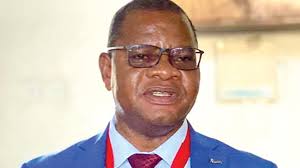
We publish here the 28th post-Cabinet media briefing presented by Information, Publicity and Broadcasting Services Minister, Dr Jenfan Muswere, in Harare yesterday.
Under the Food and Nutrition Security Thematic Area of the National Development Strategy 1, Cabinet considered and approved the Update on the 2024-2025 Summer Crop Marketing and the 2025 Winter Production Plan. The Second Round of Crops, Livestock, and Fisheries Assessment of April 12, 2025, shows that there is adequate grain at national level.
As at September 18, 2025, a total of 860 804 tonnes of maize, soyabeans, sorghum, wheat and sunflower had been sold formally, with a large proportion being marketed informally.
The formal grain and oilseed intake is 437 percent above the intake recorded at the same time last year.
The Grain Marketing Board’s intake is 262,83 percent above last year’s intake. Government has instituted interim measures to assist millers in accessing grain across the country.
The Strategic Grain Reserve currently holds 139 317 tonnes of grains in stock. As part of promoting value chain financing of production to ensure food and nutrition security, and in terms of standing policy since August 2020, millers are required to secure at least 40 percent of their raw material requirements through contracting farmers.
Meanwhile, a total of 28,7 million kilogrammes of cotton has been sold to six contractors since the cotton marketing season started on July 24, 2025. This reflects a 108 percent increase above the volume marketed at the same time last year. Similarly, tobacco sales have reached at a record 354,8 million kilogrammes as at September 18, 2025 compared to the 231.8 million kilogrammes sold at the same time in 2024, translating to an increase of 53,08 percent.
Tobacco seed sales are 11 percent firmer compared to the same time of 2024, which augurs well for attaining the 2025/2026 production target of 360 million kilogrammes. The area planted to irrigated tobacco is 60 percent above the record of 2024.
The Winter Cereals Plan has targeted 135 500 hectares comprising wheat 120 000 hectares (ha); barley 6 500 ha; and potatoes 9 000 ha, with an estimated 600 000 tonnes production of wheat, and 39 000 tonnes and 243 000 tonnes of barley and potatoes, respectively. To date, 2 303 tonnes of wheat has been harvested from 426 hectares at an average yield of about 5 tonnes per hectare. Migratory pest control and surveillance continues across all provinces of the country, and Government reassures farmers that there is enough manpower, vehicles, sprayers and chemicals to respond to any outbreak.
STATE OF PRICES AND AVAILABILITY OF BASIC COMMODITIES FOR THE PERIOD 1ST APRIL TO AUGUST 31ST, 2025
The country continues to make good progress in the economic growth and stability; and moving the economy up the value chain and structural transformation pillars of the National Development Strategy 1, as reflected in the Report on State of Prices and Availability of Basic Commodities for the period April 1 to August 31, 2025, which Cabinet considered. The report focused on 14 commodities, namely mealie-meal, laundry soap, cooking oil, bread, sugar, flour, rice, bath soap, washing powder, powdered/fresh milk, eggs, beef, chicken and salt.
The current monetary and fiscal environment, which has been characterised by exchange rate stability, steady pricing and increased availability of basic commodities is playing a critical role in preserving consumer purchasing power.
Notably feedback from the business community indicates a renewed sense of confidence, with several formal retail operators reporting increased sales volumes attributed to enhanced compliance, fair trading practices, and improved market discipline fostered by operations conducted by the Task Force on Business Malpractices.
This reflects a growing alignment between regulatory enforcement and private sector interests. During the review period, the official exchange rate was relatively stable.
The Task Force on Business Malpractices has continued to carry out compliance and enforcement inspections across all provinces.
These operations have led to the identification and confiscation of substandard products for destruction by authorities.
Most retail outlets maintained adequate stocks of basic commodities during the review period.
THE ZIMBABWE NATIONAL ONE HEALTH STRATEGIC PLAN (2026 TO 2030)
Cabinet considered and noted the Zimbabwe National One Health Strategic Plan (2026 to 2030).
The Zimbabwe National One Health Strategic Plan (2026 to 2030) provides a roadmap for integrating human, animal, plant and environmental ecosystems to address health challenges.
The strategy aligns with Zimbabwe’s Vision 2030, the National Development Strategy 1 (NDS 1), NDS 2 priority areas and international frameworks such as the Sustainable Development Goals; Africa Agenda 2063 and the One Health Joint Plan of Action.
The strategy also seeks to strengthen collaboration across sectors to combat endemic and emerging zoonotic diseases and other infectious diseases, antimicrobial resistance, and the health impacts of climate change.
The implementation plan is structured around five key pillars, each with defined strategies, activities, timelines, and performance indicators.
The pillars include the following: coordination, which entails strengthening governance frameworks, harmonising policies, and ensuring cross-sectoral accountability; and prevention and control of One Health Threats through developing integrated surveillance systems, enhancing diagnostics, and implementing emergency response plans.
Other pillars also include sustainable financing by securing dedicated and diversified funding to support long-term One Health initiatives; research and development, which entails enhanced evidence generation and innovation capacity through integrated research; and advocacy communication and capacity building.
REPORT ON THE RESPONSES TO THE LIST OF ISSUES UNDER THE INTERNATIONAL CONVENTION ON THE ELIMINATION OF ALL FORMS OF RACIAL DISCRIMINATION
Cabinet considered and approved the report on the responses to the concluding observations of the committee on the Elimination of All Forms of Racial Discrimination arising from the Zimbabwe’s combined Fifth to Eleventh Periodic Reports under the International Convention on the Elimination of All Forms of Racial Discrimination.
Zimbabwe reaffirms its commitment to the principles enshrined in the International Convention on the elimination of all forms of racial discrimination. Significant strides have been made in implementing the Committee’s recommendations, including improved data collection, expanded access to justice, and enhanced public awareness efforts.
The Government of Zimbabwe acknowledges that challenges and gaps persist, hindering the full enjoyment of rights.
Nevertheless, it remains resolute in addressing these issues in a timely, transparent, and participatory manner.
Continued collaboration with civil society, independent institutions, and international partners is essential to ensuring accountability and sustained progress.
Zimbabwe welcomes ongoing dialogue with the Committee and reiterates its dedication to building a more inclusive, just, and equitable society.
PRINCIPLES OF THE NATIONAL LIBRARY AND DOCUMENTATION SERVICES AMENDMENT BILL
Cabinet considered and approved the Principles of the National Library and Documentation Services Amendment Bill.
Following the Cabinet decision made in 2018, which directed that some parastatals be absorbed as Ministerial Departments, the National Library and Document Services became a department under the Ministry of Primary and Secondary Education.
Accordingly, the amendment to the National Library and Document Services Act [Chapter 25:10] will give legal effect for NLDS to cease to be a body corporate.
The amendment also seeks to modernise its provisions by incorporating digital technologies, digital preservation, e-lending and virtual or digital library services to enhance access to knowledge and information throughout Zimbabwe.
Furthermore, the amendment seeks to ensure that the legal framework governing the National Library and Documentation Services remains relevant by aligning with the contemporary demands, international standards and emerging best practices in library science.
REPORTS ON FOREIGN AFFAIRS MATTERS
Report on the Second Africa Climate Summit: Addis Ababa, Ethiopia: September 8-10, 2025
Cabinet received and noted the Report on the Second Africa Climate Summit which was held from September 8-10, 2025 in Addis Ababa, Ethiopia.
The Minister of Environment, Climate and Wildlife attended the Second Africa Climate Summit on behalf of His Excellency the President, Cde Dr Emmerson Dambudzo Mnangagwa.
The Summit was held under the theme “Accelerating Global Climate Solutions and Financing for Africa’s Resilient and Green Developments”.
The Summit which was organised jointly by the African Union and the Government of Ethiopia, built upon the inaugural Africa Climate Summit held in Nairobi, Kenya from September 4-6, 2023.
The Second Africa Climate Summit was preceded by the Africa Climate Week and the 13th Climate Change Development in Africa Conference held from September 1-6 and September 5-7th 2025, respectively, in Addis Ababa, Ethiopia.
Zimbabwe attended the Summit and Climate Week in pursuit of its national interests in line with Section 73 which provides a clear constitutional foundation for the Government’s efforts to address climate issues, mandating the nation to take reasonable legislative and other measures within the limits of available resources, to protect environmental rights.
The Summit considered climate change challenges affecting the African continent, the current global climate discussions under the United Nations Framework Convention on Climate Change and beyond, as well as the way forward for the continent.
Furthermore, Heads of States and dignitaries also considered practical, home-grown nature-based solutions, and focused pathways towards enhancing Africa’s adaptive capacity and climate resilience and reducing loss and damage associated with the adverse impacts of climate change.
In remarks read on his behalf by the Minister of Environment, Climate and Wildlife, His Excellency the President, Cde Dr Emmerson Dambudzo Mnangagwa pointed out that climate change presented a formidable and existential threat to the very foundation of Africa’s development, ecosystems, health and prosperity of its people.
His Excellency highlighted the country’s response to climate change and recommended the strengthening of international cooperation, guided by the principle of common but differentiated responsibilities.
The President also urged the international community to move away from viewing Africa as a Continent in need of aid and view it as a destination for investment, and called for the Continent to value-add its minerals for the green transition, rather than continue to export raw commodities.
The major outcome of the Summit was the Addis Ababa Declaration on Accelerating Global Climate Solutions and Financing for Africa’s Resilient and Green Development.
The Declaration highlights the need for adaptation and resilience, access to adequate and predictable climate finance, to strengthen agricultural and food production systems, increase energy access and renewable energy, technology-based solutions, and the nexus between climate change impacts and peace and security.
Report on the Occasion of the Second Africa-Caribbean Community Summit: Addis Ababa, Ethiopia: September 7, 2025
Cabinet received and noted the Report on the Second Africa-Caribbean Summit which was held from September 5-7, 2025 in Addis Ababa, Ethiopia.
The Minister of Justice, Legal and Parliamentary Affairs attended the Second Africa-Caribbean Community Summit on behalf of His Excellency the President, Cde Dr Emmerson Dambudzo Mnangagwa. The Summit was held under the theme “Transcontinental Partnership in Pursuit of Reparatory Justice for Africans and People of African Decent Through Reparations”.
The Summit was preceded by the Second African-Caribbean Ministers of Health Meeting, which was held from September 5-6, 2025, in Addis Ababa, Ethiopia.
The Summit was organised into three thematic sessions focusing on the following key areas: Transcontinental partnership in pursuit of reparatory justice for Africans and people of African descent through Reparations; forging stronger relations between Africa and the Caribbean region; and Africa-CARICOM cooperation in the global arena, focusing on reform of international financial institutions and climate change.
Under the plenary on Transcontinental Partnership in pursuit of reparatory justice for Africans and people of African descent through reparations, the Minister of Justice, Legal and Parliamentary Affairs called for the removal of illegal sanctions unilaterally imposed on Zimbabwe by some western nations.
The Minister emphasised that reparations must go beyond financial compensation and include acknowledgment of dignity, historical pain, suffering, and ongoing legacies, as well as the need for a united front between African Union and CARICOM to pursue justice and reparations.
The Minister also emphasised the importance of fostering stronger Africa-CARICOM cooperation for mutual economic growth and supported the establishment of a reparations Joint Mechanism between the African Union and CARICOM.
He further underscored the importance of representation and influence of Africa in international decision-making bodies, including the reform of the United Nations Security Council and the global financial architecture.