

 Online Reporter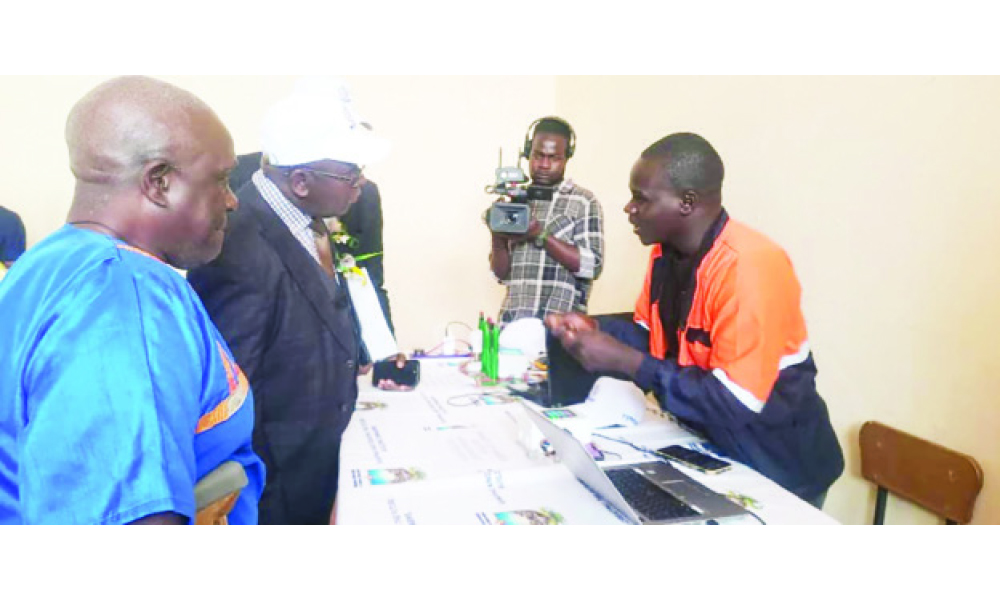
Fungai Lupande
Mashonaland Central Bureau
A BINDURA University of Science Education student has designed an IoT-based Smart Battery Management System that could transform the way solar batteries are monitored, secured and maintained in the smart energy era.
Joe Panashe Nyika, an electronic engineering student set to graduate next month, unveiled the innovation during the university’s Research and Innovation Week.
The system combines real-time monitoring, automated cooling, location tracking and password-protected terminal access to enhance the lifespan and security of solar batteries.
The device records key charging parameters such as voltage, current and temperature.
If the temperature rises above 27°C, an in-built cooling fan automatically switches on to prevent overheating.
To address the growing problem of theft and unauthorised use of solar batteries, Nyika integrated a GPS-based tracking system and terminal security.
Without the correct password, the system blocks output voltage, effectively locking out intruders.
“In the smart energy era, batteries are at the heart of solar and backup power systems, but they remain vulnerable to misuse and theft,” said Nyika.
“My system not only extends their lifespan but also enhances user confidence and safety.”
He added that while battery monitoring technologies exist, his innovation is unique because it combines tracking and password-controlled access.
With Zimbabwe and the world embracing renewable energy solutions, Nyika believes the technology can serve households, institutions, and solar farms alike.
His future plans include refining the prototype into a commercial product and seeking intellectual property protection.
Speaking at the same event, Professor Norman Takaidza, Chief Director of Human Capital Planning and Skills Development in the Ministry of Higher and Tertiary Education, Innovation, Science, and Technology Development, said innovation must take centre stage in Zimbabwe’s economic and social transformation.
He urged universities, industry, and Government to work hand in hand to create solutions that address national challenges.
“Supporting small to medium enterprises, expanding access to finance, and retooling our industries will open new market opportunities,” he said.
“But equally important, our innovation story must be told. The media has a role to highlight our successes, promote our plans, and project a positive national image.”
Professor Takaidza said Zimbabwe’s biodiversity presented vast opportunities in drug discovery, industrial chemicals and research-driven interventional programmes.
He commended universities for hosting workshops on intellectual property systems, the African-Indian ecosystem, and mechatronics, as well as for giving students a platform to brainstorm, prototype, and pitch real-world solutions.
“These initiatives nurture a culture of innovation and empower young minds not just to take jobs, but to create jobs,” he said.
“Industry must move beyond consuming research to co-investing in development, incubation, and commercialisation.
“In today’s interconnected knowledge economy, we must leverage regional and international frameworks, including global IP protocols, to position Zimbabwean innovations at the forefront.”



For decades we have been hearing of these fancy innovations from our students, all the way from village “engineers” to primary school children to university students. But we haven’t seen the gadgets being mass produced for commercial purposes. Where do they end up?