Sukulwenkosi Dube-Matutu [email protected]
GOVERNMENT has identified more than 100 dams for accelerated irrigation development that will bring an additional 113 000 hectares under irrigation by 2030 as Zimbabwe intensifies efforts to build climate-smart agriculture and strengthen national food security.
The programme forms part of the National Development Strategy 2 (NDS2), the Agriculture Food Systems and Rural Transformation Strategy 2 and Vision 2030 agenda to transform agriculture through irrigation development.
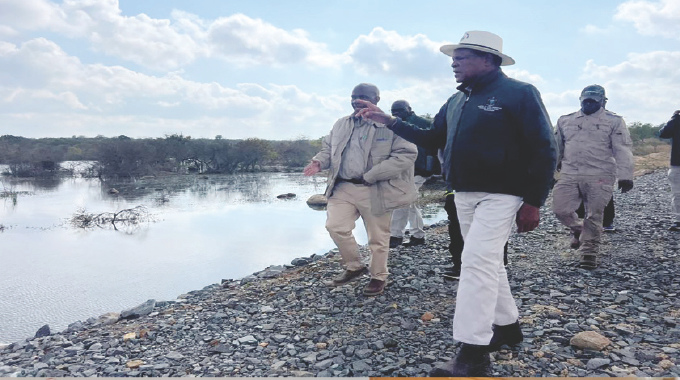
Speaking during the commissioning of the Wanezi Dam and Irrigation Scheme recently, the Minister of Agriculture, Mechanisation and Water Resources Development, Dr Anxious Masuka, said irrigation remains central to protecting the country against recurring droughts and climate change.
“We want to enhance climate-smart and climate-proof agriculture through accelerated irrigation development. The President has set an ambitious target of bringing 496 000 hectares under irrigation by 2030. We have about 258 000 hectares developed,” he said.
“We have identified more than 100 dams that will be prioritised to accelerate irrigation development on 113 000 hectares as we work towards achieving that target. We will be assessing these dams so that they become centres of agricultural production, value addition, employment creation and rural industrialisation.”
Dr Masuka said Government was also working to improve the performance of existing irrigation schemes by ensuring they operate as commercially viable enterprises.
Zimbabwe has 460 irrigation schemes with the potential to irrigate about 26 000 hectares. However, only about 19 000 hectares are under production due to governance, management and sustainability challenges.
To address these constraints, Government is implementing the Vision 2030 Accelerator Model, under which irrigation schemes are being registered as companies and supported through improved management structures.
“So far, 368 irrigation schemes have been registered and our target is to have all 460 registered and converted into viable, profitable and sustainable business entities by the end of the year. We want beneficiaries to become business-minded,” said Dr Masuka.
The minister said Agriculture and Rural Development Authority (ARDA) managers were being deployed to irrigation schemes to strengthen governance and improve productivity.
He urged farmers, particularly those in agro-ecological region four, to adopt climate-smart farming practices and grow crops suited to their environments.
“In areas without irrigation, particularly region four, we discourage the production of maize. Farmers should focus on traditional grains because they are better suited to the prevailing climatic conditions,” said Dr Masuka.
Government is also implementing a combined US$120 million irrigation investment programme aimed at expanding irrigated agriculture, rehabilitating existing schemes and strengthening long-term food security.
According to Government, Zimbabwe has increased land under irrigation from 171 000 hectares in 2020 to 258 773 hectares by May this year, representing a 51 percent increase and the fastest rate of irrigation expansion since Independence.
To achieve the national target of 496 000 hectares under irrigation by 2030, Government estimates that an additional 237 227 hectares must still be developed at an estimated cost of US$1,66 billion under the “A Dam is an Economy” strategy.
The expansion is expected to improve food production, create employment, stimulate rural industrialisation and cushion the agricultural sector against increasingly frequent climate shocks.
— @DubeMatutu