Online Reporter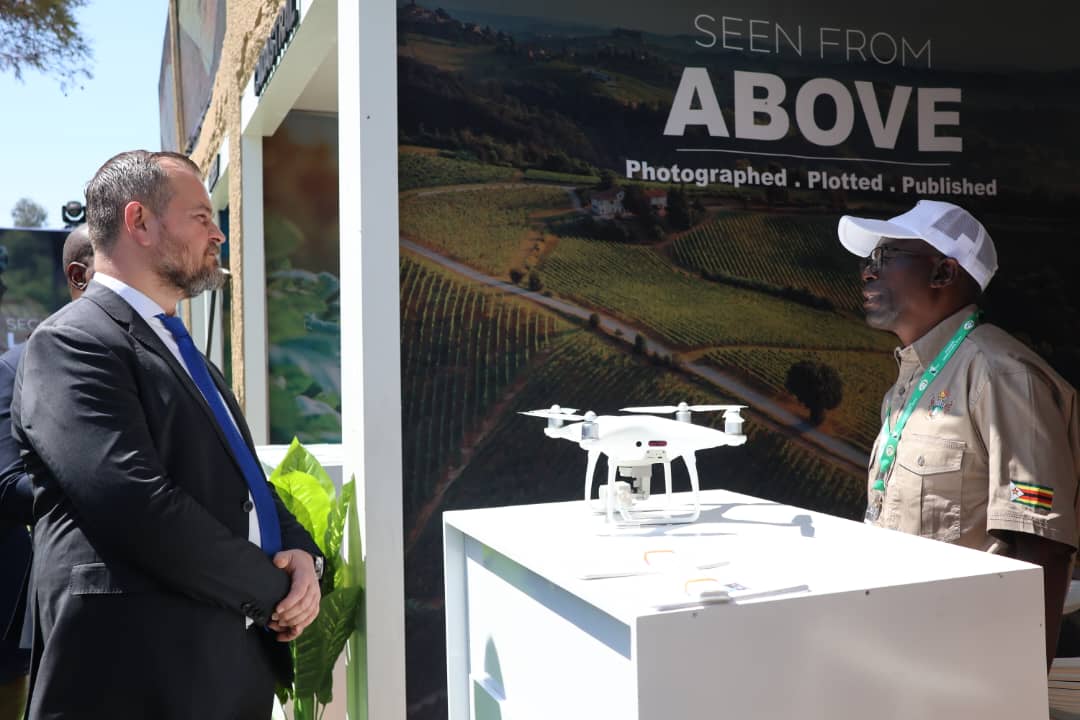
Theseus Mauruki Shambare
Government is developing a smart village model that will integrate rural communities into modern services, production systems and markets as it seeks to accelerate rural industrialisation and economic transformation.
Lands and Rural Development Minister Vangelis Haritatos said the model would move rural development beyond agriculture to encompass roads, healthcare, education, electricity, internet connectivity and modern technologies.
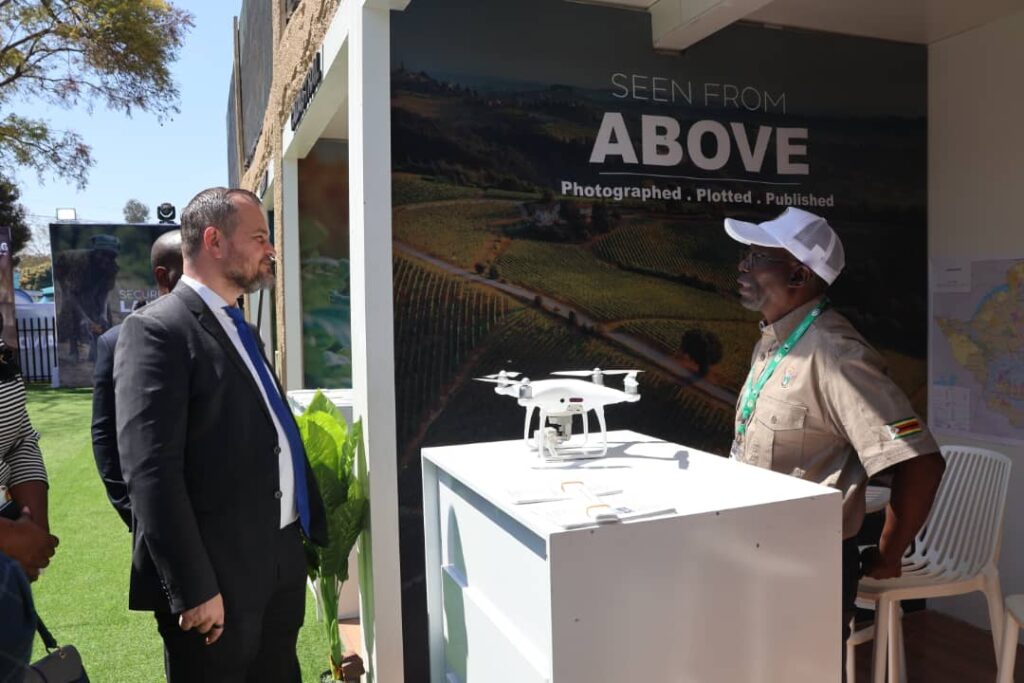
He was speaking in an interview during the ongoing 116th Zimbabwe Agricultural Show in Harare, running under the theme “Powering Growth: Where Agriculture, Technology and Commerce Converge.”
Minister Haritatos said Government viewed rural development as a coordinated process in which different services and infrastructure must work together to improve the livelihoods of rural communities.
“When we talk of rural development, when we talk about it, we talk about the roads leading to the village.
“We talk about the services that the village must provide its people, like clinics, like the education system, like electricity,” he said.
He said internet connectivity would also form part of the smart village model, allowing rural communities to access modern technologies and services.
The model will also incorporate Village Business Units, which Government intends to use as a foundation for rural production, aggregation and value addition.
Minister Haritatos said surplus agricultural produce from villages would be channelled to aggregation centres, where it could be consolidated, processed and prepared for larger markets.
“So, we need to bring in aggregation centres where we aggregate these villages so that excess produce goes into one hub, and then now we are able to value-add at that aggregation centre,” he said.
The approach is expected to help rural producers move away from selling raw commodities and retain more value through processing.
Minister Haritatos said the aggregation centres would provide a pathway for rural produce to reach towns and cities before being channelled to regional and international markets.
He said Government was considering hub-and-spoke models supported by cold-chain facilities and logistics systems to connect rural producers with wider markets.
The model could enable farmers in areas such as Murewa to supply distant markets, including China and Britain, once the necessary infrastructure and systems are in place.
“We want excess — anything excess — to come into an aggregation centre that can now be exported,” he said.
He said the concept of exports should not be limited to international markets, but also included moving surplus produce from villages to towns and cities.
Minister Haritatos said value addition would be central to the model, allowing rural communities to benefit more from their agricultural output before it leaves the production area.
The smart village concept therefore combines social infrastructure with economic development, creating communities that are connected to essential services while also being integrated into formal markets.
The initiative is expected to complement Government’s wider rural industrialisation agenda by creating opportunities for processing, logistics, employment and enterprise development within rural areas.
The initiative is also attracting interest from Belarus, with the country’s Ambassador to Zimbabwe Yury Nikalaichyk revealing that he had discussed possible cooperation in land administration with Minister Haritatos.
Ambassador Nikalaichyk said the discussions focused on the exchange of experience and best practices in land cadastre between the two countries.
“Just before this interview, I have met Honourable Vangelis Haritatos the Minister of Land, and we discussed preliminary some issues of cooperation in the land cadastre in exchange of experience and best practices for the land ministries of two countries,” he said.
He said the cooperation formed part of the broader strategic partnership between Zimbabwe and Belarus, which is being expanded beyond agricultural mechanisation into other areas of development.
Minister Haritatos said Government would coordinate the different components of rural development to ensure infrastructure, technology, services and economic opportunities developed in a complementary manner.
The smart village model forms part of Government’s broader efforts to modernise rural economies, strengthen agricultural value chains and create sustainable market opportunities for rural producers while advancing rural industrialisation.


 Vusumuzi Dube