Online Reporter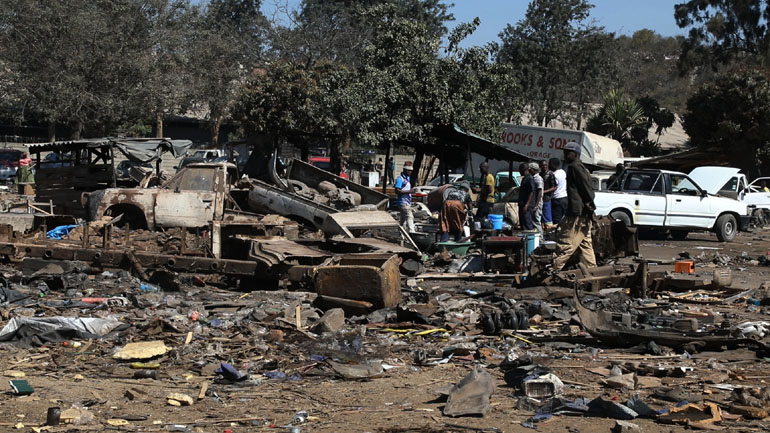
Ray Bande
Senior Reporter
SHARP and ear-piercing noise that came in screeching, shrieking and roaring sounds, emanating from grinders, hummers, welding machines or carpentry implements, were a constant feature as men and women laboured long and hard just to earn an honest living.
Sparks flew from welding torches as artisans bent steel into gates and window frames. Mechanics wrestled with stubborn engines. Carpenters transformed rough timber into furniture. Every corner of the sprawling market buzzed with activity.
Human and vehicular traffic jostled for space along narrow pathways, creating a congestion that both traders and customers had come to accept as part of daily life.
For many residents of Mutare and surrounding districts, Green Market was more than a marketplace. It was a one-stop industrial centre where affordable mechanical services, farming equipment, construction materials and household necessities could be obtained at a fraction of the cost charged by formal businesses.
Like many bustling economic centres, however, Green Market was not without its darker elements.
Con artists occasionally preyed on unsuspecting customers. Some individuals operated dubious businesses under the cover of legitimate trading activities. Women of questionable reputation also frequented the area, using various tactics to attract potential clients.
Yet despite these imperfections, Green Market remained an institution.
Behind the deafening noise, the crowded corridors and the rough-and-ready atmosphere stood a place that fed, clothed and educated thousands of families.
For many households in Mutare, especially in the high-density suburb of Sakubva, Green Market was a matter of survival.
The welding workshops, carpentry bays, mechanical repair sheds and metal fabrication businesses generated incomes that sustained countless families over the decades. School fees were paid from earnings made there. Homes were built. Businesses were launched. Dreams were pursued.
Many of today’s teachers, nurses, entrepreneurs, civil servants and professionals who grew up in Mutare owe part of their success to parents and guardians who earned a living at Green Market.
Put simply, Green Market was the breast that nursed generations.
The History
Established in 1982, barely two years after Zimbabwe attained independence, Murahwa People’s Green Market emerged as part of the vibrant informal trading culture that has long characterised Sakubva.
Originally created to serve a relatively small number of traders, the market became a hub for farmers, welders, mechanics, carpenters and countless informal entrepreneurs seeking opportunities outside the formal economy.
Over the years, the market grew far beyond its intended capacity.
What began as a facility designed to accommodate fewer than 100 traders eventually became home to more than 1 000 operators, transforming it into one of Mutare’s most important informal economic centres.
Among those who witnessed the market’s evolution first-hand is liberation war veteran, Mr Crispen Chapeyama, who has worked there since 1986.
“This place raised families. I came here after returning from the liberation struggle and was allocated a workspace in 1986. My children and many relatives whom I supported went to school from the income I earned here,” he said.
For traders like Mr Chapeyama, Green Market became more than a workplace. It became a second home.
The Decay
Ironically, Green Market’s greatest strength eventually became its greatest challenge.
As the years passed, increasing numbers of traders established businesses on the site, many without official approval.
The market, which was officially designed for just 88 registered traders, eventually hosted more than 1 000 operators.
The uncontrolled growth brought opportunities, but also serious challenges.
Congestion became a daily reality. Informal subletting flourished. Basic services came under immense pressure.
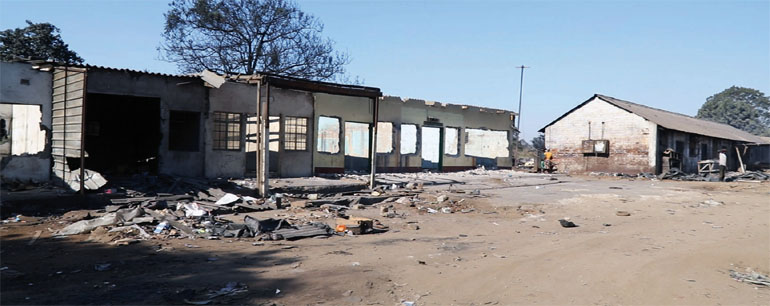
Water supplies struggled to meet growing demand, while sanitation infrastructure reached breaking point.
The situation became so severe that Mutare City Council reportedly had to assign an employee to remain permanently on-site to deal with constant blockages at the ablution facilities.
Mr Chapeyama recalls the strain vividly.
“As the numbers increased, some people simply came and started their businesses without official authorisation. Somehow we continued, but the facilities were under enormous pressure.
“We had around 10 water points, which helped, but some facilities could no longer cope.
“The toilets were no longer fit for purpose.
“The council had to station an employee here because blockages happened almost every day, sometimes three times a day,” he said.
The signs of decay had become impossible to ignore.
For many, renewal was no longer a choice. It was a necessity.
The Transformation
Today, Green Market stands on the threshold of its most significant transformation since its establishment more than four decades ago.
Through a partnership involving the Government, Mutare City Council and the National Social Security Authority (NSSA), the area is being redeveloped into a modern US$6 million Sakubva Industrial Hub.
The project seeks to replace outdated infrastructure with an organised, modern and dignified trading environment capable of supporting the next generation of entrepreneurs.
Already, more than 340 traders have relocated to a temporary site near Quest Motors to pave the way for construction.
For many, the move represents hope for a better future.
Yet the transition has not been without difficulties.
Many traders had to fund the construction of temporary workstations from their own pockets despite operating hand-to-mouth businesses.
Mr Chapeyama said numerous traders struggled to raise the required funds.
“Many relocated traders did not have money to build structures at the temporary site. We are grateful to a local businessman who assisted many of them with loans so that they could continue operating,” he said.
He also highlighted pressing concerns at the temporary site, including inadequate water supplies, insufficient ablution facilities and lack of electricity.
“These issues need urgent attention because they can quickly become a health hazard. Electricity is particularly important because many traders cannot operate without it.”
Murahwa People’s Green Market Committee chairperson Mr Ernest Muchakuya echoed similar sentiments.
“No one wants to work from a dirty place. We all appreciate the efforts to transform Green Market into a world-class industrial hub.
“However, the relocation process should also be humane. Most traders survive from hand to mouth. Ideally, they should have moved to a site with basic structures, water and electricity already in place,” he said.
Memories That Will Never Fade
The old Green Market may soon give way to modern facilities, organised workspaces and improved infrastructure, but its legacy cannot be demolished.
Its story is written in the lives it transformed.
It lives on in professionals who were educated from the sweat of welders and carpenters. It lives on in families that survived difficult economic times because someone had a small workshop at Green Market.
The new Sakubva Industrial Hub promises a brighter future, improved working conditions and greater economic opportunities.
But as bulldozers prepare to reshape the landscape, one thing remains certain: the old Green Market will forever be remembered as a place where generations were nurtured, livelihoods were built and hope was forged amid the noise of hammers, grinders and determination.



 Moffat Mungazi