Online Reporter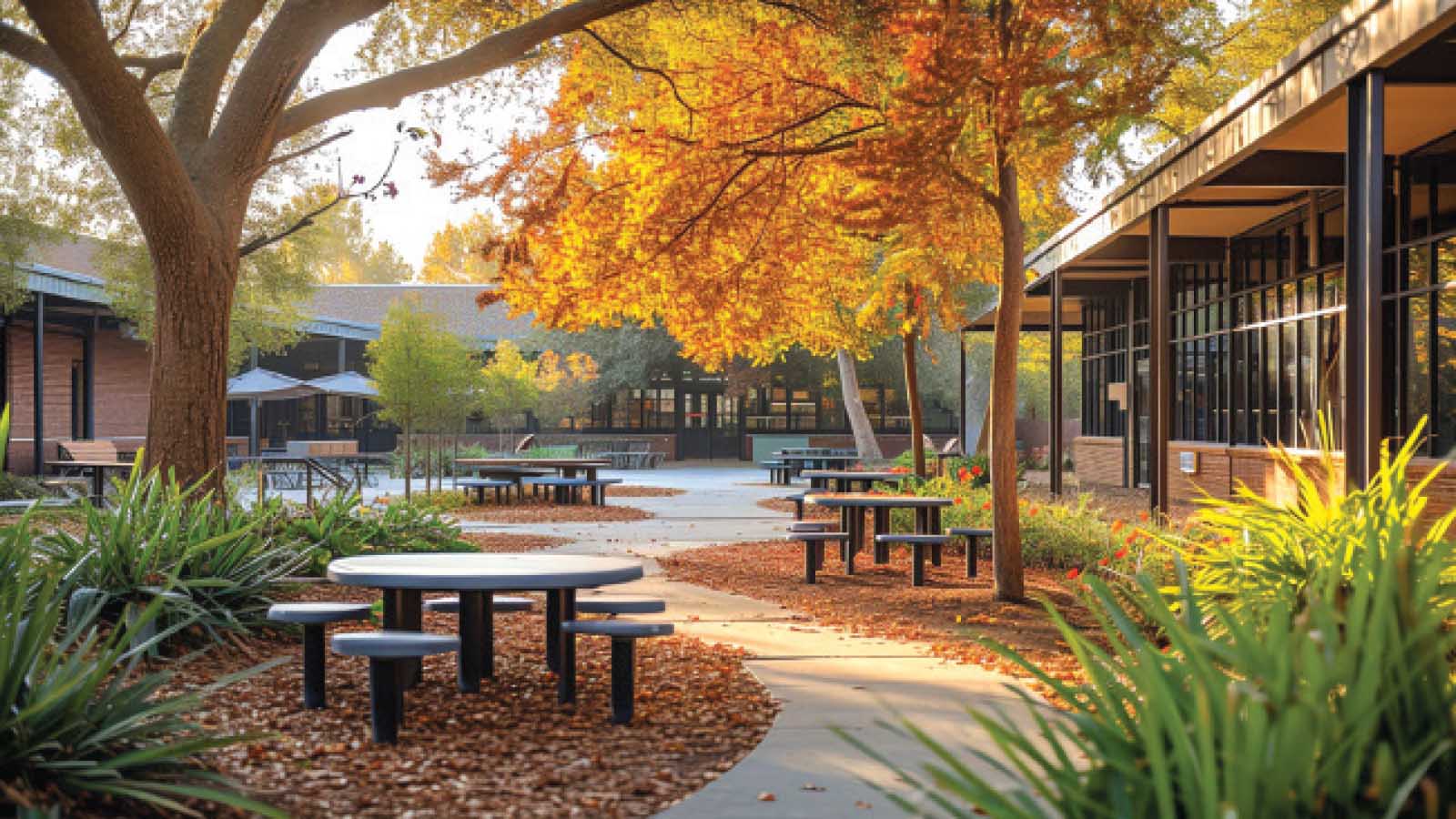
Adapting urban spaces to tackle climate change through nature-based solutions, especially in school playgrounds and environments, benefits both children and society as a whole.
This is one of the main findings of a three-year study conducted by a group of experts at European universities and research centres under the leadership of a team of researchers at the Universitat Oberta de Catalunya (UOC) and Universitat Politècnica de Catalunya — BarcelonaTech (UPC).
The study, titled COOLSCHOOLS, is an interdisciplinary applied research project that seeks to analyse the many benefits of nature-based solutions for climate adaptation.
“Greening school environments is more than just a climate adaptation strategy. It is essential for ecosocial education, environmental justice and planetary health,” said Isabel Ruiz Mallén, co-leader of the study and co-coordinator of COOLSCHOOLS.
Ruiz Mallén is a member of the Faculty of Psychology and Education Sciences and researcher at the TURBA Lab group, which is affiliated to the UOC-TRÀNSIC research centre, a team that analyses urban designs and transformations from an environmental and technological point of view and based on a critical and interdisciplinary approach.
The study uses scientific research to examine the transformative impact of greening actions in school playgrounds to tackle climate change in schools.
Its assessment draws from aspects of natural, biomedical, social and educational sciences. The project’s objectives are: to ascertain how climate shelters in school environments can enable the implementation of governance practices aimed at urban transformation that ensures inclusion and the sharing of power among all the stakeholders involved; to carry out and promote the concept of nature-based climate shelters, moving away from traditional closed, climate-controlled spaces; to drive urban transformation on a larger scale by using schools as strategic hubs for positive climate action; and to assess their effects based on a holistic approach, taking into account matters such as social justice, biodiversity, public health, safety, inclusive governance and educational quality.
According to the European Climate and Health Observatory, the “heat island” effect has increased heat-related health risks for 40 percent of schools located in cities.
Furthermore, it is estimated that, in almost 90 percent of primary schools, less than one third of services, areas and infrastructure is located within 300 metres of a green area.
“As shown in previous research, grey school playgrounds and environments, i.e. those predominantly composed of cement and other synthetic materials, weaken children’s bond with nature, reducing their ability to act responsibly and constructively in the face of climate change,” said Francesc Baró, co-coordinator of the project and co-leader of the work, a researcher in the Department of Civil and Environmental Engineering at the UPC and the Vrije Universiteit Brussel (VUB).
“If we don’t take action in school environments, a greater proportion of children will be exposed to growing risks associated with extreme heat and air pollution,” said Baró.
Transforming society through greening
Following the study and the analysis of its findings, the experts are calling for the principles of building shared spaces and natural and climate-adapted areas, especially in and around schools, to take priority in the design of urban environments.
“In addition to helping to reduce temperatures and increase the amount of greenery to tackle the effects of extreme heat, transforming school environments into nature-based climate shelters promotes quality education, ecological restoration, empowerment and reconnection with nature, providing children with healthier, safer, play-friendly, equitable and climate-ready spaces,” said the researchers.
According to the authors, such well-designed and climate-adapted spaces can transform various sectors of society, as well as change ways of thinking, interactions between people and our relationship with nature.
“Building liveable, inclusive and climate-resilient cities involves working together to turn school environments into nature-based climate shelters.
“This isn’t just because of children’s vulnerability but also because of their visionary ideas,” said Ruiz Mallén, who highlighted the power of children’s imagination as a raw material for the future of society.
“Beyond their value to the schools themselves, nature-based playgrounds can trigger a broader urban transformation.
“Schools do not exist in isolation from the towns or neighbourhoods in which they are located; they are levers for systemic change,” said the UOC researcher.
Thus, the use of an adapted design aimed at building and consolidating open and accessible public spaces broadens its reach and its impact on society beyond the educational community.
For example, such spaces can foster inclusive and resilient urban design practices while inspiring the redesign of parks and other shared urban infrastructure.
“This strategy brings countless social and environmental benefits to surrounding neighbourhoods. This is why nature-based school playgrounds present a unique opportunity to give everyone equal access to nature in cities,” said the authors.
A growth model for the present day
The study is thus a call for greater emphasis to be placed on enhancing, protecting and looking after shared, natural and climate-adapted spaces in the construction and adaptation of cities and urban environments.
“This premise should be a design principle, not a secondary consideration,” said Ruiz Mallén.
“Failing to include nature as a co-educator deprives today’s children of the opportunity to have the tools and values necessary to lead sustainable and inclusive cities.
“There is a risk that younger generations will not be motivated to question the status quo and seek solutions to the many global crises facing them,” said Baró.
These experts are calling for greater engagement from the authorities in the form of ambitious and adequate budgets, an investment in the future to transform and maintain school playgrounds and other spaces for the benefit of society as a whole.
The COOLSCHOOLS project has received over €1,5 million in funding from the JPI Urban Transformation Capacities (JPI Urban Europe) fund, of which the Spanish State Research Agency (AEI) is a member. — uoc