admin
admin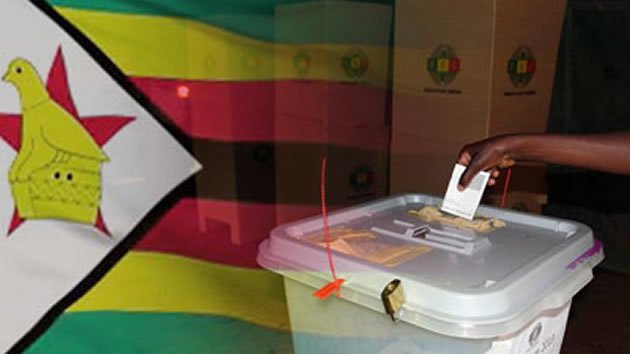
Trust Maanda
Post Correspondent
THE right to free, fair and credible elections for any public office, established in terms of the Constitution or any other law, is a fundamental right guaranteed to every Zimbabwean citizen by the Constitution of Zimbabwe.
Pursuant to Section 157(1) of the Constitution which provides that an Act of Parliament must provide for the conduct of elections to which the Constitution applies, the Electoral Act (Chapter 2:13) is the Act enacted to provide for the conduct of the harmonised elections.
The Act sets out how the electorate exercises the right to vote.
In terms of Section 155 of the Constitution, elections must be peaceful, free and fair.
They must be conducted by secret ballot and based on universal adult suffrage and equality of votes.
Sections 54 to 70 of the Act contain measures that give effect to the principles that govern the conduct of elections in Zimbabwe.
Section 54 of the Act requires a presiding officer to ensure that the ballot box is empty not more than 30 minutes before the commencement of the poll at any polling station on the day of the vote.
The check is carried out in the presence of other election officers, candidates, election agents and accredited observers.
The ballot box itself must be translucent.
The presiding officer shows the interior of the ballot box to the persons present before sealing it, leaving open the aperture for marked and folded ballot papers to be dropped into the ballot box.
A prospective voter enters a polling station and approaches the presiding officer to apply for the ballot paper.
Section 56(2) of the Act allows the presiding officer to pose to an applicant for a ballot paper questions he or she considers necessary to ascertain whether or not the applicant is registered as a voter on the Voters Roll for the ward in which the polling station is situated.
An applicant for a ballot paper should produce his or her voter’s registration certificate or proof of identity.
The applicant is examined to ascertain whether or not he or she has previously received a ballot paper for that election.
If the applicant has previously received such a ballot paper, the presiding officer shall not hand him or her another ballot paper.
After the examination and it has been established that the prospective voter has not previously received such a ballot in the election, he or she is handed a ballot paper for the Presidential Election, the Parliamentary Election and the Local Authority Election.
After handing an applicant a ballot paper, the applicant is required to dip his or her index finger in indelible ink.
When the applicant has received the ballot paper, he or she takes the ballot paper to a compartment, which is a booth provided for the purpose.
The booth is designed to ensure that the voter can vote in secret.
Alone in the booth, the voter is free to indicate the candidate he or she is voting for by placing a cross in the rectangle opposite the candidate’s name on the ballot paper.
After voting and folding the ballot paper so that the official mark is visible but the names of the candidates and the cross made are not visible, the voter drops the ballot paper in the translucent box that will be placed in front of the presiding officer.
Section 59 of the Act provides for voting of registered voters who include illiterate persons or physically handicapped voters.
These may be assisted by other persons of their choice in exercising their right to vote.
A person permitted to assist a voter does not have to be a registered voter, but shall not be a minor, electoral officer, accredited observer, chief election agent, election agent or a candidate in the election.
The presiding officer must keep a special register in which he or she shall record the name and particulars of every person they permit to assist a voter, the name of the assisted voter, as well as why that voter needed assistance.
All of the presiding officer’s actions are done in the full view and observation of the candidates present, the election agents, accredited observers, and other electoral officers present.
The Constitution therefore provides for the principles that guarantee free, fair and credible elections, which the Electoral Act gives effect to.
Trust Maanda is a legal practitioner and a partner at Maunga Maanda And Associates. He writes in his personal capacity. He can be contacted on +263 772432646



 Online Reporter