Lovemore Kadzura
Post Reporter
RAINFALL usually brings relief to rural communities, particularly farmers waiting to plant their summer crops.
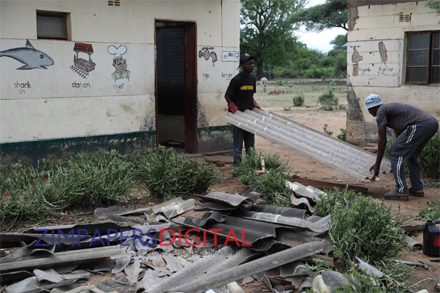
But for some rural schools in Manicaland, the arrival of the rainy season now comes with another concern – damaged classrooms, exposed roofs and buildings struggling to withstand hailstorms and heavy rains.
Recent storms have damaged school infrastructure in Chipinge, Nyanga, Buhera and Makoni districts, exposing the vulnerability of ageing buildings and raising concerns about the safety of learners and teachers.
Last week, hailstorms destroyed buildings at St Luke’s Primary School, while Chitsva Primary School suffered extensive damage from storms in October. Heavy rains and hailstorms also affected communities in Mutovhoti, Chichichi and Ngaone Toti in Chipinge District.
For rural schools, damaged infrastructure presents challenges beyond the immediate cost of repairs. Deteriorating classrooms and other facilities threaten the safety of learners and teachers, while exerting additional pressure on already constrained resources.
Many rural school buildings date back several decades. Years of exposure to harsh weather have weakened roofing sheets, timber trusses and walls, leaving some structures vulnerable to heavy rains, strong winds and hailstorms.
The damage has renewed questions about how schools can protect their infrastructure, prepare for weather-related disasters and maintain safe learning environments.
Ministry of Primary and Secondary Education spokesperson, Mr Taungana Ndoro, said Government recognises the threat posed by extreme weather conditions, including hailstorms, heavy rains, strong winds and flooding.
He said protecting learners, teachers and other school personnel remained a priority, adding that the ministry is working with relevant departments and authorities to repair damaged buildings and improve infrastructure resilience.
“The ministry is prioritising the development and maintenance of safe, climate-resilient school infrastructure. This includes strengthening infrastructure planning, promoting appropriate construction standards and ensuring that weather-related risks are considered in the construction, rehabilitation and maintenance of school buildings,” said Mr Ndoro, urging school authorities to inspect their buildings regularly and report storm damage promptly to relevant education offices.
Such reports, he said, will help the ministry coordinate interventions and prioritise urgent repairs, particularly where damaged structures threaten the safety of learners and teachers.
Mr Ndoro acknowledged that some schools, especially those in rural communities, have ageing infrastructure requiring regular assessment and maintenance.
Through provincial and district structures, the ninistry works with technical departments and local authorities to identify infrastructure deficiencies and assess buildings requiring rehabilitation.
He said authorities should restrict access to buildings considered unsafe until technical teams complete assessments and recommend remedial work.
“Where buildings are considered unsafe, appropriate measures must be taken to protect learners and teachers, including restricting access to affected facilities pending the necessary technical assessments and remedial interventions,” he said.
The ministry also wants schools to strengthen routine infrastructure maintenance rather than wait for major damage before seeking assistance.
However, rehabilitating ageing schools and constructing climate-resilient facilities requires financial resources, a challenge that continues to complicate infrastructure development.
Mr Ndoro said the ministry prioritises projects according to the condition of existing buildings, enrolment pressures, available resources and the needs of disadvantaged and underserved communities.
He said Government continue to engage Treasury, local authorities, development partners and other stakeholders to mobilise additional funding for infrastructure development and rehabilitation.
“The ninistry works within the provisions of the national budget and continues to engage Treasury, local authorities, development partners and other stakeholders to mobilise additional resources for infrastructure development and rehabilitation,” he said.
The ministry also works with Government departments, local authorities and technical institutions to ensure that new school infrastructure complies with building regulations and approved construction standards.
Mr Ndoro said construction projects should undergo technical scrutiny, including design assessments, supervision and inspections to ensure contractors meet approved specifications.
He said Government wants to expand access to education while ensuring that schools provide safe and sustainable learning environments capable of withstanding unpredictable weather conditions.
But beyond Government interventions, education stakeholders believe schools must also take practical steps to protect their infrastructure against weather-related losses.
Education Coalition of Zimbabwe Manicaland Chapter chairperson, Mr Charles Musembwa, urged school authorities to embrace property insurance, arguing that insurance could help institutions manage the financial consequences of damaged buildings.
He said schools should treat insurance as an essential protection measure rather than an unnecessary expense.
“El Nino-induced drought, which will be accompanied by negative weather patterns such as hailstorms and violent winds, possess great risk to both private and public property. We are now seeing the effects following the start of the rainy season,” said Mr Musembwa, calling for greater awareness among education stakeholders and communities about disaster risk management.
Mr Musembwa said only a limited number of schools in Manicaland insured their infrastructure against damage, leaving many institutions exposed to potential financial losses.
He urged school authorities to consider insurance as part of their infrastructure protection strategies.
“In Manicaland Province, we have very limited number of schools which have insured their infrastructure from damages. We are working with communities and institutions conscientising them on disaster risk management,” he said, while emphasising the importance of maintaining learning continuity when disasters damage school buildings.
Mr Musembwa said partnerships can help provide temporary tents when disasters strike, allowing learners to continue their education, while authorities address damaged infrastructure.
“When a disaster strikes school infrastructure learning must not stop and through partners temporary tents can be availed,” he said.
Zimbabwe Rural Teachers Union of Zimbabwe president, Mr Martin Chaburuminda, also called for gradual renewal of ageing school buildings and teachers’ residences, particularly in rural areas.
He said some primary schools have buildings dating back to the 1920s, arguing that many require substantial upgrading to meet present-day needs.
Mr Chaburuminda said resource constraints make immediate replacement of all ageing structures difficult, but authorities should pursue gradual modernisation.
“Most schools in rural areas especially primary were constructed long ago some in the 1920s. We have noted that some of them were constructed up to standards as they were meant for the indigenous populace. These buildings now require renewal,” he said, adding that authorities should prioritise the safety of learners and teachers when planning infrastructure rehabilitation.
“We understand there are resource constraint and we suggest that the renewal be done gradually so that schools are modernised. The school must remain safe for the pupil and the teacher,” he said.
Hailstorms expose vulnerability of rural schools