Online Reporter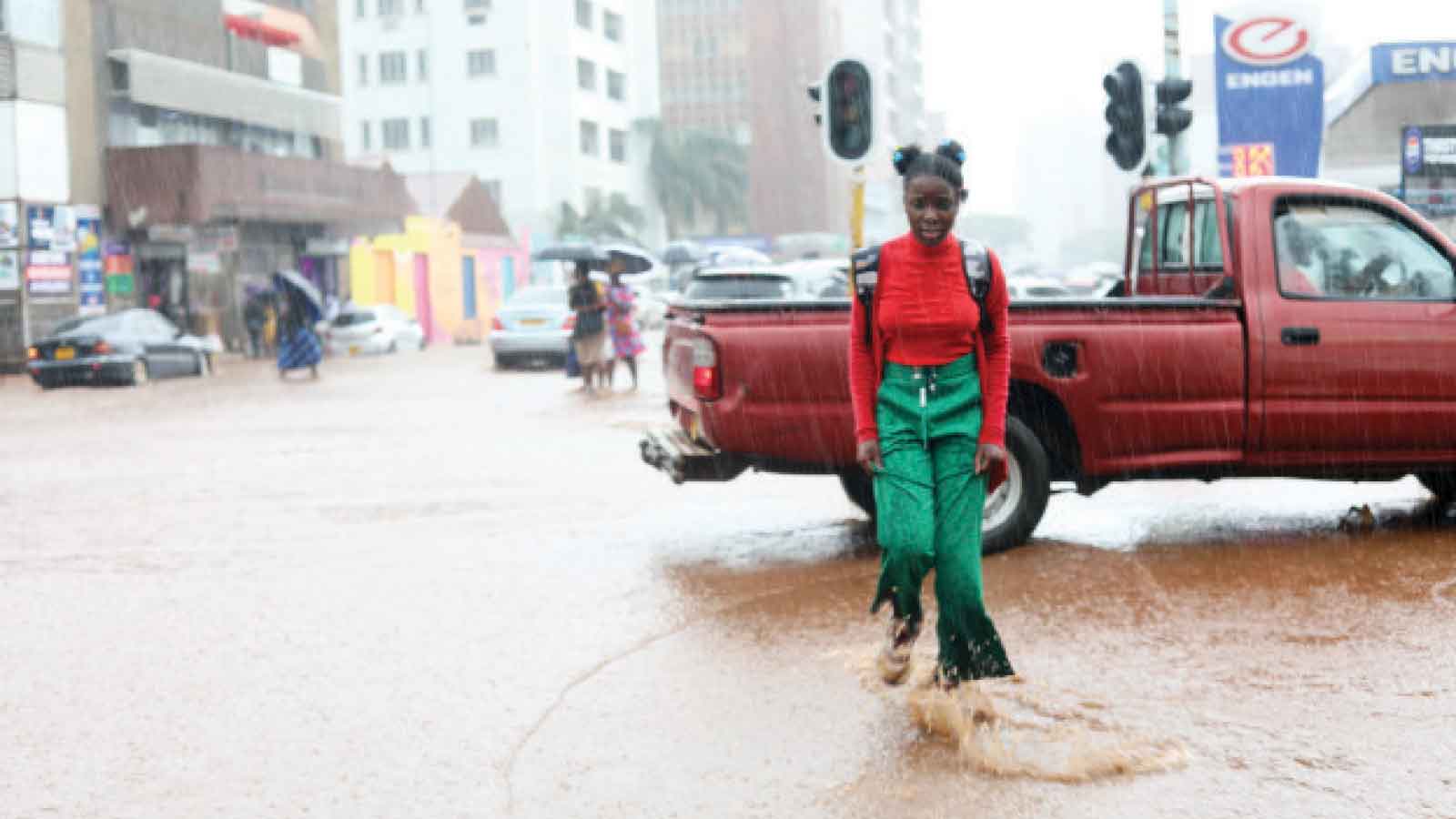
Daphine Zulu
AS the rainy season sweeps across the country, Harare’s streets are once again turning into rivers, and homes into temporary lakes.
Each downpour exposes a glaring truth: the city’s drainage system is groaning under pressure, and its failure is no longer a minor inconvenience, but a looming disaster that threatens lives, property, and the city’s future.
What should be a routine rainy season has become a yearly spectacle of flooded roads, stranded commuters, and damaged homes, highlighting decades of neglect, poor planning, and governance failures.
What was once considered an occasional inconvenience has now become a recurring crisis. What will become of Harare in the next 10 years?
It seems that at the heart of Harare’s flooding woes lies its antiquated drainage infrastructure. Many stormwater drains, culverts, and pipes were designed decades ago, when the city’s population was a fraction of today’s.
Over time, these systems have been overburdened, neglected, and in some cases, obstructed by silt, waste, and debris. During peak rains, water that should flow freely through these channels often stagnates in streets and low-lying areas, turning neighbourhoods into temporary lakes. The economic impact is tangible: homes are damaged, roads are impassable, and businesses lose income, all while the city spends millions in post-flood clean-up operations that could have been avoided with preventive maintenance.
Urban planning failures seem to be compounding the problem, for rapid rural-to-urban migration has led to the expansion of informal settlements, often on wetlands and other ecologically sensitive areas.
Even in planned suburbs, poor zoning decisions have seen housing stands allocated in flood-prone areas, sometimes due to financial pressures on the city council to raise revenue through land sales. The result is predictable: heavy rainfall translates into widespread flooding, endangering residents and straining emergency services. Talk of Glen View’s new stands, Glen Nora’hs Mtungwazi area, Waterfalls retreat, Budiriro, Rydale Ridge (to mention a few) were flooding remains a perennial challenge. Who is to account for this?
There is also a cultural and behavioural dimension to Harare’s drainage challenges. Many residents, unaware or unconcerned about the implications, dispose of household waste directly into streets and drains. Plastic bags, food packaging, and other debris block culverts and channels, reducing the flow of stormwater and exacerbating flood risks.
While municipal authorities are partly responsible for clearing and maintaining drains, community participation is crucial. Without collective responsibility, even upgraded infrastructure will fail during torrential rains.
Corruption and underfunding further undermine drainage management. Over the years, numerous reports have highlighted mismanagement of municipal resources, with funds earmarked for drainage maintenance either misappropriated or inadequately used. Routine maintenance, which should include clearing drains before the rainy season and repairing damaged culverts, often does not occur at the scale needed. When heavy rains come, the city is left scrambling, responding reactively rather than proactively.
Climate change adds yet another layer of urgency. Rainfall patterns are becoming more unpredictable, with occasional intense downpours causing flash floods that the existing system cannot handle. The city must prepare for not only heavier rains but also longer periods of wet conditions, which increase soil saturation and reduce the capacity of drains to manage stormwater. Without forward-looking investment, Harare’s drainage system will continue to fail, leaving residents exposed to repeated disasters.
Some may argue that the financial burden of large-scale drainage rehabilitation is too high. Yet, the cost of inaction is far greater. Every flood season, the city spends significant sums on emergency response, repairs, and disaster relief. Businesses lose income, homes are damaged, and residents incur out-of-pocket expenses to mitigate flooding impacts. Investing in proper drainage is not a luxury; it is an economic necessity, ensuring the city’s growth and resilience in the long term.
Moreover, Harare can learn from other cities facing similar challenges. Cities in Kenya, South Africa, and Asia have successfully implemented integrated drainage systems, combining infrastructure upgrades with community participation, spatial planning enforcement, and environmental conservation. Such models demonstrate that with political will, effective planning, and citizen cooperation, urban flooding can be substantially mitigated.
As the current rainy season unfolds, Harare once again confronts the familiar sight of submerged streets, stranded commuters, and flooded homes. For flooding remains not as a mere seasonal inconvenience; but a symptom of systemic failures.
Addressing it requires more than temporary clean-ups. It demands a sustained commitment to infrastructure investment, proper urban planning, environmental protection, and civic responsibility.
Harare’s drainage crisis is not merely a technical issue; it is a test of governance and foresight. Experts have repeatedly warned that the city needs a comprehensive, long-term strategy to address flooding. This may include, the rehabilitation and expansion of drainage infrastructure, strict enforcement of spatial planning laws with land developers and city planners being held accountable for decisions that exacerbate flooding risks.
Residents must also be educated on proper waste disposal, and the importance of keeping drains clear. Integration of environmental considerations into urban planning, for protecting natural wetlands can serve as a buffer during heavy rainfall, to absorb excess water and reduce the risk of flash floods. There is also need for transparency and accountability in municipal governance.
Harare’s residents deserve a city that drains efficiently, protects lives, and safeguards property. The rains may be inevitable, but the floods are not. With foresight, accountability, and collective effort, the capital can transform its drainage crisis from a perennial disaster into a model of sustainable urban resilience. Until that happens, each rainy season will continue to serve as a stark reminder of what happens when planning, governance, and maintenance fall behind the demands of a growing city.
Until then, each rainy season will continue to serve as a stark reminder of what happens when neglect, corruption, and poor planning conspire against a city and its people.
The time to act is now for every day of delay costs livelihoods, and the future of the city. Harare’s floods are a warning, and warnings are meant to be heeded!