Jabulani Garwi-Correspondent
On a dry morning in a small Zimbabwean village, a farmer observes the early flowering of the munanga tree (Acacia nigrescens) and notes unusual patterns of migratory birds overhead.
To an outsider, these may seem coincidental, but to the local community, they are time-tested environmental cues that guide rainfall preparation, planting schedules and safeguarding of livelihoods.
Across Southern Africa, such observations form part of intricate indigenous knowledge systems (IKS) that have long enabled communities to live in harmony with their environment. Yet today, these time-honoured methods face unprecedented threats from both modernisation and climate change.
Accelerating climate change disrupts ecological patterns and undermines the social and cultural frameworks that sustain indigenous environmental knowledge. As societies increasingly rely on modern scientific techniques, often applied without contextual adaptation, many traditional systems of knowledge, once reliable for generations, are marginalised or forgotten.
The irony is stark: while modern science models and predicts climatic variability through complex technologies, local communities already possess knowledge systems refined over centuries precisely for this purpose.
The erosion of indigenous knowledge represents not only a cultural loss but a strategic misstep in confronting intensifying climate crises.
Modern science and indigenous wisdom need not be in competition. Yet the prevailing development paradigm, overly reliant on technocratic solutions, frequently relegates local practices to the margins of policy and planning.
This marginalisation weakens community resilience and erodes local adaptive capacity. In Zimbabwe and across Africa, displacing indigenous knowledge systems with imported approaches has resulted in unsustainable agricultural models, loss of biodiversity, and heightened vulnerability to climate shocks.
The solution is not to reject science, but to recalibrate: moving away from overdependence on imported technologies and reinstating indigenous knowledge systems as central pillars in climate adaptation and sustainable development.
Indigenous knowledge is neither primitive nor static. It is dynamic, empirical and deeply rooted in environmental observation.
In Zimbabwe, communal farmers have long relied on local ecological indicators to forecast weather and plan agricultural cycles. The flowering of munanga trees signals the onset of rains, termite activity indicates soil moisture, and the appearance of the Christmas beetle forecasts imminent rainfall.
Phenological cues, such as the flowering of musasa (brachystegia spiciformis) and munhondo (julbernardia globiflora), or the fruiting of mazhanje (uapaca kirkiana), guide planting and harvesting.
Celestial observations, including halos around the sun or moon and the shifting position of the Milky Way, further enrich this sophisticated indigenous meteorology.
Far from superstition, these insights are grounded in generations of empirical evidence.
They have enabled communities to cultivate resilience, optimise water use and maintain food security under uncertain conditions. Agroforestry practices, intercropping, crop rotation, and the cultivation of drought-resistant species, such as millet and sorghum, have all emerged from indigenous knowledge frameworks.
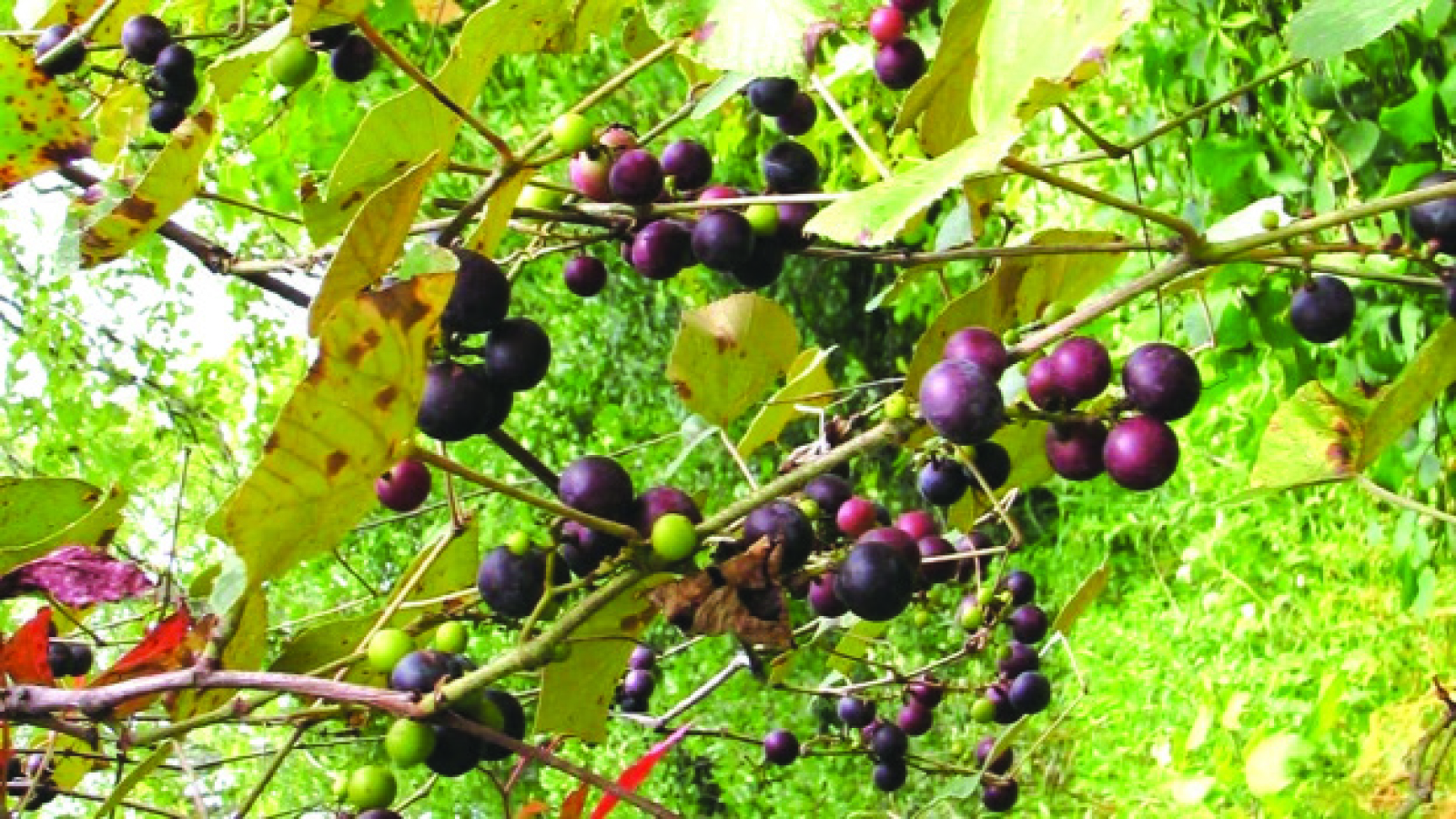
Knowledge of wild edible plants like maungu (landolphia buchananii), shumha (diospyros mespiliformis) and masau (ziziphus spp.) has helped communities endure periods of food scarcity. Collectively, these practices constitute adaptive strategies that are both ecologically sound and economically viable.
However, globalisation and modernisation increasingly devalue traditional knowledge systems.
Younger generations migrate to urban centres, formal education systems privilege Western scientific paradigms, and policy institutions seldom recognise local expertise.
Climate change compounds this marginalisation by disrupting ecological indicators, making certain traditional signs less reliable and eroding confidence in indigenous knowledge systems.
Paradoxically, these challenges underscore the urgency of revitalising these systems, as they offer locally grounded, cost-effective, and culturally sustainable methods of adaptation that modern science alone cannot replicate.
The strategic integration of indigenous knowledge into climate policy is not an act of nostalgia but a practical necessity.
Zimbabwe’s Vision 2030 and its commitments to the Sustainable Development Goals, particularly zero hunger, clean water and climate action, can only be realised through knowledge systems that are contextually rooted and socially inclusive.
Revaluing them entails recognising indigenous farmers, elders and community leaders as co-producers of knowledge. It also demands policy frameworks that document, preserve and institutionalise traditional practices alongside scientific innovations.
International recognition by the Intergovernmental Panel on Climate Change (IPCC) and the African union affirms that local knowledge is indispensable to effective adaptation.
For Zimbabwe and other African states, sustainable development lies not in wholesale adoption of Western scientific models but in a balanced synthesis, where indigenous wisdom and modern technology coexist in mutual reinforcement.
Restoring indigenous knowledge systems into national strategies would revitalise local governance, foster community participation and strengthen grassroots resilience. Above all, it would reassert an African epistemology of adaptation, valuing careful observation, respect for nature and the continuity of cultural heritage.
Ultimately, traditional knowledge systems are more than a historical legacy. They remain vital instruments of adaptation and survival. Marginalising them in favour of conventional approaches is both unsustainable and strategically flawed.
Revitalising these systems offers Africa a pathway not only to climate resilience, but also to the reclamation of intellectual sovereignty and ecological wisdom. Drawing on the deep reservoirs of knowledge that have sustained its peoples for centuries, Africa can confront climate change with insight rooted in its own heritage.
Jabulani Garwi (PhD) is a sustainability scholar specialising in climate change, sustainable agriculture and environmental governance. He is a research fellow affiliated with the University of the Free State, South Africa. He writes in his personal capacity. Feedback: Email: [email protected] | Call/WhatsApp: +263 77 587 7869.