Online Reporter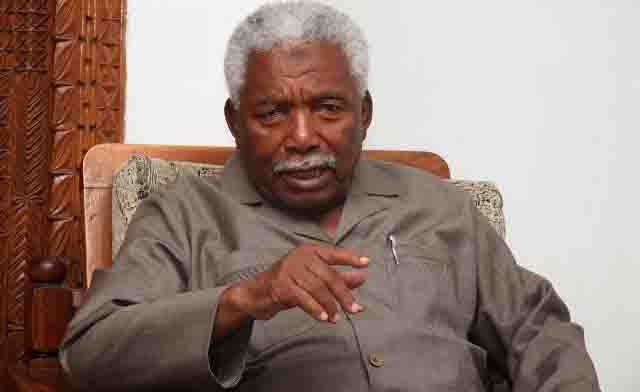
Lloyd Makonya
Correspondent
WHEN Zimbabwe marks 46 years of independence on April 18, the national narrative rightly centres on the sons and daughters who carried the armed struggle, endured detention, exile and sacrifice and ultimately secured majority rule in 1980.
Yet the architecture of that victory extended beyond Zimbabwe’s borders. In Dar es Salaam, in the corridors of the then Organisation of African Unity (OAU) now African union (AU), a Tanzanian officer quietly worked to ensure that Zimbabwe’s liberation was, not an isolated rebellion, but a continental mandate.
That officer was the late Brigadier-General (Rtd) Hashim Mbita.
To describe Brig-Gen Mbita merely as a regional liberation strategist is accurate, but incomplete.
For Zimbabwe, he functioned as a guarantor of continuity, the man who ensured that when political divisions, logistical shortfalls or diplomatic fatigue threatened to stall momentum, the broader African consensus did not fracture. In an era when liberation movements depended, not only on courage, but on coordination, Brig-Gen Mbita professionalised solidarity.
As Executive Secretary of the OAU Liberation Committee from 1972 to 1994, Brig-Gen Mbita transformed what could have remained a symbolic body into a disciplined operational mechanism.
The Liberation Committee, hosted in Tanzania under the patronage of President Julius Nyerere, became the clearing house for material assistance, diplomatic recognition and strategic coherence among African liberation movements.
For Zimbabwe’s nationalist movements operating under immense pressure from the Rhodesian regime this institutional backing mattered profoundly. Funding streams were rationalised. Military training opportunities were coordinated. Diplomatic advocacy at multilateral platforms was structured. Rather than ad-hoc support, Zimbabwe’s struggle was embedded within a continental programme whose objective was committed to the dismantling of settler colonialism across Southern Africa.
Brig-Gen Mbita understood that the Zimbabwean theatre was central to the regional equation. Rhodesia was, not merely a domestic anomaly, but was a linchpin sustaining minority rule in the subcontinent. Weakening it would alter the balance of power across Southern Africa. His stewardship ensured that Zimbabwe’s liberation fighters were not isolated actors, but beneficiaries of an integrated regional support system.
Brig-Gen Mbita did not command troops in the field on Zimbabwean soil, nor did he seek personal acclaim. His battlefield was structural.
He mastered the mechanics of supply chains, intelligence coordination and diplomatic leverage. By strengthening liberation movements in Mozambique through support to FRELIMO including facilitating access to defensive capabilities that shifted the military balance, he indirectly accelerated the collapse of Portuguese colonial authority.

Mozambique’s independence in 1975 fundamentally altered Zimbabwe’s strategic geography, opening rear bases and corridors that intensified pressure on the Rhodesian regime. The chain reaction that followed — Angola’s independence later in 1975, Zimbabwe’s in 1980, Namibia’s in 1990, and finally democratic elections in South Africa in 1994 reflected the cumulative logic of coordinated liberation. General Mbita did not claim authorship of these victories. Yet without the scaffolding he maintained, the pace and cohesion of the process would have been markedly different.
In 2014, Zimbabwe conferred upon Brig-Gen Mbita the Royal Order of Munhumutapa, its highest honour for a foreign national.
The gesture was not ceremonial diplomacy. It was an acknowledgement that independence is rarely achieved in isolation.
Brig-Gen Mbita, though born in Tabora, Tanzania, had become inseparable from Zimbabwe’s liberation narrative.
His leadership style embodied disciplined Pan-Africanism. He believed that sovereignty was indivisible as long as one territory remained under minority rule, the continent’s independence was incomplete. Zimbabwe’s call for freedom was, in his worldview, Tanzania’s responsibility as well.
When the Liberation Committee formally closed in Arusha in 1994, following South Africa’s democratic breakthrough, Brig-Gen Mbita titled his concluding statement: “Mission Accomplished.”
The phrase was neither triumphant nor self-congratulatory. It was a declarative institutional report that the mandate entrusted to Africa’s liberation generation had been executed.
For Zimbabwe, that mission culminated on April 18, 1980. Yet its success had been incubated years earlier through meticulous coordination, resource mobilisation and diplomatic persistence. Brig-Gen Mbita’s contribution lay in ensuring that Zimbabwe’s liberation was sustained, legitimised and strategically reinforced until victory became irreversible. As the nation commemorates 46 years of independence, it is fitting to reflect, not only on those who fought within Zimbabwe’s borders, but also on those who fortified the struggle from beyond them.
Brig-Gen Hashim Mbita stands among that distinguished cadres, a liberation icon whose loyalty to Zimbabwe’s cause was unwavering and whose disciplined Pan-African stewardship helped convert solidarity into statehood.