Online Reporter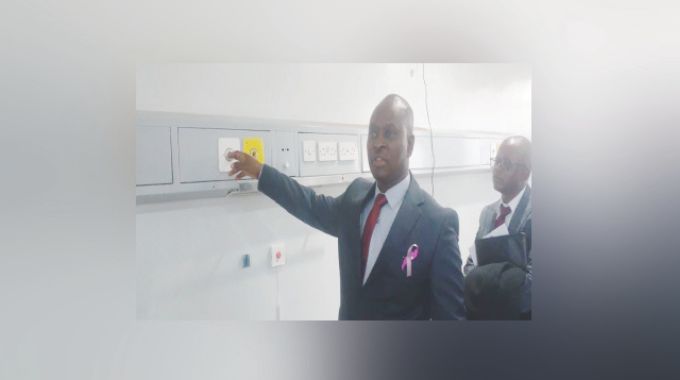
Fairness Moyana in Hwange
HWANGE Colliery Company Limited (HCCL) is undertaking a major modernisation of Hwange Colliery Hospital, introducing smart patient monitoring systems, piped medical oxygen, advanced diagnostic equipment and plans for a regional oncology centre as the mining company seeks to establish a world-class healthcare facility.
Speaking during the recent graduation ceremony for Registered General Nurses at Hwange Colliery Hospital, Chief Medical Officer Dr Nairos Deredzai said the institution was making significant investments in infrastructure, technology and human capital to improve healthcare delivery for both employees and surrounding communities.
“We are establishing a centre of excellence and envision becoming a world-class medical service provider, where service quality is a critical pillar of excellence,” said Dr Deredzai.
Held under the theme: “A Shared Vision of Excellence through Nurse Training and Teamwork,” the graduation ceremony saw newly qualified nurses encouraged to combine professional competence with compassion as they joined Zimbabwe’s healthcare workforce.
Dr Deredzai said HCCL had consistently trained nurses since 1997 as part of its Environmental, Social and Governance (ESG) commitments and corporate social responsibility initiatives, complementing Government efforts to strengthen the country’s healthcare system under the National Development Strategy 2 (NDS2) and Sustainable Development Goal 3.
He said the hospital had substantially expanded its School of Nursing, increasing annual student intake from 15 to between 35 and 40 through a public-private partnership with the Ministry of Health and Child Care.
The expansion has included the acquisition of 140 student beds, 80 desks and chairs, an interactive teaching screen and the conversion of an existing ward into additional classrooms and a modern clinical demonstration room.
Beyond nurse training, HCCL has embarked on an extensive refurbishment programme to ensure the hospital complies with the latest World Health Organisation infection prevention and control standards.
During a tour of the upgraded private ward, Dr Deredzai said traditional bathtubs had been replaced with walk-in showers, while seamless flooring had been installed throughout the facility to minimise areas where bacteria can accumulate.
“We are moving away from the traditional hospital setup to one where patients feel as though they are staying in a hotel because evidence has shown that the environment has a direct impact on patient recovery,” he said.
Among the hospital’s key innovations is an electronic nurse call system that enables patients to summon assistance at the touch of a bedside button.
The system identifies both the ward and the patient’s bed, with alerts remaining active until staff respond. Senior nurses will also be equipped with smart wrist devices linked to the system, enabling them to monitor emergency alerts remotely.
“If a patient has not been attended to, the watch continues vibrating. The nurse in charge can immediately contact the ward to establish why the patient has not yet received assistance,” explained Dr Deredzai.
The hospital has also introduced piped medical oxygen and vacuum suction systems, replacing portable oxygen cylinders to improve efficiency while reducing manual handling and associated safety risks.
Other upgrades include free Starlink-powered Wi-Fi, television sets in patient rooms, improved lighting systems and the procurement of electronically controlled hospital beds, automated wheelchairs and specialised patient bathing equipment, which is expected to arrive from China later this year.
Dr Deredzai said the hospital was also pursuing the acquisition of advanced diagnostic equipment, including a 4D ultrasound machine, mammography services, CT scanning facilities and a mobile outreach clinic to improve access to healthcare in remote communities.
The centrepiece of the expansion programme is HCCL’s proposed Regional Oncology Centre of Excellence, which is being developed in partnership with an international consortium with experience in establishing specialised cancer treatment centres across Africa.
Dr Deredzai said the project had completed its inception and feasibility phase and would soon proceed to the design stage.
Once completed, the oncology centre is expected to complement national efforts to expand cancer diagnosis and treatment while reducing the number of Zimbabweans seeking specialised oncology services outside the country.
The investment comes as Government intensifies efforts to strengthen the country’s healthcare workforce, following the recent announcement that more than 19,000 health workers will be recruited over the next two years under the Health Workforce Strategy and Investment Compact (2023–2030).