admin
admin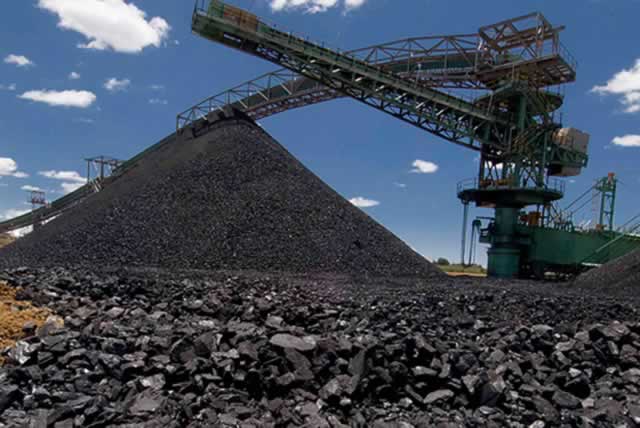
 HWANGE Colliery Company Limited (HCCL) will soon be going into the market to seek a partner or financier to assist it in developing its newly-granted mining concessions, an official said.
HCCL managing director Mr Thomas Makore said the company had already started exploring the new concession with plans to start mining in the next two months.
“We have already commenced exploration activities and will soon be going to market to look for suitable partners and financiers to develop the three mining concessions. The indications are that operations in these areas will commence within the next one or two years,” Mr Makore said
He said the company was also in the process of initiating an Environmental Impact Assessment at the newly granted concessions namely Western areas and Lubimbi East and West.
“The company is in the process of soliciting quotations from reputable (Environmental) consultants and we anticipate completing this process by end of August.
“The assessments will begin with the Western areas and thereafter Lubimbi East and West. Hwange Colliery projects to submit the environmental impact assessment reports to Environmental Management Agency (EMA) by the end of the year,” Mr Makore said.
The new concessions hold deposits in excess of a billion tonnes of coal consisting of both coking coal and thermal coal at Western areas and Lubimbi West while Lubimbi East has prevalence of coal-bed methane gas, giving HCCL an additional estimated life of mine of above 70 years.
“A competent persons report by an independent consultant estimated a resource of 750 million tonnes in Western areas only split evenly between coking coal and thermal coal. These reserves can be extracted either through open cast or underground mining methods,” Mr Makore said.
HCCL has also set its sights on diversifying its operations to include coal and its related by-products as well as coal-bed methane gas and its related beneficiation.
Meanwhile, HCCL board chairman Mr Farai Mutamangira said the company could save more than to $15 million per annum if it revives part of its critical infrastructure through restoring its power station and conveyor belt system.
He said the coal mining giant was losing a significant amount of its revenue towards meeting its electricity bill and as such was considering bringing its small thermal power station to life.
The then Wankie Colliery (now HCCL) small power station was decommissioned in 1983 as Government gave the Zimbabwe Electricity Supply Authority the sole mandate to regulate the supply of power in the country.
“We are actively considering setting up a small power station to meet our needs as HCCL because we are spending over $12 million on electricity instead of turning that money to capital,” Mr Mutamangira said.
He said the company was looking forward to resuscitating its conveyor belt which moves coal from open cast’s stock piles to the processing plant for a distance of about five kilometres.
The conveyor belt ceased operating in 2013 and the company has been relying on contracted haulage trucks to move the product.
“When we use trucks to haul coal, it’s not our best plan but plan B but as our production flows and sales and working capital improves we are going to resuscitate our conveyor belt, obviously it’s a cheaper option,” Mr Mutamangira said.
HCCL’s managing director Mr Makore said about $18 million was needed to replace the conveyor belt with a new one further stating that the company was forking out about $400 000 per month in moving coal to the processing plant using trucks.
The $400 000 which HCCL pays contracted trucks a month translates to $4.8 million a year.
“If we do a complete overhaul and upgrade the conveyor belt it will cost us $18 million but if we patch up here and there maybe $3 to $5 million. It costs us about $400 000 to haul a 100 000 tonnes a month,” Mr Makore said.
A conveyor belt is the carrying medium of a belt conveyor system (often shortened to belt conveyor). A belt conveyor system is one of many types of conveyor systems.



 Online Reporter