Online Reporter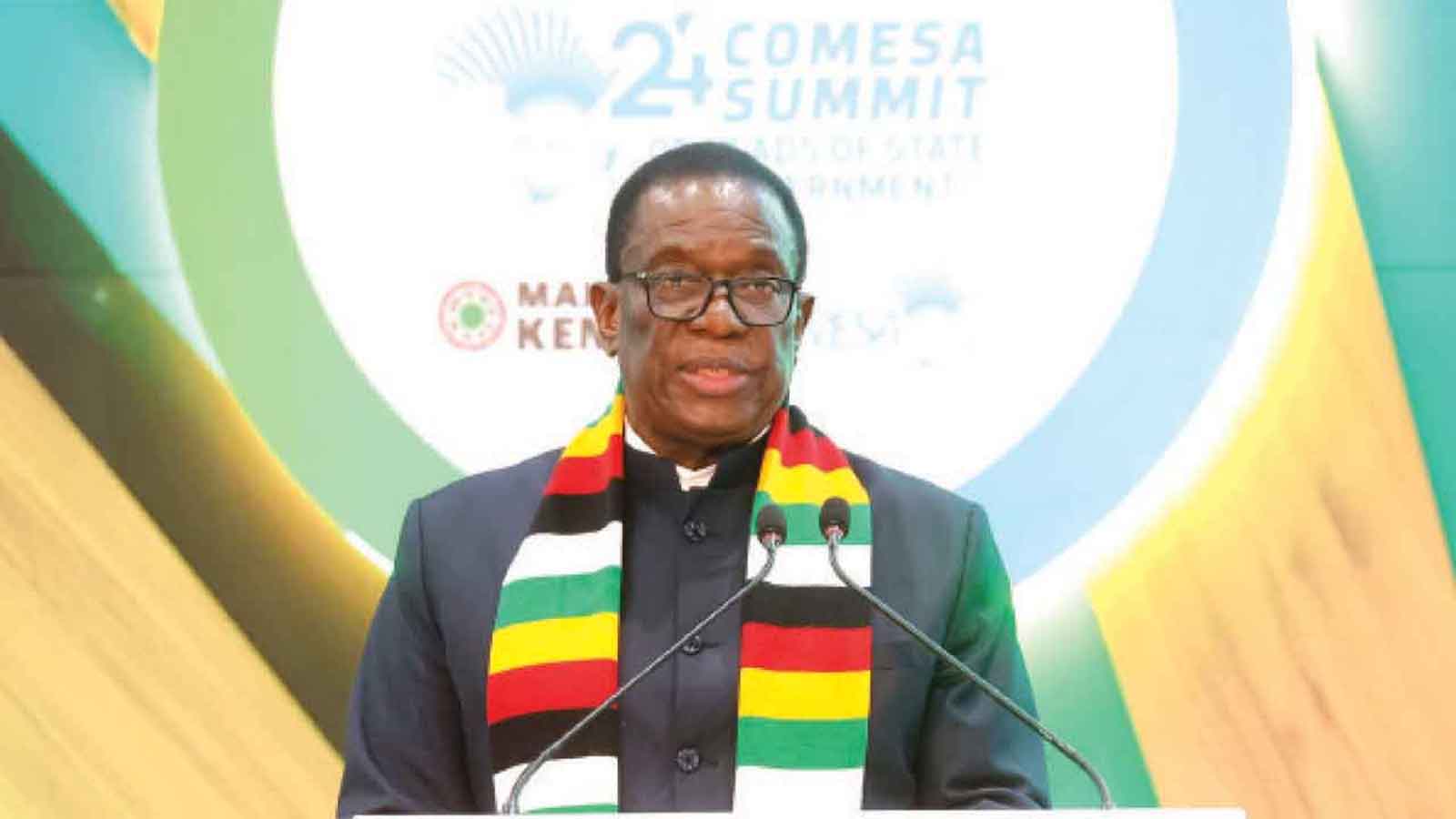
Nqobile Bhebhe [email protected]
PRESIDENT Mnangagwa is expected to headline the 5th Annual Zimbabwe Economic Development Conference (ZEDCON) 2026 in Bulawayo tomorrow, with infrastructure financing taking centre stage as Zimbabwe seeks to build a solid productive base required to accelerate attainment of an upper middle-income status by 2030.
Hosted by the Ministry of Finance, Economic Development and Investment Promotion under the theme: “Smart Infrastructure for an Upper Middle-Income Society”, the high-level conference has brought together Government, the private sector, financial institutions, researchers and regional and international partners to examine how infrastructure can drive economic transformation and competitiveness.
Hopes are high that President Mnangagwa’s address will provide the political focal point of a conference that has placed capital mobilisation, innovative financing and infrastructure development at the centre of Zimbabwe’s Vision 2030 agenda.
According to the programme shared with delegates, President Mnangagwa will deliver keynote remarks tomorrow with Bulawayo Metropolitan Province Minister of State for Provincial Affairs and Devolution Judith Ncube giving earlier welcome remarks, while Secretary for Finance,
Economic Development and Investment Promotion, Mr George Guvamatanga, will present the conference summary and key takeaways.
President Mnangagwa said in his State of the Nation Address (SONA) on Tuesday that his administration’s economic policies and programmes were bearing positive fruit across economic sectors amid increased investments and foreign currency earnings.
Senior Economic Advisor to Professor Mthuli Ncube, the Minister of Finance, Economic
Development and Investment Promotion, Professor Ashok Chakravatri, yesterday said the contributions made in previous editions have been infused in national economic policies.
“In past editions, the discussions have been robust and they have been included in economic policies such as National Development Strategy 1 and 2 and the national budget.
“I am sure this year’s edition will be no different,” he told delegates.
The conference started yesterday with technical sessions examining infrastructure, economic policy, financing and investment.
ZEDCON has evolved into a key interface between policymakers and knowledge producers, providing a platform where research, economic analysis and practical experience can feed into policy formulation.
Its objectives include facilitating multi-stakeholder engagement on innovation-driven competitiveness, sharing research and best practices, generating actionable recommendations for national strategies and regional integration, and strengthening collaboration between Government, business, regional and international partners and citizens.
This year’s conference comes as Zimbabwe seeks to translate its Vision 2030 ambitions into bankable infrastructure projects capable of attracting sustainable long-term capital.
The programme is structured around five major pillars — sustainable energy and power generation; urban infrastructure and smart cities; ICT infrastructure and connectivity; rail infrastructure; and homegrown fintech and financial inclusion.
Together, the pillars address both the physical infrastructure required to support economic activity and the financial architecture needed to mobilise capital for development.
The energy pillar examines renewable-energy policy implementation, public-private partnerships, innovative financing mechanisms, green finance, smart microgrids and distributed solar photovoltaic adoption.
Under urban infrastructure and smart cities, delegates will examine ways of unlocking private-sector finance through land-based and user-financed models, alongside incentives for industry to invest in infrastructure.
Rail infrastructure is considered as an engine for industrialisation, with discussions covering national rail revitalisation, institutional reform, innovative financing and operational transformation.
The conference will also examine the potential of rail-steel integration as a strategic industrialisation lever. Digital infrastructure discussions will focus on addressing the rural-urban digital divide, expanding ICT connectivity and digital education as well as public-private partnerships in areas such as digital health.
The fintech and financial inclusion pillar will explore home-grown financial technology and ways of mobilising diaspora remittances into long-term savings to support national development.
The breadth of the programme has placed financing at the heart of the infrastructure debate, with delegates expected to examine how public and private capital could be combined to support projects while improving economic productivity and the business environment.
The conference is expected to generate recommendations on policies, financing structures and partnerships aimed at moving infrastructure projects from policy discussion towards implementation.
Delegates have said the discussions are particularly significant as infrastructure gaps in energy, transport, digital connectivity and urban services continue to influence the cost of doing business and the pace of industrial development.
The emphasis on innovative financing also provides an opportunity to examine mechanisms that can expand the pool of capital available for large-scale projects beyond traditional public funding, they added.
In this regard, President Mnangagwa’s address is expected to provide the broader policy direction as stakeholders assess the infrastructure requirements of an upper middle-income Zimbabwe.
With its focus on evidence, policy and partnerships, ZEDCON 2026 is positioning infrastructure not simply as a development requirement, but as a key platform for improving productivity, competitiveness and investment under Vision 2030.