Chronicle Editor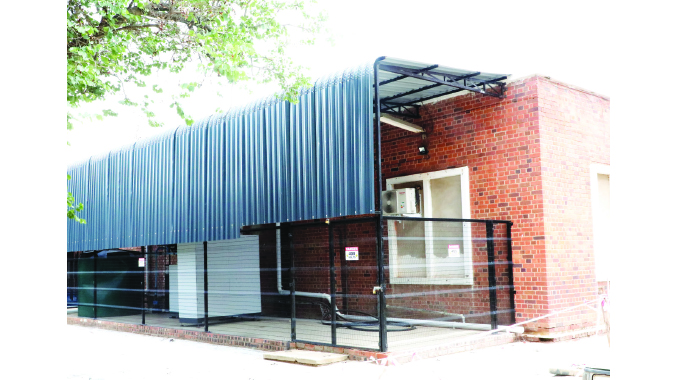
Robin Muchetu, Senior Reporter
THE Second Republic has made commendable strides in improving the health sector since its inception and 2023 has been no exception as massive gains have been recorded in the past 12 months.
The revamping of health infrastructure took centre stage while notable progress was made in saving life with a number of successful complex operations done locally.
Several health facilities were opened up under the Second Republic and are improving access to healthcare and easing the pressure on existing facilities that have been overwhelmed by a growing population and an increase in human settlements.
Cowdray Park, Bulawayo’s largest suburb benefited from a health centre that was opened this year making it the second to be completed in an initiative by the Second Republic to construct 30, 22-bed clinics and five, 60-bed district hospitals across the country over the next three years. Stoneridge Health Centre in Harare was the first to be completed.
The completion of Cowdray Park Clinic has relieved pressure on the city’s two central hospitals, Mpilo and United Bulawayo Hospitals.
Lupane Provincial Hospital in Matabeleland North Province is also another major health institution that is under construction and will soon be completed offering people around the province and beyond close access to medical assistance.
Patients were travelling from as far as Binga to hospitals in Bulawayo to access medical care but the completion of the hospital will see patients getting assistance in Lupane.
A super-specialist hospital is set to be constructed at the United Bulawayo Hospitals (UBH) and will offer services to Bulawayo and beyond, a move that will reduce the number of locals embarking on medical tourism across the borders, lessen pressure on the current structure and save the much-needed foreign currency.
Officials at the institution said they want to make UBH a super-specialist centre, a centre of excellence in terms of super-specialisation by constructing the Quinary Surgical Hospital. The hospital, ideally, provides accommodation services for clients that come from out of town.
The hospital, once constructed, will house several specialist disciplines that will run at quinary level, the institution will have the capacity to do liver transplants, heart transplants, kidney transplants, neo-natal operations such as the separation of Siamese twins and In Vitro Fertilisation (IVF) among others.
There will be 12 operating theatres, a library, a high dependency, and Intensive Care Unit, lecture rooms, a surgical pharmacy, CT and MRI scans with a futuristic view to also do robotic surgery.
A giant medical laboratory that is under construction at UBH will soon be opened and will be the first of its kind in Zimbabwe. The laboratory will have several areas that cover patient investigation.
The laboratory will house nine departments including haematology, biochemistry, histopathology, immunology/serology, a blood bank, microbiology and viral load/Tuberculosis testing.
Mpilo Central Hospital and Parirenyatwa Group of Hospitals were the first public health institutions in Zimbabwe to acquire state-of-the-art Magnetic Resonance Imaging (MRI) machines. This move has been hailed as it will reduce the cost of treatment for patients requiring the service. MRI scan services have only been available in the private sector costing at least US$500 per scan, a cost that many could not afford.
The equipping and retooling of Government health institutions has recorded many positives as seeking health care is now affordable for the general populace who had been struggling in some instances as health centres were far from the communities.
With over 50 health centres having been opened since 2017 and more under construction and renovation, health care for communities is now accessible for all.
Life-changing procedures have also been conducted at health institutions which shows the dedication and commitment of health personnel that are in the institutions.
A nine-year-old girl from Tsholotsho was assisted to deliver her baby at UBH via a Caesarian section operation. The baby has since turned a year old and both mother and child are healthy.
It was through dedication and expertise that two female doctors delivered the baby, in what could be one of the world’s most fragile birth cases.
In another milestone procedure, an artisanal miner from Gwanda was admitted to UBH with a spear lodged in his neck and it took the collaboration of surgeons from UBH and Mpilo Central Hospitals to save the man’s life.
The UBH operation came barely a month before doctors at Mpilo had successfully removed a spear in another artisanal miner’s skull after he was attacked at a mine in Bubi. These successful life-saving operations are a testament to the skilled health workers available in the country’s public hospitals and are dedicated to saving lives and making life better for patients.
Binga District Hospital is also undergoing some renovations to accommodate more patients and offer healthcare for the patients. It is also home to the largest waiting mother’s shelter which houses over 200 women at a time.
The Government and its partners have been pouring support into the shelter and women are giving birth for free under the Results-Based Financing Model where vouchers are availed to expectant mothers which allows them free access and services to hospitals and clinics from the day they register the pregnancy until six weeks after giving birth.
CURE Children Hospital in Bulawayo is now offering free reconstruction surgery to children from across Zimbabwe which has brought smiles to the faces of both children and parents who were struggling to fund their treatment owing to the high cost of musculofascial surgery locally. A musculofascial surgeon from the Philippines was contracted to do the surgeries locally.
The development has been a life-changing one for children who have had various injuries that changed their physical appearance. They are now getting reconstructive surgery at no cost, restoring their confidence in society and school.
Zimbabwe hosted the International Conference on Aids and STIs in Africa (Icasa) conference for the second time in December 2023. Various activities and plenaries were in place and one of the noteworthy discussions was on how finances can be raised to fight HIV/Aids in Africa.
The conference saw thousands of delegates, researchers, health personnel, and many others who have a passion for health issues discussing HIV, Aids and STI’s and how Africa and the world can end Aids by 2030.
Zimbabwe on the other hand was identified as one of the top five leading countries in Africa that are making positive strides in ending Aids and reducing new infections as seen by the country meeting its 95-95-95 targets earlier than expected.
The 95-95-95 targets were set by UNAIDS that 95 percent of the population must know its status, 95 percent of these people must be initiated on antiretrovirals, and 95 percent of the same population must be virally suppressed.
This is evidence of the Government’s commitment to applying all resources possible in health institutions, particularly in the fight against HIV and Aids.
Another success in the health sector leaning on reducing HIV infection, Cowdray Park Clinic in Bulawayo has been identified as a site for the CATALYST Study, where the feasibility and acceptability of new HIV prevention products to stop the spread of infection in women are being done.
Cowdray Park Clinic has already been providing the HIV prevention product daily oral Pre-exposure Prophylaxis (PrEP). In July this year, the clinic introduced the Dapivirine vaginal ring (PrEP ring) in a bid to provide greater choice in PrEP products for women seeking to protect themselves from acquiring HIV. Injectable cabotegravir (CAB PrEP) which will be available later during the study will also be offered to the participants.
Over the next three years, the CATALYST study will produce critical evidence to help transform the HIV prevention landscape in Zimbabwe and inform future scale-up and sustainability of the HIV prevention options.
The year has been a hive of activity in the health sector looking at infrastructure development, access to services, and procurement of large and small machinery, access to drugs and services, and general access to health care following the Government’s commitment to ensure health is accessible and affordable for all. — NyembeziMu



 derick.khumalo