

 Online Reporter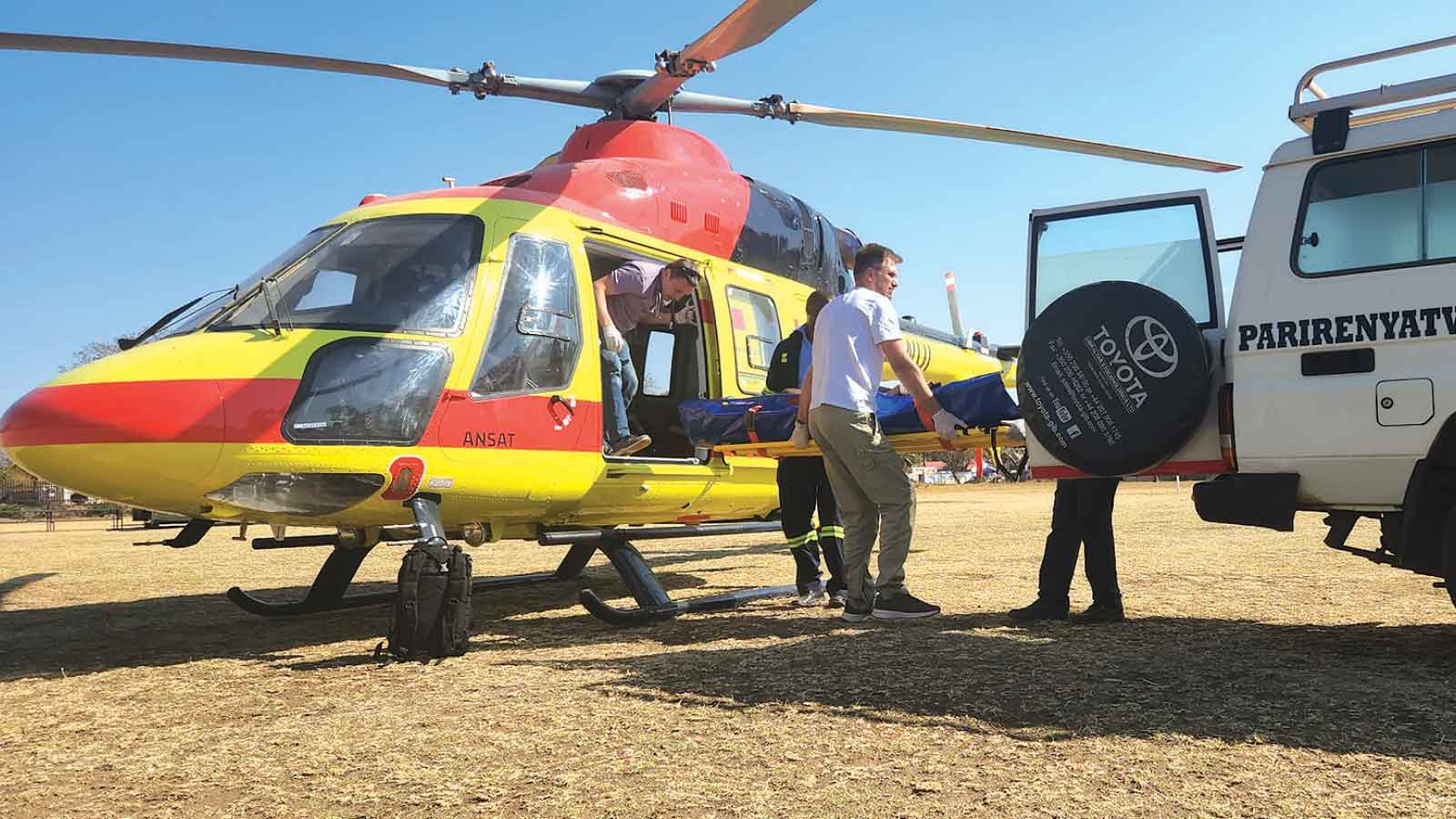
Theseus Mauruki Shambare
Zimbabwe’s national air ambulance service has handled 1 462 emergency evacuations in less than two years, highlighting the growing role of aeromedical transport in improving access to lifesaving specialist care and strengthening the country’s emergency healthcare system.
Statistics released by HeliDrive Zimbabwe National Air Ambulance Service show that between August 24, 2024, and May 19 this year, the aeromedical evacuation programme responded to over 1 400 emergencies across Harare, Bulawayo and Victoria Falls.
Harare recorded the highest number of evacuations at 944 cases, followed by Bulawayo with 504, while the newly established Victoria Falls operational base handled 14 emergencies.
The figures also point to increasing demand for emergency paediatric and neonatal transfers.
A total of 473 children aged between zero and 12 years were evacuated nationally, including 271 infants under the age of one.
Those aged 13 years and above accounted for 710 evacuations.
HeliDrive Zimbabwe chief medical officer Dr Freddy Mhondiwa said the emergency air ambulance programme was becoming an increasingly important link between district hospitals and specialised referral centres.
Speaking during the opening of the service’s new operational base in Victoria Falls last week, Dr Mhondiwa said the expansion would improve access to advanced medical care for both residents and visitors.
“As HeliDrive Zimbabwe National Air Ambulance Service, we are proud to mark the opening of our new operational base in Victoria Falls,” he said.
“This positions us to deliver timely, high-quality aeromedical services to both tourists visiting one of Africa’s premier destinations and surrounding local communities requiring urgent access to advanced medical care.”
Medical practitioners working with the service say long travelling distances have historically placed critically ill patients at significant risk, particularly those requiring intensive care, trauma stabilisation and specialist treatment.
Victoria Falls-based general practitioner Dr Tapiwa Kandemiiri said some patients previously faced journeys of nearly 12 hours by road to access specialist services in Bulawayo.
“In critical emergencies, that is simply too long. There was a patient who developed post partum haemorrhage after complications in theatre and urgently needed blood products and ICU care,” he said.
“Because of the air service, we managed to quickly evacuate the patient. The helicopter itself functions like a flying ICU.”
The helicopters are equipped with ventilators and advanced critical care equipment capable of stabilising patients during transfer.
Former Air Force of Zimbabwe pilot Mr Lasley Makoni, who now flies emergency evacuation missions for HeliDrive Zimbabwe, said each deployment represented a race against time.
“When we receive a flight request for a critically ill-patient, sense of duty calls,” he said.
“You know that somebody’s life depends on how quickly you can get them to the next medical facility.”
In Victoria Falls alone, six children have already required emergency evacuation since the local base became operational, including five infants under the age of one.
Health sector analysts say improvements in emergency transport systems, oncology services and critical care infrastructure are beginning to reshape healthcare access patterns across Zimbabwe, particularly for patients living in remote areas.
The developments also come as Victoria Falls prepares to host major international sporting events such as the ICC Men’s Cricket World Cup next year, which is expected to attract thousands of athletes, officials and tourists, increasing the importance of emergency preparedness and trauma response capabilities.
“Our teams are fully prepared and operational,” said Dr Mhondiwa.
“We are strengthening rapid response systems, trauma care and critical care transfers across the region.”
The expansion of emergency aeromedical services coincides with Government efforts to strengthen specialist healthcare infrastructure nationwide.
Recently, two TrueBeam Linear Accelerators (LINACs), among the most advanced radiotherapy systems available globally, arrived in the country and are scheduled for installation at Mpilo Central Hospital in Bulawayo and Parirenyatwa Group of Hospitals in Harare as part of broader efforts to modernise cancer treatment services.
Health experts say the simultaneous expansion of emergency evacuation capacity and specialist treatment facilities marks a significant shift in Zimbabwe’s healthcare delivery model, reducing barriers to advanced medical care for patients who previously struggled to access specialised services.




 Peter Tanyanyiwa