Online Reporter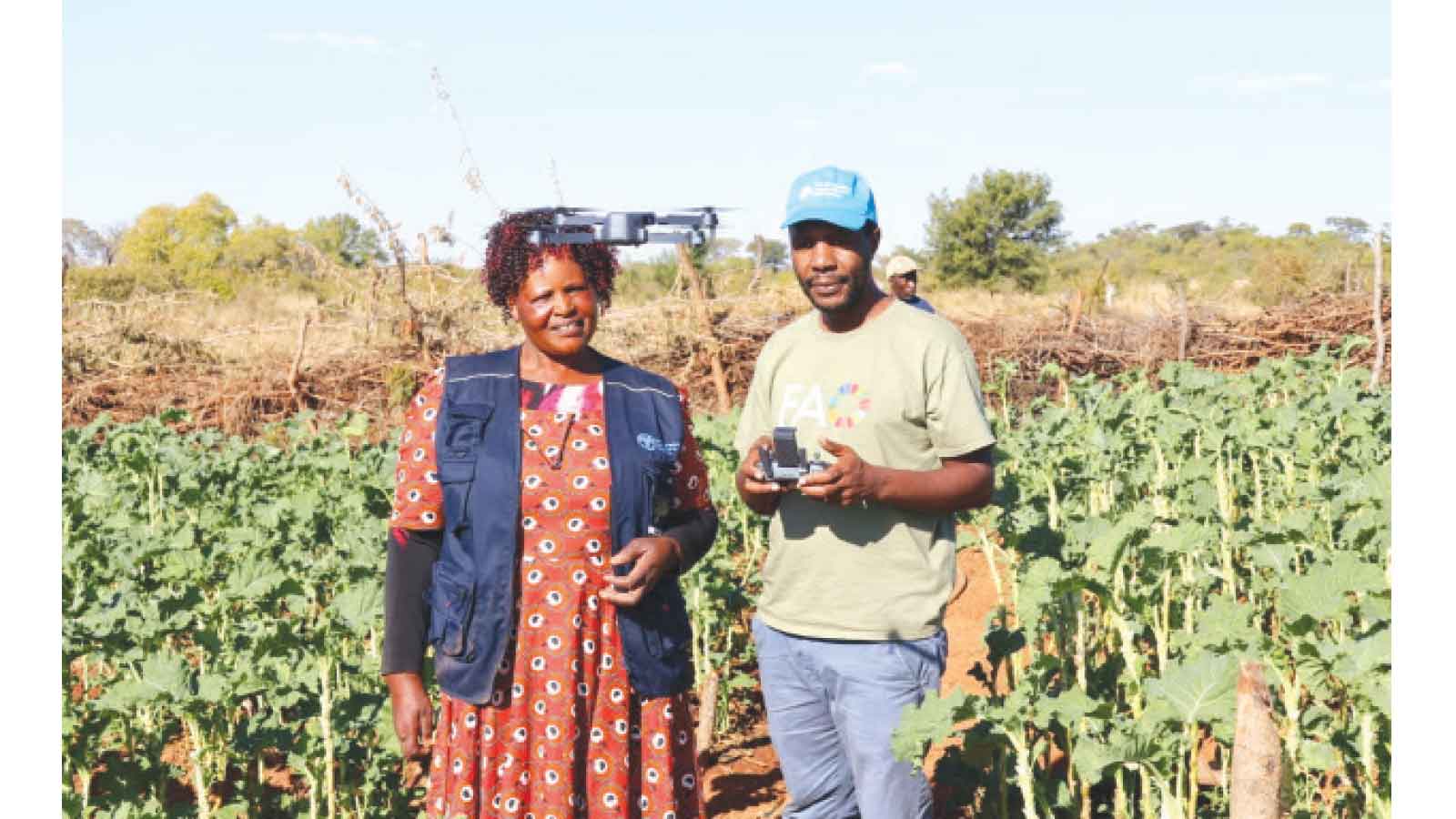
Theseus Mauruki Shambare
BEFORE dawn breaks over the rolling landscapes of Mhondoro-Ngezi district in Zimbabwe’s Mashonaland West Province, the glow of a smartphone screen lights up Mrs Farai Majasi’s face.
The 53-year-old farmer sits outside her homestead in Village C1 in Bannerlands, scrolling through overnight WhatsApp messages from customers ordering vegetables, chickens and maize. Some inquiries come from nearby villages.
Others arrive from traders who saw her digital flyers shared through farming groups on Facebook and WhatsApp.
A few minutes later, she rises and walks to her fields where green maize stretches across the soil beside rows of tomatoes and vegetables nourished by a solar-powered irrigation system she recently purchased using farming profits. Nearby, chickens scatter through the yard as water pumps steadily fill a storage tank beside her garden.
For decades, such scenes would have seemed almost impossible across many rural communities in Southern Africa where farming has remained heavily dependent on manual labour, weak market access and limited information flows.
Today, digital technologies are beginning to transform not only how rural farmers produce food, but also how they participate in regional economies.
In communities once defined by distance and isolation, smartphones are becoming tools of economic integration, climate resilience and rural transformation.
“The training changed my entire mind set,” said Mrs Majasi. “I can now market and sell my vegetables and chickens using my phone. I advertise through WhatsApp statuses, Facebook and online groups. Buyers contact me directly after seeing my posts.”
Her story forms part of a broader regional transformation supported by the Food and Agriculture Organisation of the United Nations’s Digital Villages Initiative. Through a regional programme titled; ‘Fostering Digital Villages Through Innovative Advisory and Profitable Market Services in Africa’ (FDiVi), the initiative is being implemented across Zimbabwe, Malawi and Rwanda.
It brings together governments, private sector actors, universities, extension services and rural communities to modernise agriculture using digital technologies and Artificial Intelligence-supported advisory systems. While separated by borders, the participating countries share common challenges: climate change, youth unemployment, weak agricultural markets, gender inequalities, limited extension services and widening rural-urban digital divides.
Across the Southern African Development Community (SADC), tens of millions of smallholder farming households continue to rely on rain-fed agriculture despite increasingly erratic rainfall patterns linked to climate change. Yet agriculture remains central to the region’s survival and food systems.
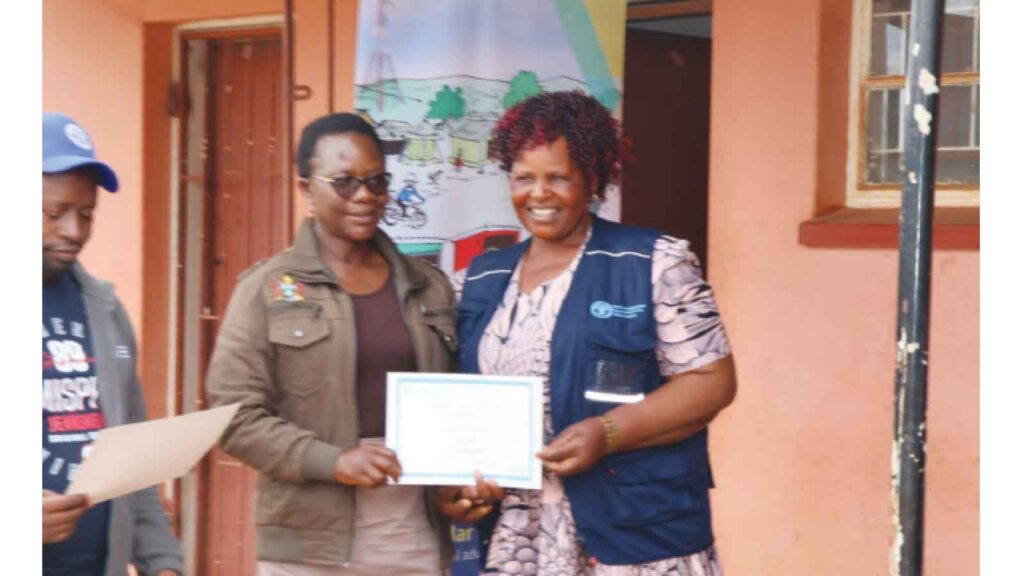
Mrs Majasi (right) receives a certificate in Digital Agriculture Transformation from Mhondoro-Ngezi District agricultural business advisory officer Ms Nola Marumbwa (centre).
In Zimbabwe, approximately 70 percent of the population depends on agriculture for livelihoods, while more than 61 percent live in rural areas, according to national census data. For years, communal farmers have often operated at the margins of formal markets, relying on intermediaries and struggling with limited access to information, transport and finance.
Smartphones, internet connectivity and digital agriculture platforms are beginning to change that equation.
Under the FDiVi programme, nearly 4 000 small-scale rural producers in Zimbabwe have undergone Digital Agriculture Literacy training and received certificates in “Digital Agriculture Transformation.”
The programme has also established Digital Hubs in Mhondoro-Ngezi and Bikita districts using existing public infrastructure such as AGRITEX Ward Information Centres and ZimPost District Information Centres. These hubs provide free internet access, computers, digital literacy support and access to emerging agricultural technologies.
The initiative is also promoting “Village Twinning,” a regional cooperation approach that helps communities exchange experiences and solutions.
For policymakers across SADC, such collaboration reflects a growing recognition that food insecurity, climate shocks and weak market systems are no longer only national challenges, but shared regional risks requiring coordinated responses anchored in innovation and integration. Digitalisation has emerged as one of those responses.
Research across Africa increasingly shows that digital technologies can improve farmers’ bargaining power, strengthen market participation and reduce transaction costs by improving information flows between producers and buyers.
Studies by institutions such as the International Food Policy Research Institute (IFPRI) have highlighted how mobile-based agricultural platforms can help farmers access markets more efficiently while reducing exploitation by intermediaries.
The FAO has similarly noted that digital technologies can strengthen productivity, increase resilience and improve food security by connecting smallholders to information and services they previously could not access.
At a recently concluded Joint Meeting of SADC Ministers Responsible for Agriculture, Food Security, Fisheries and Aquaculture held in Victoria Falls, SADC Deputy Executive Secretary for Regional Integration, Ms Angèle Makombo N’Tumba, underscored the urgency of embedding technology into regional food systems.
“The future of food security in our region will depend on how effectively we integrate digital technologies, innovation and data-driven systems into agriculture. We can no longer rely solely on traditional methods in the face of climate change.
“Our farmers must be connected, informed and supported through shared regional digital platforms that strengthen productivity, trade and resilience across SADC,” she said.
Minister of Agriculture, Mechanisation and Water Resources Development, Dr Anxious Masuka, also emphasised coordinated regional approaches: “Agriculture in Southern Africa must increasingly be driven by innovation, technology and cross-border cooperation to achieve food security and industrialisation goals.”
For rural women, the impact can be especially transformative. Across Southern Africa, women form a significant share of the agricultural workforce, but often face unequal access to technology, markets, finance and extension services. The FDiVi programme targets women and youth to reduce these inequalities.
For Mrs Majasi, digital inclusion has become a pathway toward economic independence. Before joining the programme, selling produce involved physically travelling to nearby business centres with vegetables and hoping to secure buyers before produce spoiled. Today, many sales are negotiated online before harvest.
“I now sell my vegetables and chickens using WhatsApp and Facebook,” she said. “People place orders directly after seeing my posts.”
Digital technology has also reduced transport costs and unnecessary movement. Instead of travelling long distances to buy chicks and agricultural inputs, she now places orders digitally and collects supplies closer to home.
The economic impact has been substantial. Where she once earned about US$70 from produce sales, she now says revenues can exceed US$200 during productive periods.
With the income, she purchased a solar-powered irrigation system and water tank, which reduced the labour required to irrigate crops. Previously, watering fields involved drawing water manually from a well using buckets.
Now irrigation is powered through solar energy – an adaptation measure in drought-prone rural environments affected by rising temperatures and unpredictable rainfall patterns.
Her poultry project has expanded from 50 chickens to 150 birds, with plans for further growth. She has also diversified crop production to include orange maize, yellow maize and white maize alongside sorghum, millet, beans and cowpeas. Across Southern Africa, diversification is viewed as essential for climate resilience and food system stability.
Food Security Monitoring and Digital Agriculture Specialist under the FDiVi programme, Mr Dowsen Sango, said the initiative was helping farmers move from traditional guesswork toward informed decision-making.
Speaking during a Village Twinning and Review Meeting recently held in Mhondoro-Ngezi District, he said farmers now used smartphone cameras and AI-supported platforms to assess crop diseases and livestock health almost instantly.
“We are moving agriculture from traditional guesswork to informed decision-making powered by technology,” he said.
“Farmers are now able to take pictures of diseased crops or sick animals using their phones and receive instant feedback and recommendations through AI-supported platforms.”
He added that digital platforms also help farmers connect directly with suppliers, transporters and buyers while improving price transparency and reducing exploitation by middlemen.
“Digital agriculture is not only about production, but also profitability. Farmers are now linking directly with input suppliers, transporters and buyers through online platforms and social media groups.”
One of the most significant lessons from the initiative is the willingness of rural communities to invest in digital transformation. Some farmers have formed Internal Savings and Lending Associations to mobilise resources for purchasing smartphones and Starlink internet kits.
The private sector is also increasingly recognising the potential of rural digital markets previously seen as commercially unviable.
Zimbabwe’s approach under the initiative involves partnerships between government institutions, universities, private sector stakeholders and international organisations to strengthen rural innovation ecosystems.
Mhondoro-Ngezi District agricultural business advisory officer Ms Nola Marumbwa said the programme was strengthening extension services while improving farmer confidence and productivity.
“We are seeing farmers becoming more confident in making farming decisions because information is now easily accessible through digital platforms,” she said.
“Instead of waiting for physical visits, farmers can quickly identify crop diseases, seek livestock health advice and interact with extension officers using smartphones and AI-supported applications.”
Back in Bannerlands Village, Mrs Majasi has become one of the programme’s emerging “Digital Champions.”
After applying lessons from the initiative, she now organises field days at village, ward and district level where she demonstrates improved farming techniques to fellow farmers. To invite participants, she designs and distributes digital flyers using WhatsApp groups and online platforms.
“In the past I never imagined teaching other farmers,” she said.
“But now I teach others about the benefits of digital agriculture because I have seen how it changes lives.”
As the afternoon sun settles across her fields, her smartphone continues to vibrate with incoming customer inquiries. Nearby, water pumps run through the solar-powered irrigation system while green maize sways in the breeze.
For Mrs Majasi, digital transformation is no longer an abstract policy idea. It is visible in her growing poultry project, in her flourishing crops, in her improved household income — and most importantly, in her confidence as a rural African woman participating in a modern digital marketplace from her homestead.