Online Reporter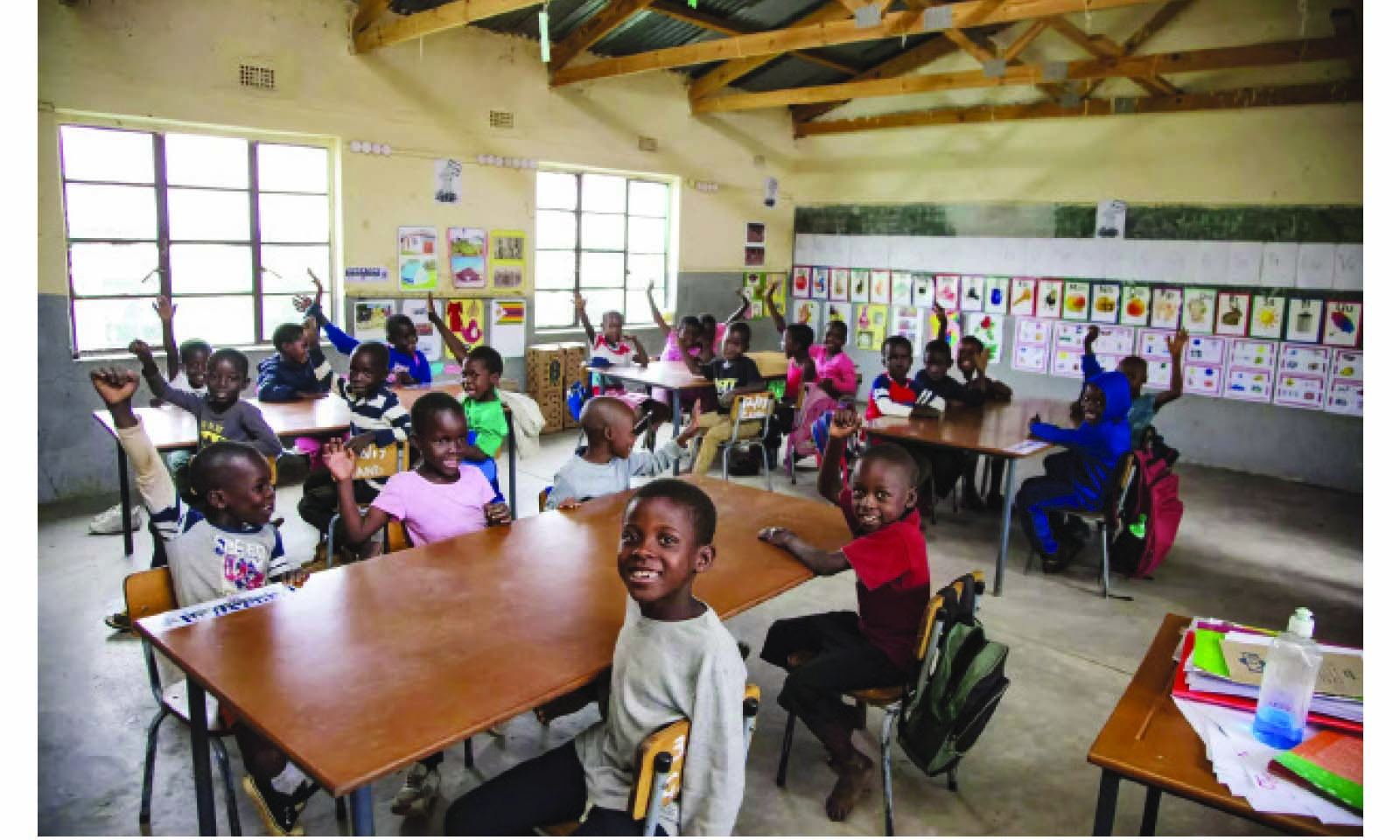
Richard Muponde-Zimpapers Politics Hub
WAY back in August 1981, prominent Kenyan writer Ngugi waThiongo was invited by the University of Zimbabwe to present a paper at a “Seminar on Education in Zimbabwe- the Past, Present and Future”. He presented a seminal paper titled “Education for National Culture”.
As Zimbabwe commemorates culture month this May, a revisit of Ngugi’s seminal presentation is critical as it has remained relevant as a critical social, political, economic, and cultural compass needed to guide the nation in fast changing global order.
Ngugi began his paper by exalting Zimbabwe’s historical experience of the armed struggle and felt unqualified to talk about the importance of culture to a country that had fought a valiant struggle to regain its self-worth.
“I feel slightly presumptuous on my part to stand here, in Zimbabwe and talk about education and culture. For a people who have entered the highest phase of political struggle against foreign rule and oppression, have already laid firm educational foundations for national patriotic culture,” said Ngugi as he presented his paper.
He further posited that it is both an act of education and an educational process to struggle to seize back the right and initiative to make one’s own history and hence culture which is a product and a reflection of that history.
Quoting Amilcar Cabral, Ngugi said the national liberation itself was an act of culture and the liberation movement being “the organised political expression of the struggling people’s culture.”
In other words, according to Ngugi, Zimbabwe unlike other African countries, already had an advantage in being able to reclaim that which was lost, degraded, distorted and vilified by colonialism as it had fought a liberation struggle, which according Cabral was in itself an “organised political expression of the struggling people’s culture”.
In Ngugi’s words, Zimbabwe has always been an aspirational country to him. Even when he chaffed at its hypocrisies, it somehow always seemed sure, a nation that knew what it was doing, refreshingly free of that anything-can happen existential uncertainty so common among some developing nations.
Congratulating Zimbabwe for its heroic struggle and organising a seminar imbued with the spirit and desire for structural social transformation, Ngugi said the nation had already seen the possibilities and hence the dangers of neo-colonialism- what Kwame Nkrumah once described as the last stage of imperialism.
It is thus not surprising that 43 years later, Zimbabwe is still rooted in its aspirational goals of being a proud nation conscious of its historical and cultural identity that bestows upon it a unique identity.
It also from that historical consciousness that will Masvingo, one of the country’s 10 provinces playing host to the 2025 Culture month launch this month with President Mnangagwa set to preside over the event in Chikombedzi.
The Government attaches so much importance to the Culture Month as shown by the fact that it was one of the agenda items on last month’s Cabinet meeting. This was revealed by the Minister of Information, Publicity and Broadcasting Services, Dr Jenfan Muswere in a post Cabinet Media Briefing in Harare last Tuesday.
The Minister told journalists that Culture Month would be held under the theme: “Celebrating Indigenous Voices” aimed at promoting and honouring diverse culture within Zimbabwe.
Far from being a symbolical celebration of culture, Minister Muswere said this year’s culture month will take a pragmatic approach through the celebration of the country’s rich cultural heritage, promote cultural diversity and foster national unity including showcasing the diverse cultural practices. These cultural practices will be in the form of dance, food, attire, visual arts, literary arts, film, music, poetry and to promote intellectual dialogue for cross cultural understanding and exchange.
“The first week will focus on encouraging historical recipes and cooking techniques, connecting modern eaters to their culinary heritage. The second week will be an indigenous Fashion Week where the colourful and unique forms of cultural wear will be rolled out. The third week is the National Culture Month launch while the fourth week is Indigenous Languages and Cultural Dialogue Week,” said Minister Muswere.
In his remarks before the 11th Cabinet meeting last week, President Mnangagwa urged all Zimbabweans to play an active role in preserving and promoting the country’s cultural heritage, describing it as a living expression of national identity and pride.
Leading by example, the President, his deputies, and Cabinet ministers last week wore the national dress to the meeting as part of National Culture Month commemorations.
Calling the nation to exalt their cultural heritage does not mean the President is unaware of the existence of a global world fundamentally being shaped by technology. The President is aware of the effects of cultural imperialism, whose effect would be devastating if the nation is not rooted in its cultural norms.
In an attempt to equip the nation, particularly the younger generation with the necessary tools to navigate a fast changing world, the Government has introduced Heritage Studies from primary level up to secondary level. By infusing Heritage Studies in the education system, the Government is conscious of the role played by education and culture in social transformation, so vital and necessary in dealing with the effects of what Ngugu calls “the neo-colonial stage of imperialism.”
But what education and what culture? What’s the relationship between the two? And what have these got to do with the economic, political and social transformation of society?
Again we go back to Ngugi who says education is the process of integrating the youth into the entire system of production, exchange and distribution of what we eat, wear and shelter under, the whole system of organising the wealth of a given country.
“Thus education is part of culture and culture is part of education. They run into each other and one way of looking at education is as a process of integrating a people into the dominant culture of that community,” said Ngugi.
By making education part of the country’s culture, the Government is attempting to dilute the consequences of being cultural zombies of other countries. When a dominant culture imposes its values, beliefs, and practices on a smaller culture, it can lead to the assimilation or extinction of the smaller culture. This process can result in the loss of languages, traditional practices, and cultural knowledge, ultimately eroding the nation’s identity and well-being.
The impact of colonialism on indigenous Zimbabwean cultures is a stark reminder of the dangers of cultural infiltration. The suppression of indigenous languages, religions, and cultural practices, replaced by those of the colonising power, has had a lasting impact on the nation’s cultural landscape.
While most indigenous cultures survived, the fear is that continued infiltration by alien norms, such as same-sex marriages, could lead to significant decline or even eradication of the nation’s cultural identity.
Cultural infiltration can take many forms, from language and religious assimilation to the adoption of new technologies and social norms. The loss of languages, particularly those spoken by a small number of people, is a pressing concern.
According to the UN, languages are at risk of disappearing when they’re no longer passed down to younger generations. The erosion of traditional knowledge and practices, including food systems, can also lead to the loss of cultural identity and well-being.
Moreover, the deliberate destruction or removal of cultural artefacts can be considered a form of cultural genocide or culturicide. It’s essential for Zimbabweans to recognise the value of their cultural heritage and take steps to preserve it.
Zimbabweans must be vigilant and guard their culture jealously. This includes promoting and preserving indigenous languages, traditional practices, and cultural knowledge. The nation should also be cautious of foreign aid or investment opportunities that may come with strings attached, compromising its cultural values.
Zimbabwe’s cultural identity is a precious asset that requires protection and preservation.
As alluded to by Ngugi, Zimbabweans must take pride in that before the coming of the Portuguese, the country used to be a seat of a great African civilisation with an architecture that puzzles the worst of our detractors.
There is no reason why Zimbabwe should not be seat once again of a new beginning for the final homecoming of the new man of Africa. But this new man will be given on a silver platter.
He/she will be a product of an intense revolutionary struggle. Future generations need inspirational historical and cultural heritage in order to forge ahead with pride.