Zimpapers Knowledge Centre
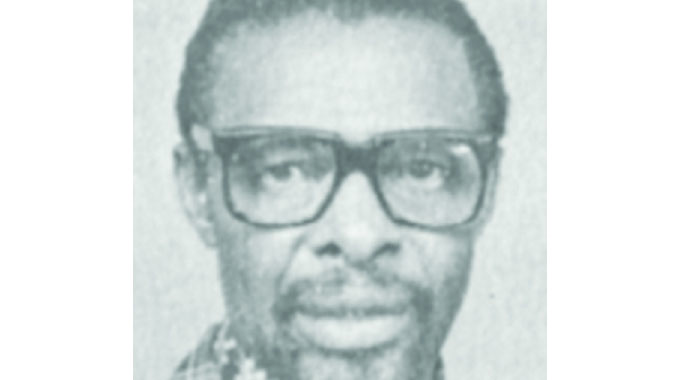
ON July 10, Karoi and its immediate environs reverberated to the sound of music as the people of Mashonaland West or ‘Mashonaland Best’ as they prefer to call themselves, danced the night away during a music gala held at Chikangwe Stadium, as a befitting honour and in memory of one of their own son, a true nationalist and national hero, James Robert Dambaza Chikerema, who passed on, on March 22, 2006.
The music gala was preceded by a well-attended star rally that was addressed by President Mnangagwa at Magunje Growth point about 35km from Karoi.
The late National hero, who was affectionately known as Chiki, was declared a national hero posthumously by President Mnangagwa together with Reverend Ndabaningi Sithole, Brigadier General Chrispen Masuku, Rabelani Choeni, Elliot Gwabe, Professor Sheunesu Mupepereki, George Kahari, Saul Gwakuba Ndlovu, and Stanley Matunhira.
During the occasion President Mnangagwa said the Second Republic was committed to giving a holistic account of the country’s war of liberation.
“We are, therefore, rising to the occasion and recognising other heroes and heroines such as the late Reverend Ndabaningi Sithole and the late Comrade James Chikerema for their historical contributions, despite their areas of weaknesses, with regards to the observance of the correct line of the revolution,” he said at the main heroes day commemorations at the national heroes acre last year.
“For that reason, we now honour them among the list of our national heroes and heroines. We forever remain indebted to all the heroes and heroines of our great country for the freedom, democracy and independence.”
As the nation prepares to celebrate Heroes Day in honour of illustrious sons and daughters who made the ultimate sacrifice to bring about the country’s independence and the peace and tranquillity that exist in the country today, we remember the life of Cde Chikerema, a fiery politician who was born at Kutama Mission in Zvimba District of Mashonaland West.
He was born on April 2, 1925 to Joseph Dzeneza Dambaza Chikerema and his wife Antonia Sekai Dambaza Chikerema in a family of 12, the youngest of whom was the late editor of The Herald, Charles Chikerema
He went to Kutama and Chishawasha Mission for his early education before proceeding to Marianhill in Natal, South Africa in 1943 for his Secondary education after which he enrolled at the University of Cape Town for a BA degree but had to withdraw after 18 months after he was deported before he could finish his degree.
He returned home in 1950 and worked as a welfare officer at Cam & Motor Mine from 1951 to 1952.
In 1953 he moved to the Waste Paper Recovery Company’s factory in Norton as a dispatch clerk and was dismissed the following year after organising a strike.
In 1955 he joined Central African Airways before he decided to venture into politics on a full-time basis the following year.
He became politically conscious while still at secondary school in Natal when he met Jonathan Masinya, a young member of the Communist Party, who exposed him to Marxist literature, which greatly influenced him. He joined the Communist Party and helped in recruiting students.
He later joined the African National Congress in 1944 and rose through the ranks to become the chairman of a branch. During this time, he met ANC stalwarts Nelson Mandela and Walter Sisulu.
At the University of Cape Town, he organised a students’ protest against the establishment of the Federation of Rhodesia and Nyasaland that brought together pre-independence Malawi, Zambia and Zimbabwe in 1953.
In 1956 he formed the Southern Rhodesian African National Youth League, which in effect became the first step in the creation of a full-scale nationalist movement in Rhodesia. He was subsequently elected its first president.
At the time he was working with nationalists such as the late National heroes George Nyandoro, Edison Sithole, Dunduza Chisiza and Paul Mushonga. They were later joined by Jason Ziyaphapha Moyo, Lazarus Nkala and Joseph Msika. He was prosecuted and fined for slander against the Minister of Native Affairs.
On September 12, 1957 a new African National Congress was formed at the Mai Musodzi Hall in Harare with the late Dr Joshua Nqabuko Nkomo as president and James Chikerema as vice president.
George Nyandoro and Joseph Msika were general secretary and treasurer respectively. The ANC was banned in 1959 after a state of emergency was imposed by the colonial regime to counter a bus boycott against an increase in bus fares organised by the youths, which had turned into mass protests in Harare and Bulawayo leading to the burning of buses and cars.
He and other leaders such as George Nyandoro were subsequently detained in Gokwe Game Reserve. Mr Chikerema and Nyandoro were released from detention in 1963 and were met by Dr Nkomo.
They started going round the country on Zapu business. On 9 February 1963 Nkomo, Chikerema, Nyandoro and Maurice Nyagumbo were arrested after Nyagumbo and Chikerema had attacked a policeman who had barged in while they were having their supper at a supporter’s house in Rusape. Chikerema was sentenced to six months’ imprisonment (three months of which were suspended).
Their convictions were overturned on appeal. After Joshua Nkomo’s arrest on April 16, 1964 and was sent to Gonakudzingwa, Chikerema left the country for Russia and China where he received military training.
He later returned to Dar-es Salaam, Tanzania and Lusaka, Zambia. He was largely responsible for retaining the majority support for Dr Nkomo when Ndabaningi Sithole broke away to form Zanu.
As the acting Zapu president he went about organising Zapu’s first armed incursion into Zimbabwe together with Cdes Nyandoro, Dumiso Dabengwa, Jason Moyo and George Silundika.
He remained on Joshua Nkomo’s side until 1971 when he formed Front for the Liberation of Zimbabwe after failed attempts to unite Zapu and Zanu.
In December 1974 he participated in the talks that led to the Lusaka agreement, which provided for the banned nationalist organisations to unite as the African National Council. He signed the agreement together with Reverend Ndabaningi Sithole representing Zanu, Dr Nkomo representing Zapu and Bishop Abel Muzorewa representing the ANC.
After the Lusaka Agreement when disagreements in the ANC saw Dr Nkomo and Rev Sithole walking away, Chikerema started working closely with Bishop Muzorewa in his party which had been renamed UANC.
He participated in the Victoria Falls conference on August 26, 1975 under the banner of the UANC. In 1976 he was elected vice president of the UANC during a special congress in Kwekwe.
This facilitated his return home from 14 years in exile in September 1977. Chikerema participated in the internal settlement talks of 1978. In April 1978 Bishop Muzorewa appointed him co-Minister for Transport and Power, Mines, Roads, Road Traffic and Posts during in his short-lived transitional government.
“I was challenged to prove my popularity. This is an invidious sort of challenge to meet because it puts emphasis on the individual rather than the cause he serves,” he said during an interview after his election to Parliament.
Mr Chikerema then held a three-day feast where he slaughtered 11 herds of cattle at his farm to thank the spirits for their support and to celebrate his election to Parliament.
In April 1979 Mr Chikerema attacked tribalism in the UANC which drew the ire of party supports who demonstrated and attacked him physically during party gatherings while calling for his expulsion from the party. A hand grenade was also thrown at his Highfield home while he was asleep with his family.
“As a national party we should have had a national balance in nomination. Instead we found that nearly a third of the party’s candidates were selected from one tribe I am therefore pleased with the election results because they signal a halt in the trend towards nepotism, tribalism and dictatorship that have been growing in the UANC,” he said during a press conference that was mean to thank people of Mashonaland West for voting for the party but instead he attacked tribalism in the UANC.
On June 20, 1979, Mr Chikerema broke away from the United African National Council and immediately formed the Zimbabwe Democratic Party.
He took with him seven UANC members of Parliament. They managed to retain their Parliamentary seats after a court challenge and he held another feast to celebrate their court victory.
Later in the year he attended the Lancaster House Talks as a representative of the ZDP. During the 1980 elections that ushered in independence Mr Chikerema’s ZDP party failed to win a single seat and he quit politics.
“We have been eliminated as a result of these elections we are happy that the best man has won,” he said while commenting on the elections won resoundingly by Zanu PF.
He then joined Lonhro (Zimbabwe) Ltd until he resigned in 1993 and announced his comeback to politics in 1993 after 13 years of political inactivity as the Forum Party’s organising secretary for Mashonaland province.
In the March 31, 1995 elections he locked horns with Edna Madzongwe of Zanu PF in the race for the Chegutu East Parliamentary seat as a representative of the Forum Party and lost.
He then spent most of his days at his farm in Borrowdale. In 2004 he left the country for the United States and was in and out of hospital until March 22, 2006 when he passed on.
He was accorded a state—assisted funeral and was buried at the family cemetery in Kutama on April 2 with the late former President Robert Mugabe, who was his uncle, joining the mourners.