

 Online Reporter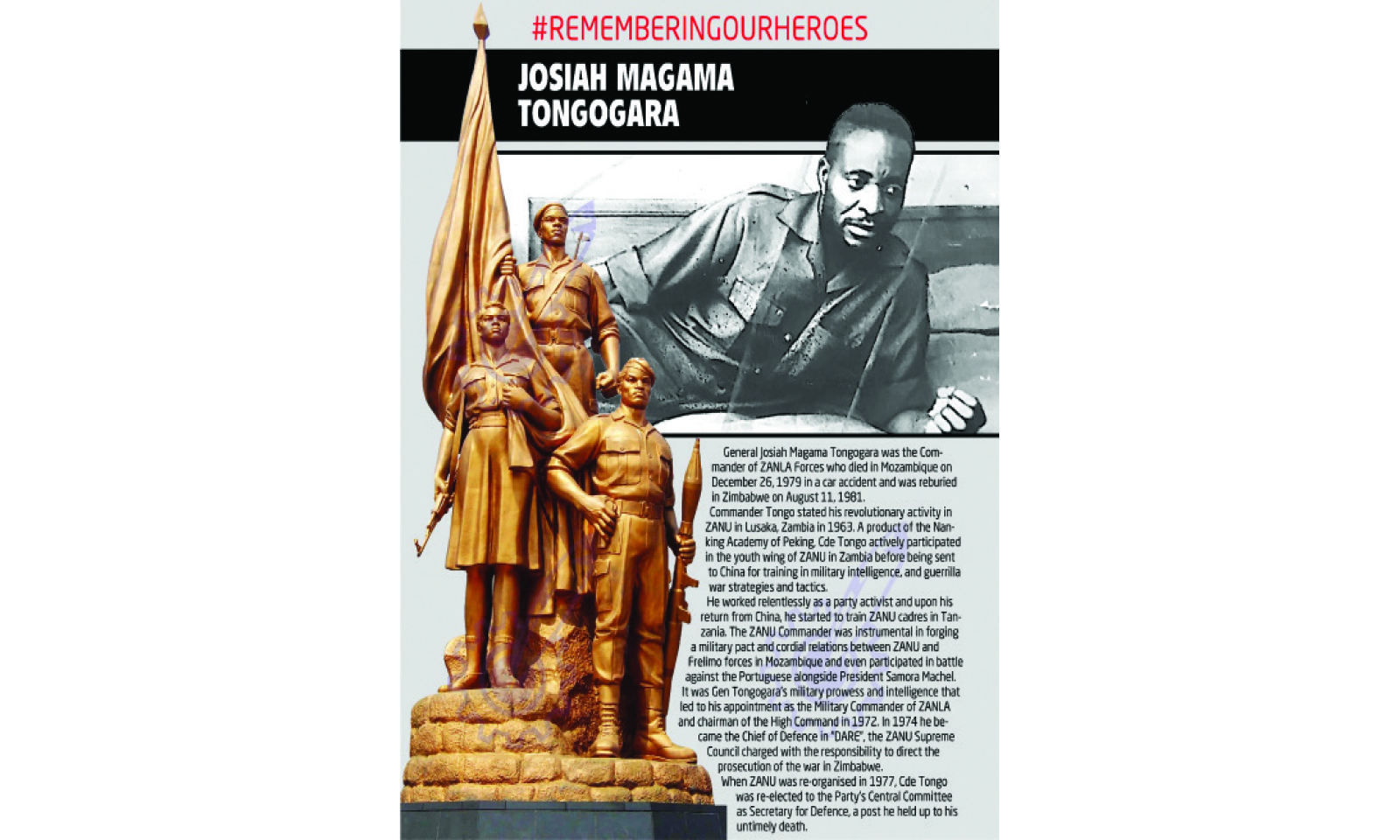
Sifelani Tsiko-Fact Check Editor
HEROES Day is a cherished holiday on Zimbabwe’s calendar, observed annually on the second Monday of August in honour of Zimbabwe’s liberation war heroes and heroines.
It holds a profound significance as a day of rallying the nation together to honour and pay tribute to the courageous men and women who made the ultimate sacrifice during the protracted 16-year armed struggle and in the post-independence era.
Heroes Day stands as a solemn reminder of the debt of gratitude owed to those who have given their lives to liberate Zimbabwe and preserve its freedoms.
A history rooted in the Chimurenga/Umvukela war of liberation
The origins of Heroes Day can be traced back to the aftermath of the protracted 16-year armed struggle, one of the most significant conflicts in Zimbabwe’s history following the First Chimurenga/Umvukela wars of the 1890s.
As the war ended in 1980, the new black Government sought ways to commemorate the fallen soldiers.
The fight to establish Heroes Day was met with resistance from raw and racist Rhodesian Front members. Before then President Canaan Banana approved the recommendation that Heroes Day be held on August 11 and 12, in July 1980, there was massive opposition from the Rhodesian Front elements in Parliament.
Legislators drawn from ZANU and ZAPU, stood their ground, arguing it was “cheeky” for the Rhodesian Front MPs to put profits and economic interests first, instead of honour for the national heroes.
Black nationalists were appalled by the attitude of the Rhodesian Front legislators in view of the fact that for years blacks were forced to observe holidays that held no meaning to them. At the time, nationalists were pushing for the observance of April 18 Independence Day, May 1 Workers Day, National Heroes Day and Africa Day.
By then, Dr Joshua Nkomo, then Minister of Home Affairs, refused to yield to calls from RF members who attempted to block the holidays. Dr Nkomo stood his ground and stressed the need for new holidays to characterise the life of the new nation.
Cde Robert Mugabe, then Prime Minister called on all Zimbabweans to be thankful to the nation’s fallen heroes and be guided by their ideals.
“In our hearts and minds we, therefore, forever remain indebted to Zimbabweans whose names appear on the pages of these rolls of honour and equally to those others whose honourable role by force of circumstances prevents us from acknowledging in print.
“They all occupy a permanent place of great honour in our indebted hearts,” Cde Mugabe said in August 1980, in a foreword to a 274-page book on the country’s fallen heroes.
The book, titled “The Fallen Heroes of Zimbabwe”, was published to commemorate Heroes Day in 1983.
“The people’s memory of the fallen heroes must continue to cherish the pursuit of policies that enhanced the ideals of freedom, democracy, national unity and human dignity. They should never be a nation that easily forgets the meaning and significance of the supreme sacrifices made by their heroes.
“And never must we by thought, word and deed be men and women who shrink from striving for those high ideals for which they so nobly, so courageously and so indomitably, strove.”
Black nationalists stood firmly by the ideals of the liberation struggle and not the narrow baneful concepts of tribe, region, race or colour. Zimbabwe’s heroes transcended “such myopic barriers, ephemeral shackles to the national cause and bequeathed to the people a sterling example of national endeavour”.
After the RF resistance, August 11 and 12 were designated by an Act of Parliament in 1980 as public holidays to serve as a permanent reminder that the struggle to free Zimbabwe from colonial oppression, exploitation and indignity cost thousands of lives.
“It was because of that supreme sacrifice costing blood, unequalled suffering and long terms of unjust imprisonment, matched by their unyielding and undeviating character that the nation has declared them heroes,” Cde Mugabe said.
From that time, the heroes’ holiday has become a time where people now visit various heroes’ shrines and decorate the graves of fallen soldiers with flowers and flags.
A national day of commemoration
In 1980, Heroes Day was officially declared a national holiday after an Act of Parliament to honour fallen heroes.
This change allowed the majority of the black population to more significant participation in memorial ceremonies, parades and other commemorative events in honour of fallen heroes. It also allowed families and friends to come together and reflect on the sacrifices made by their loved ones and countless others who have given their lives for Zimbabwe.
First black heroes to be given full military honours
ZANLA Commander, General Josiah Tongogara, and ZIPRA commander, Jason Ziyaphapha Moyo, were the first heroes to be accorded full military honours when they were brought back home from Mozambique and Zambia, respectively.
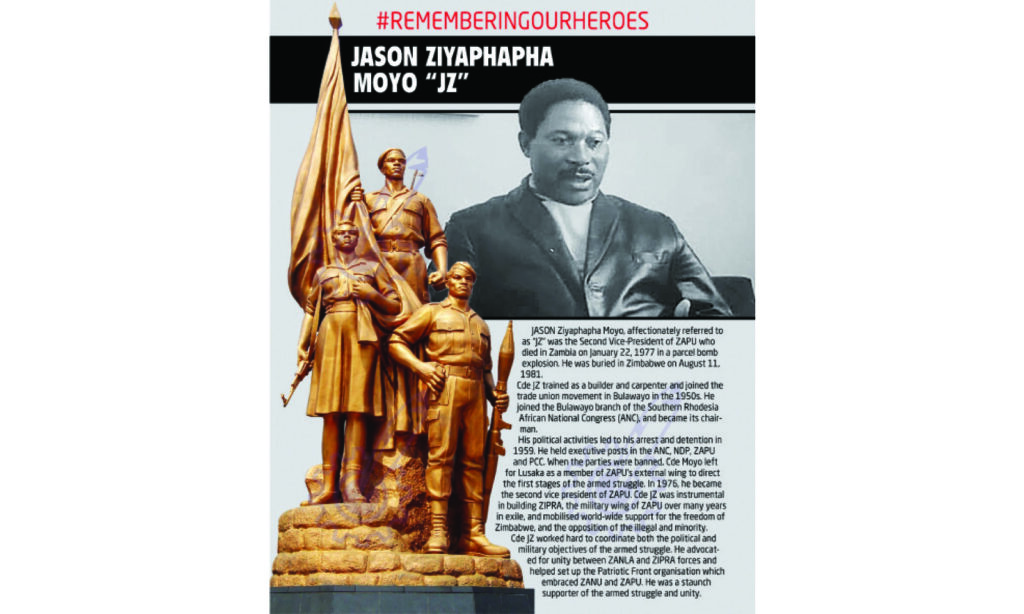
On August 11, 1980, there was “pin-drop” silence at the Salisbury International Airport when a Mozambican Air Force transport plane with the body of General Tongogara and a Zambian Air Force Buffalo plane bringing that of Cde Moyo touched down.
General Tongogara was killed in a car accident in Mozambique on December 24, 1979, while Cde Moyo who was ZAPU’s vice president died from a parcel bomb explosion in his office in Lusaka on January 22, 1977.
More than 40 000 people attended the first interment of the heroes at the National Heroes Acre. People came from far and wide to witness the final burial with full military honours of the liberation war heroes. Father Alexio Muchabaiwa of the Roman Catholic Church consecrated the site he said should be respected by all Zimbabweans as the resting place for its heroes.
Messages at the emotion-filled reburial ceremony
“We have not come here to bury heroes of ZAPU and ZANU — but heroes of Zimbabwe. In other words, we have come to bury two heroes of our country. It is the burial of the entire population of Zimbabwe and not of a particular tribe,” said Dr Joshua Nkomo clad in his general’s uniform.
“These young heroes worked hard for unity for years. They stood for unity and one country. This is what we must also work for in our independent Zimbabwe. If you shout tribalism, then you are not with these two great young men.
“They fought for the true liberation of Zimbabwe. They didn’t sacrifice their lives for any one particular tribe or political party. They sacrificed their lives for the true liberation of our country. We honour these young men whom we also adore and respect. They died so that there can be one nation, one people, one flag and one Zimbabwe.”
Cde Mugabe said General Tongogara and Cde Moyo “deserved a taste of the independence for which they had fought so hard.”
Herbert Chitepo’s homecoming
On August 10, 1981, scores of sobbing Zimbabweans gathered in large numbers to receive the remains of Cde Herbert Chitepo who died in a land mine explosion outside his Lusaka home in March 1975.
Cde Chitepo is one of the country’s national heroes and ZANU chairman, who planned the armed struggle in the 1970s war of independence. His remains were brought by a Zambia Air Force aircraft. He was buried with full military honours at the National Heroes Acre on August 11, 1981. Thousands of people thronged the national shrine to witness his burial.
Messages to pay respects to Herbert Chitepo
“He was a brilliant student and scholar. He was a doing person and did even more for the country. He talked less and did more,” said Douglas Sagonda, a Chitepo family representative in 1981.
“Last but not least, Herbert was God’s gift to Zimbabwe,” said Anglican Bishop of Salisbury —Rt Rev Peter Hatendi.
Hero Takawira reburial in August 1980
Veteran freedom fighter Cde Leopold Takawira was buried with full military honours on August 11, 1982. He died in 1970 and his body was exhumed from the Holy Cross Mission in Chirumhanzu for reburial at the national shrine.
Honouring the fallen
After the burial of these heroes and others in the early 1980s, Heroes Day has now become a powerful reminder of the selflessness and bravery exhibited by those who fought the brutal white settler regime.
Across the nation, communities now honour veterans and fallen heroes at various shrines. These parades often feature marching bands, military units, and displays of patriotism, fostering a sense of unity and gratitude.
Beyond Heroes Day commemorations
The commemorations have been widened to honour heroes in shrines at mass graves both inside and outside the country, to pay tribute to all heroes.
It is a day to express gratitude, educate younger generations about the sacrifices made by the fallen, and support the families left behind. The holiday is also a deeply meaningful occasion that allows Zimbabweans to come together as a nation, united in their gratitude for the men and women who have paid the ultimate price for the liberation of Zimbabwe.
It is a day to reflect on these heroes’ sacrifices and honour their memory.



