Fidelis Munyoro
Chief Court Reporter
THE High Court has dismissed an application by TGMA Enterprises (Private) Limited to overturn an arbitral award that rejected its US$281 730 commission claim and ordered it to refund US$110 000 to Blackwood Hodge Zimbabwe (Private) Limited.
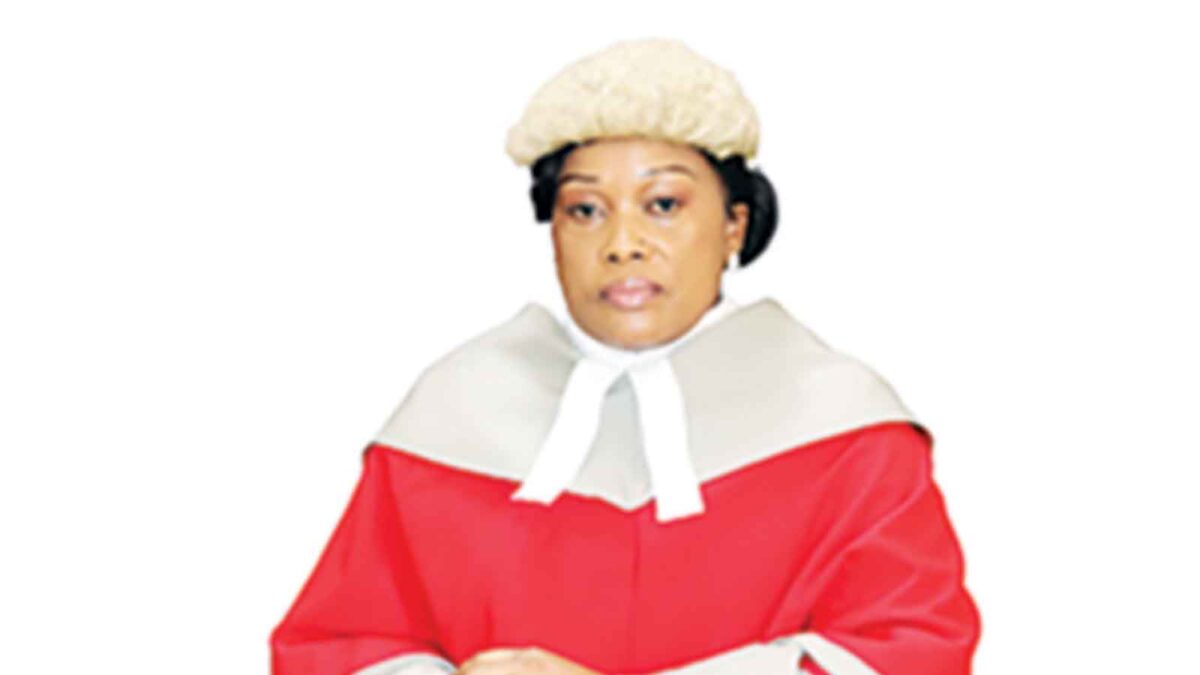
Justice Lucy-Anne Mungwari ruled that allegations of forgery, bias and procedural unfairness did not meet the legal threshold required to set aside an arbitration award.
She said TGMA was effectively seeking a fresh assessment of evidence and contractual disputes already determined by arbitrator Regis Chawatama, which the court could not undertake under Article 34 of the Model Law.
Justice Mungwari warned against litigants framing dissatisfaction with arbitration outcomes as violations of public policy, natural justice or procedural fairness.
“I am mindful of the need to guard against an increasing tendency to dress ordinary complaints over an arbitral award in the language of ‘public policy’, ‘natural justice’, ‘bias’ and ‘procedural irregularity’,” she said.
“Arbitration would cease to provide the finality for which it is selected if every adverse factual finding could be recast as an assault upon public policy.”
The dispute arose from consultancy agreements between TGMA and Blackwood Hodge involving the registration and processing of legacy debts worth millions of United States dollars.
TGMA claimed it had secured approval of blocked funds amounting to US$3 417 309, resulting in Treasury Bills being issued to Blackwood Hodge in August 2022.
It argued that the transaction had achieved its commercial objective and claimed a commission of 10 percent, amounting to US$341 730,09, less payments previously received.
Blackwood Hodge, however, maintained that the agreement required the funds to be remitted to designated foreign suppliers. Since this had not happened, it argued that the contractual conditions for payment had not been met.
A key issue was an addendum dated March 18, 2021, which TGMA relied on to support its commission claim.
Chawatama rejected the document as unauthentic, citing inconsistencies in witness testimony, its late production, the absence of contemporaneous supporting documents and differences in the signatures.
TGMA challenged that finding, arguing that former Blackwood Hodge employee Talent Chikobvu had testified under oath that the signature was his. It also criticised the arbitrator for comparing signatures without expert handwriting evidence.
However, Justice Mungwari said the arbitrator was entitled to assess the document alongside the other evidence presented.
“At its highest, it establishes that another decision-maker might have attached greater weight to Chikobvu’s evidence and lesser weight to the circumstantial evidence,” she said.
“That may constitute a disagreement with the second respondent’s factual assessment. It does not constitute the kind of palpable inequity as contemplated in the authorities.”
The court also dismissed claims that the arbitrator had been biased, denied TGMA a fair hearing or improperly disregarded its alternative claim for compensation based on unjust enrichment or quantum meruit.
On the Treasury Bills, Justice Mungwari acknowledged the commercial significance of TGMA’s argument but said the court could not rewrite the agreement to treat the issuance and retention of the bills as equivalent to remittance to foreign suppliers.
The arbitrator had also ordered TGMA to refund US$110 000 paid under a separate 2024 consultancy agreement after finding that the contemplated services had not been rendered.
TGMA argued that Blackwood Hodge’s failure to provide necessary documentation had contributed to the non-performance, but the judge found no basis to interfere with the award.
Justice Mungwari concluded that the complaints did not establish an injustice sufficiently serious to offend public policy.
“The injustice must be palpable, far-reaching and outrageous in its defiance of logic or accepted moral standards,” she said.
The application was dismissed, with TGMA ordered to pay Blackwood Hodge’s legal costs. However, the judge declined to award punitive costs, finding that the application raised substantial legal questions and was not frivolous, vexatious or abusive.