Chronicle Editor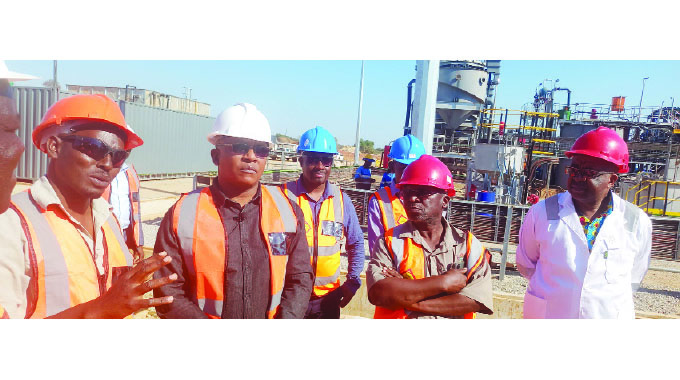
Sikhumbuzo Moyo
THE first structure that any visitor sees at the Premier African Minerals owned Zulu Lithium at Fort Rixon in Insiza district, Matabeleland South is the huge mineral processing plant.
Huge as it is, there is very little human presence as it is largely an automated giant plant.
At the site’s offices, employees have a spacious canteen area and a leisure centre.
There are about eight office staff members who are busy on their computers, as everything seems to be technology based. Staff houses in the form of military coloured square tents are also within the administrative area.
About five kilometres to the east, the company is constructing a two million cubic metres carrying capacity dam that will see 60 percent of its water being used by the local community.
Mines and Mining Development Deputy Minister Polite Kambamura visited the mine yesterday.
The mine will start operations in two weeks’ time with the company already having secured a US$34 million lithium supply deal from a Chinese company, Suzhou TA & A.
Deputy Minister Kambamura described the pre-production deal as proof that Zimbabwe is indeed open for business and in line towards achieving the US$12 billion mining economy by year end as well as its vision of having an upper middle income economy by 2030.
“This shows that there is so much demand for our spodumene, this is proof that Zimbabwe is open for business and we have investors scrambling for the mineral before we have even started producing it. It clearly shows that investors or the market has confidence in the country,” he said.
The Zulu Lithium Mine is one of the country’s huge investments under the Second Republic aimed at boosting the country’s mining industry.
The country’s mining revenues have grown from US$2,7 billion in 2018 to US$5,3 billion in 2021.
Lithium is a mineral used in the manufacture of batteries and its demand has risen sharply because of the demand for electric cars, especially in developed countries, which are forging ahead with plans to phase out fossil fuels such as petrol and diesel in the coming years. The Zulu project is generally regarded as potentially the largest undeveloped lithium bearing pegmatite in Zimbabwe, covering a surface of about 3,5 square kilometres, which are prospectively for lithium and tantalum mineralisation.
It produces a rare high value spodumene, a rock that has very high mineralisation of lithium. Spodumene is a battery grade product, which is key for the future of electric cars.
Once fully operational, the company will be able to produce 4 000 tonnes per month.
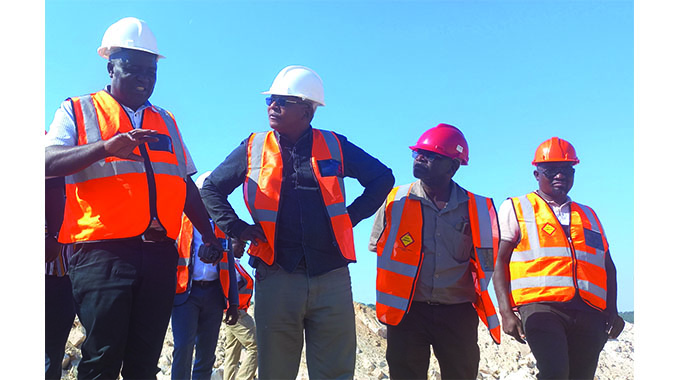
Key plant tests such as plant to point mill feed have been run, crusher settling in pre-production runs are underway and the wet section (floatation part of the plant) has water on and is pressurised.
There are 800 employees working at the mine with 200 directly employed by Zulu Lithium of which 95 percent are from the local communities following a policy position by the mining company’s managed to empower locals instead of importing labour.
Zulu Lithium mine general manager Mr Jabulani Chirasha said the Chinese company, Suzhou TA & A, produces material for batteries from lithium.
“They were happy to pre finance the product to the tune of US$34 million, this is big business,” said Mr Chirasha.
Deputy Minister Kambamura said he was impressed with the investment that the company has done, which to date stands at US$80 million.
“All the investment in this place amounted to US$80 million, this shows how serious the organization is with investing in the country, especially after Government had banned the export of raw lithium ores. The company is also looking forward to setting up a battery manufacturing plant in three years’ time, this is why they have made such a commendable investment,” said Deputy Minister Kambamura.
He said it is pleasing that the company has gone further to employ locals with 95 percent of its workforce being locals, only importing skilled manpower not available locally. –@skhumoyo2000



 Online Reporter