Online Reporter
Golden Guvamatanga-Correspondent
OUT of the many grand efforts that were made by Zimbabweans to free their country from colonialism, the yet to be fully told story is how several local businessmen contributed to Zimbabwe’s independence.
Stoically silent during the war, and silent in the aftermath of it all, theirs is a story that has been drowned by the euphoria that enmeshed the country when it hoisted and lit up the flame of independence.
Yet that story remains there for the taking, there to be explored and delivered to a country and people who have been swayed from honouring and celebrating their unsung heroes.
That story encompasses, yet at the same time ignores, the twin problems these entrepreneurs encountered during the struggle.
From contending with innumerable impediments that inhibited their ability to compete with whites in the business sector to taking the risk of funding the struggle, in the process incurring the wrath of the Rhodesians, their path to freedom was not at all a stroll in the park.
They operated within the tight framework of a few selected sectors such as retail, transport service and, in rare instances, small-scale commercial farming which were presented to them by the colonial regime.
Historian Michael West describes the participation and bravery of these businesspeople as a “nationalism movement”.
The shots they fired at the enemy represented a significant shift in the struggle through moral, financial and even technical support to the fighters.
Far away from the horrors of bombs and bullets, and support from countries like China and Russia, deep in the heart of the seemingly tiny suburb of Highfield were these towering icons of Zimbabwe’s struggle for freedom.
Their story and contributions are hardly mentioned and have probably been forgotten. Their bullets, though invisible, linger long and loud on the pages of our history.
You talk about Josiah Chinamano, who was chairman of the Highfield Traders’ Association, his wife Ruth, Machipisa, Mushandirapamwe and Makomva, among many others.
On paper and according to the Rhodesians, these were just “black-owned” businesses in what they derisively refer to as a “native township” for blacks. Within those walls were individuals who were fighting the enemy in their own way.
The Rhodesians had established Highfield in the 1930s as a conveyor belt for cheap labour for industries in Southerton and Workington.
But Highfield was not just the womb that gave birth to the spirit of resistance against colonialism, it also acted as an undetected corridor of logistics, financial and technical support for the fighters through these businesspeople.
Yet the Rhodesian “eyes” and “ears” were always on the prowl, snooping and preying on the activities of businesspeople in Highfield. For instance, Ruth Chinamano, who ran a general dealer’s shop with her husband in Highfield, would lead resistance against the order by the Rhodesians that they closed shop at 6.30pm.
The order, she argued, meant that they would lose key clients who knocked off at 5pm. But there was a catch.
She would use the back of her shop as a party office after the formation of the NDP in 1961 when she headed the women’s wing of the People’s Caretaker Council (PCC) in Highfi eld before her detention at Gonakudzingwa as the only woman in 1964.
The shop had to remain open after 6.30pm to avoid detection by the Rhodesian Special Branch.
Arguably the biggest name to operate businesses and support the liberation struggle was Philemon Garikai Machipisa Murambiwa, owner of the famous Machipisa Stores in Highfield.
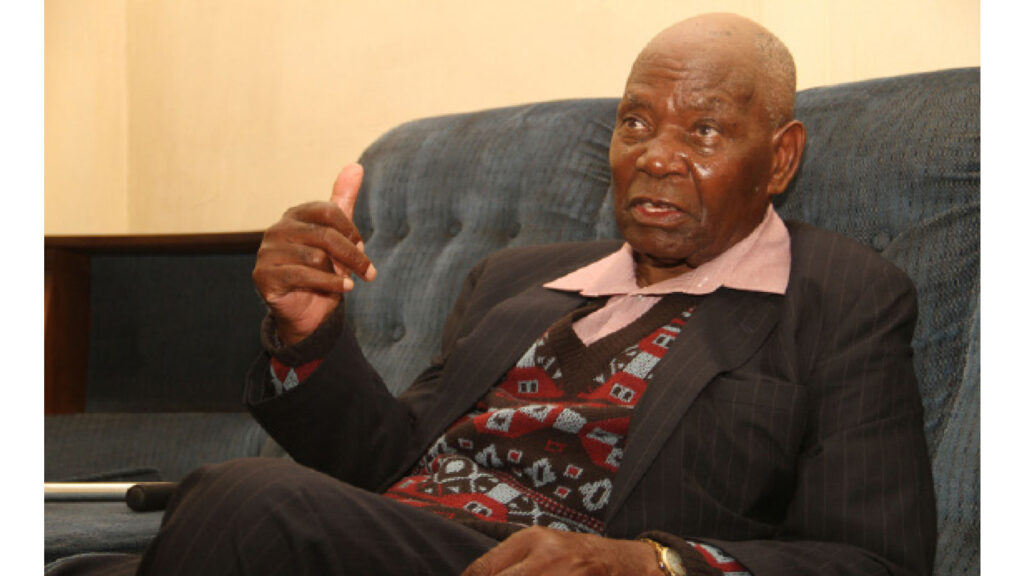
Philemon Machipisa
He established Machipisa Stores in 1954 and would go on to become one of the biggest supporters of the struggle using his personal resources at great personal risk.
The name Machipisa was inherited from his grandfather who was a vegetable trader in Rusape. Mushandirapamwe Hotel lingers hesitantly, in grudging resignation to what now seems like its eternal fate.
The paint peels off together with the abandoned history. It was the place to be not only for revellers, but nationalists who were instrumental in the attainment of independence back in the day.
But beneath that shell is an enduring, glowing history that ties it and the country to its fate – the history of the struggle for freedom.
Nestled on the outskirts of Machipisa Shopping Centre, the first brick at Mushandirapamwe Hotel was laid in 1972, just when the decisive phase of the Second Chimurenga was taking shape.
The man behind the iconic place, George Tawengwa, would go on to become Zimbabwe’s first black millionaire (in US dollars). His hotel used to host nationalists, like the late President Robert Mugabe, Enos Nkala and Maurice Nyagumbo, among others planning and coordinating the execution of the struggle.
Often described as “the mistrustful autocrat” the name Dennis Makomva rings far and wide in the realms of pioneer black entrepreneurs in the country as well as the liberation struggle.
A man of limited education but shrewd in business, Makomva excelled where many failed.
He opened his first shop in Highfield in 1959 and, by 1980, he had a sprawling business empire with supermarkets and service stations.
“Few expected him to succeed because of his minimal education,” reads part of an April 12 2015 story by The Sunday Mail.
Crucially, he was ‘educated’ enough to know that independence would only be attained through availing support to the freedom fighters.
The merger of Marembo Funeral Services, Highfield Undertakers and Ayawo Society Funeral Services to form the Zimbabwe African Funeral Services in October 1961 serves as a prime example of how the business community was instrumental in laying the groundwork for independence through supporting the nationalist movement.
As the struggle was gathering momentum, two key figures – Chairman Herbert Chitepo and Dr Tichafa Samuel Parirenyatwa – would open a law firm and surgery respectively in Highfield.
Such is the sheer magnitude of Highfield’s contribution to the liberation struggle that it deserves accolades. – Patriot.