admin
admin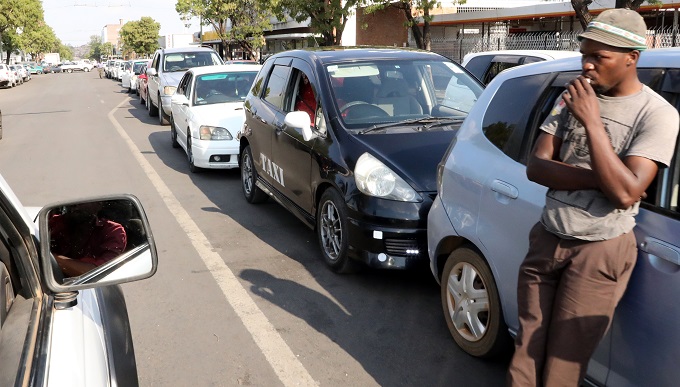
Stephen Mpofu
The business community in this country have long made impassioned pleas to the Government for laws that engender the ease of doing business with the outside world in order to grow an economy hard hit by illegal Western sanctions to try to bring about regime change and with that the reversal of a land reform programme now also hitting headlines in South Africa and Namibia.
Paradoxically, however, some businesses wilfully or ignorantly have been engaged in acts of self-immolation by hoarding goods or charging exorbitant prices and in the process driving away customers and distorting the real picture of business in Zimbabwe to potential investors.
Only the most desperate investor — and these will probably be counted on one hand — will be eager to plough their hard earned cash into a confused market place such as the quick-and-big buck one that has come into existence in our country lately.
It is for genuine reasons of restoring sanity and respectability to the market place that the Government recently cancelled licences of service stations charging prices above those recommended.
At the same time the Government, after discovering that some producers hoarded consumer goods to create artificial shortages, most likely as a way of exacting high prices for them, allowed the importation of those goods into the country to ease shortages.
But perhaps the big business spoiler that needs to be hit with a really heavy hammer is the parallel market.
It is all very well that the police have recently swung into action, arresting illegal foreign currency dealers on the streets.
But where do these otherwise ordinary looking Zimbabweans get the much sought-after foreign currency to trade on the black market to which many people now resort?
That is the big question that needs to be answered to complete the job of cleaning up the multi-currency market that had become a headache for both ordinary Zimbabweans and the government as it makes life difficult for ordinary citizens with limited financial resources to try to make ends meet for their families.
Or could these parallel market dealers be representatives of some big, political or economic bigwigs somewhere and who remain protected by their anonymity?
Whatever the case might be, it seems Zimbabweans generally are agreed that the parallel market must go, and go yesterday, to restore sanity to the business transactions in the country.
The Government should use all its power to destroy the parallel market, said veteran Bulawayo journalist Mr Jonathan Mapenduka who noted that Zimbabwe was the only country with such a rampant parallel black market that distorted the ease of doing business in the country.
Or is tolerating the market which causes economic hardships for many who cannot access forex, not similar to tolerating a parallel government if one came into existence in our country?
Many, many sick people today survive by the grace of God because, for instance, medicines at pharmacies are mainly quoted in United States dollars or the local equivalent running into multiple digits.
The price distortions, the hoarding of goods to cause shortages have among other unorthodox business acts made some people wonder if some Machiavellian politicians eager to get into power by any means possible might not in fact be exacerbating the difficult business environment in collusion with those who refuse to remove economic sanctions on Zimbabwe in order to bring about political change benefitting both enemies of the incumbent Zanu-PF government.
If that is not so why do some big Western countries remain tenaciously clung to the sanctions they imposed on this country in spite of calls by most progressive nations to remove the sanctions and walk the walk with Zimbabwe politically, economically and socially?
But love, unity and peace cannot be expected to blossom in a global village where Big Brother wantonly treads on the cones of those with little or no retaliatory power, as is the case in our world today.
Only God is the true arbitrator.


 Online Reporter