Online Reporter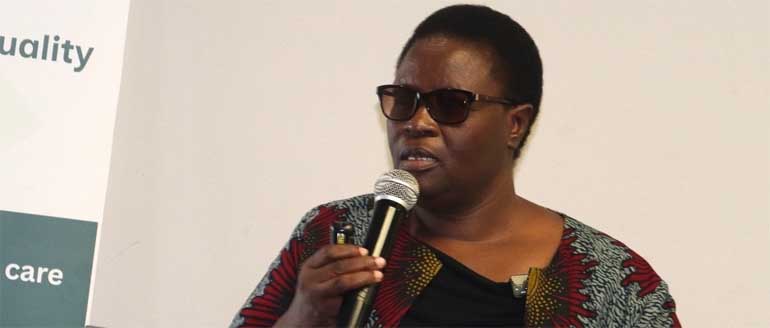
Tendai Gukutikwa
Health Reporter
RUSAPE General Hospital has been selected as one of 11 frontline centres nationwide for Lenacapavir (LEN), a ground breaking long-acting injectable drug for HIV prevention.
Health officials have hailed the rollout as a milestone in Zimbabwe’s fight against new infections.
Introduced in February under the Ministry of Health and Child Care’s targeted HIV prevention strategy, Lenacapavir is being deployed in phases across high-burden districts.
Manicaland is among six provinces prioritised in the first wave, with Makoni and Mutare identified as hotspots accounting for a significant share of new HIV cases.
So far, the drug is available at 11 sites across Bulawayo, Harare, Midlands, Matabeleland South, Manicaland, and Mashonaland Central.
During a media training workshop, Dr Idah Moyo, HIV Prevention Officer in the Ministry’s AIDS and TB Programme, revealed that as of May 16, 2026, Zimbabwe had recorded 1 498 initiations on Lenacapavir.
Rusape General Hospital contributed 110 of these cases, positioning it as one of the country’s leading implementation centres.
Lenacapavir is administered as a twice-yearly injection, offering a powerful alternative to daily oral pre-exposure prophylaxis (PrEP).
Health authorities say the long-acting option is crucial for reaching populations that struggle with pill adherence, including adolescent girls, young women, and key populations at higher risk of infection.
The phased rollout is targeting districts with the heaviest HIV burden, aiming to curb transmission where it is most entrenched.
Further expansion will depend on uptake, supply, and early outcomes, but officials believe the drug could transform Zimbabwe’s HIV prevention landscape.
Manicaland’s inclusion reflects both its high HIV burden and its proven capacity to deliver new biomedical interventions.
Health experts say the province’s participation complements existing prevention methods such as condoms, voluntary medical male circumcision, and oral PrEP.
“Uptake patterns in Makoni show women accessing the long-acting HIV prevention drug more than men. By mid-May, 77 women and 33 men had been initiated at Rusape General Hospital. Priority groups for the drug include pregnant and breastfeeding women, adolescent girls and young women, female sex workers, high-risk men, and sero-discordant couples,” explained Dr Moyo.
She added that Government adopted a data-driven approach when selecting rollout sites for the first phase.
“We carried out a site prioritisation process focusing on districts with high HIV incidence, high numbers of new infections, and gaps in prevention coverage. Makoni District was selected for Manicaland, where the drug is now being offered at Rusape General Hospital.”
Other roll-out centres include Cowdray Park Clinic, Khami CeSHHAR Clinic, and Bambanani Clinic in Bulawayo, as well as Overspill Polyclinic in Epworth and New Africa House in Harare, underscoring the nationwide scope of the programme.
Dr Moyo said the prioritisation exercise revealed that just 15 districts account for 52,1 percent of all new HIV infections nationwide.
“These figures show that the epidemic remains geographically concentrated. Because of that, we cannot roll out Lenacapavir everywhere at once. We have to focus on districts carrying the greatest burden first,” she explained.
Statistics presented during the training indicate that Zimbabwe recorded 14 987 new HIV infections in 2024, with women accounting for 60 percent of the cases.
Adolescent girls and young women aged 15–24 contributed 22 percent of all new infections, underscoring their continued vulnerability.
The top six priority districts include Harare (2 013 new infections), Bulawayo (567), Chitungwiza (529), Mutare (477), Kwekwe (429), and Goromonzi (417).
“All the 15 priority districts are informing Zimbabwe’s phased national scale-up plan for Lenacapavir,” said Dr Moyo.
She added that district selection criteria also considered PrEP uptake trends between 2023 and 2025, the number of people not on antiretroviral therapy (ART) or not virally suppressed, and the proportion of women living in districts where male ART coverage remains low.
Lenacapavir forms part of a broader category of HIV prevention medication known as pre-exposure prophylaxis (PrEP). It is used by HIV-negative individuals to reduce their risk of contracting HIV before exposure, offering a long-acting alternative to daily oral PrEP.
Dr Moyo explained that PrEP differs from post-exposure prophylaxis (PEP), which is administered after possible exposure to HIV.
ART, on the other hand, is used to suppress the virus in people already living with HIV.
“When HIV-negative individuals take ARVs before exposure to protect themselves against HIV, that is what we call PrEP,” she said, noting that the World Health Organisation currently recommends several PrEP products, including oral tenofovir-based tablets, dapivirine vaginal ring, long-acting injectable cabotegravir and Lenacapavir.
Dr Moyo stressed that although Lenacapavir provides protection against HIV, it does not prevent pregnancy or other sexually transmitted infections.
“It is important for people to understand that LEN is not a vaccine, it is not a cure for HIV and it does not replace condoms or HIV testing,” she said.
Lenacapavir is administered as a long-acting injectable given every six months following an initiation phase that combines oral tablets and injections. The drug is only prescribed to HIV-negative individuals after thorough testing and clinical assessment.
“Before starting LEN and before every follow-up injection, health workers must confirm that the client remains HIV-negative. This is critical because using PrEP while someone already has undiagnosed HIV can increase the risk of drug resistance,” said Dr Moyo.
She said clinical trials conducted in several countries showed promising results for the drug, including very high effectiveness rates among adolescent girls, young women and other high-risk populations.
One study recorded no HIV infections among participants receiving Lenacapavir, while another showed a 96 percent reduction in HIV infections compared with background incidence levels.
Dr Moyo said the long-acting nature of the injectable makes it attractive for many users because it removes the burden of taking daily pills.
“Long-acting products improve adherence because people do not have to think about HIV prevention every day. They also reduce transport costs and clinic visits for clients,” she said, adding that Government plans to scale up Lenacapavir access to about 46 500 users in 2026 after securing additional Global Fund support through the United States Department of State.