Chronicle Editor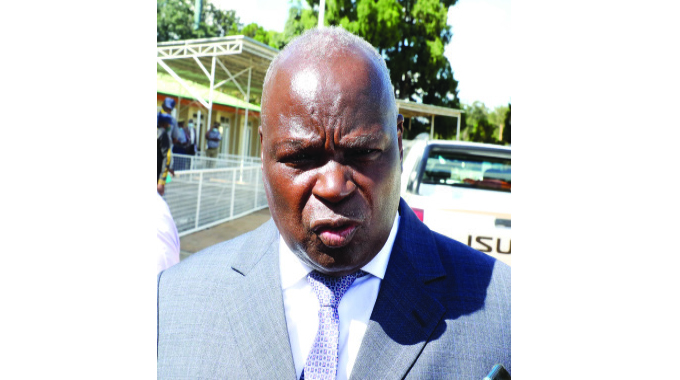
Nqobile Bhebhe, Senior Business Reporter
HWANGE Local Board (HLB), which is seeking town status, is on the cusp of attracting major potential investors who are currently shunning Hwange urban, as they might be sceptical of recouping their investments, an official has said.
The anticipated investments have vast potential to steer up economic growth and improve contribution to the country’s Gross Domestic Product.
Currently, Hwange is led by the Local Board, a local authority created by statute under the body of the Urban Councils Act, Chapter 29:15. HLB was established in 1974.
As a major step towards attaining town status, the Minister of Local Government and Public Works, July Moyo, has appointed a six-member commission to assess HLB readiness to incorporate Wankie Colliery Concession Area into Hwange Local Board as well as to upgrade into a town council.
Town secretary, Mr Ndumiso Mdlalose told Business Chronicle that the local board has over the years mooted the idea of incorporating Wankie Colliery Concession Area and efforts were also made by the residents when they petitioned Parliament on the same issue in 2019.
“It’s also our view that upon incorporation of Wankie Colliery Concession Area into Hwange Local Board, the Board shall be meeting most of the requirements stated in Chapter 29:15 of the Urban Councils Act First Schedule (Section 14) of being elevated to a Town Council, Municipality or even a City,” he said.
“Even prior to the incorporation of the Hwange Concession Area, that is, at the current status, we still meet requirements stated in Urban Councils Act.
“Among the requirements stated in the Act, where we meet the set standards are the size and density of the population, taking into account the population living in homes.
“To this end, Hwange is experiencing massive infrastructural development most notably housing construction.”
Hwange has vast employment opportunities across various sectors of the economy notably mining, power generation and tourism and hospitality, he added.
“The extent to which the municipality is a centre for state services, such as law courts, the provincial headquarters for the police, the biggest prison facility in the province, it has an army establishment, an aerodrome, road and railway infrastructure and stations, among others as required and stated in the Urban Councils Act,” said Mr Mdlalose.
“Hwange is home to the province’s Regional Magistrate’s Court, and has circuit High Court and Labour Court sessions.
“To add to that, the province’s first Teachers’ College and Polytechnic, and also the Zimbabwe Open University are also based in Hwange, with prospects and plans for construction of additional and more pronounced facilities set for this year in the Council area.”
The town secretary noted that the current quasi-local authority structures are hampering the growth of Hwange with colonial legacies still rooted in its administration and planning systems, adding that the failure to incorporate the seven wards, which fall under Concession Areas has deprived them from benefiting from various projects being undertaken through utilisation of inter-governmental fiscal transfers such as the Devolution Fund, Zimbabwe National Road Administration programmes, Government initiated infrastructural projects such as water and sanitation, among others.
On investment opportunities that lie ahead, Mr Mdlalose said apart from courting numerous municipalities for twinning arrangements once granted town status, investments that await will subsequently lead to improved contribution to the country’s Gross Domestic Product.
“It is also important to note that the incorporation of Wankie Colliery Concession into Hwange Local Board will play a very big role in attracting investment in Hwange subsequently leading to its economic growth and improved contribution to the country’s Gross Domestic Product,” he said.
“Currently most potential investors are probably shunning investing in Hwange urban, as they are sceptical of recouping their investments, largely due to its (small) size and its status of being a Local Board.
“Further investments in Hwange would also contribute towards the Government thrust to increase employment opportunities in Zimbabwe generally.
“Living standards would also improve as we thrive towards being an Upper Middle-Class Society by 2030,” he further noted.
On possible twinning arrangements, Mr Mdlalose said the status quo at the moment is such that most municipalities do not see any value or benefit of entering into a twinning arrangement with HLB.
“Twinning arrangements are important in that the local authority gets to adopt best local governance practices from other local authorities as well as for attracting investment.”
To buttress the need for a town status, Mr Mdlalose said the extent to which the local board provides employment opportunities for residents and surrounding areas and the range and variety of employment opportunities provided is also an added advantage.
“Hwange is also home to five big mines and processing plants for mineral related products like coke.


 Online Reporter